Inventory Management Course | Career Goals | KnoWerX
In today’s competitive business environment, effective inventory management is essential for controlling costs, meeting customer demand and improving operational efficiency. Businesses across manufacturing, retail, e-commerce and logistics rely on skilled professionals to maintain the right inventory levels and ensure smooth operations.

An inventory management course can help professionals develop the knowledge and practical skills needed to manage stock efficiently, reduce wastage and support better business decisions. Whether you are starting your supply chain career or looking to upgrade your existing skills, inventory management training can be a valuable step towards your professional growth.
What Is an Inventory Management Course and Why Is It Important?
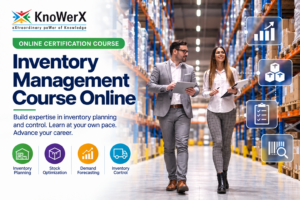
A course in inventory management teaches the basics of planning, tracking, controlling and replenishing inventory. It helps students understand how businesses keep enough inventory to meet demand without tying up too much money in unused materials or finished goods.
Poor inventory management can cause stockouts, overstocking, increased storage costs, and dissatisfied customers. A structured course teaches professionals how to understand inventory processes and make appropriate decisions to balance product availability and cost savings.
Inventory management is an essential component of supply chain, procurement, production, warehouse and logistics operations. Accurate stock data facilitates planning and execution in time.
What Will You Learn in an Inventory Management Course?
The topics covered depend on the programme, but inventory management training may introduce learners to key concepts, including:
- Inventory planning and control: Understand how to maintain appropriate stock levels and support operational requirements.
- Demand forecasting: Learn how demand estimates influence inventory decisions and replenishment planning.
- Stock replenishment: Explore the principles behind deciding when and how much inventory to reorder.
- Inventory costs: Understand carrying costs, ordering costs and the financial impact of excess or insufficient stock.
- Inventory performance: Learn why measures such as inventory turnover and stock accuracy matter.
- Supply chain coordination: Understand how inventory decisions connect with procurement, production, warehousing and customer service.
These skills can help professionals identify inventory challenges, evaluate available information and contribute to more efficient supply chain operations.
How an Inventory Management Course Can Improve Your Career
Inventory management is important for many industries as organisations need to manage their materials and products effectively. Taking a relevant course will help you to better understand basic supply chain processes and prepare yourself for inventory planning and control jobs.
This information can help you develop your career in roles such as inventory analyst, inventory controller, warehouse executive, materials planner or supply chain professional depending on your experience and other qualifications.
Training can also be used to help experienced employees develop their current skills. For example, a warehouse professional might get a more profound understanding of inventory accuracy, and a production planner might learn how stock availability impacts production schedules.
However, career outcomes will depend on factors including your previous experience, programme content, practical skills and employer requirements. A course should therefore be selected based on your specific professional goals.
How to Choose the Best Inventory Management Course
Before enrolling, consider the following factors to ensure the programme meets your learning needs.
- Check the curriculum: Look for coverage of inventory planning, stock control, replenishment and relevant supply chain concepts.
- Match the course to your career goals: beginners may need a foundation in inventory principles, while experienced professionals may prefer more advanced supply chain learning.
- Review the learning format: Consider whether online, classroom or other available formats suit your schedule and preferred learning style.
- Evaluate the training provider: Review the provider’s experience in supply chain education, course information and available learner support.
- Know the certification: Find out whether the programme offers a certificate of completion or prepares learners for a recognised professional qualification. They are not necessarily the same.
Compare these factors and select training that provides you with the relevant knowledge and supports your long-term development.
Why Choose KnoWerX for Inventory Management and Supply Chain Training?
KnoWerX is dedicated to supply chain education and professional development. If you are a learner who wants to learn about inventory management, it can be useful to explore its training offerings to find learning opportunities that best match your career objectives.
Check the course syllabus, delivery, eligibility and certification details before selecting a programme. You can also discuss the available options to align the programme with your experience and development goals.
Choosing the proper training is a critical step in building a stronger footing in inventory and supply chain management.
Frequently Asked Questions
What is an inventory management course?
An inventory management course teaches learners how to plan, track, control and replenish stock efficiently. It covers key concepts such as inventory planning, stock control, demand forecasting, replenishment and inventory cost management.
What topics are covered in an inventory management course?
An inventory management course may cover inventory planning and control, demand forecasting, stock replenishment, inventory costs, inventory turnover, stock accuracy and coordination with procurement, warehousing and production.
What career opportunities are available after an inventory management course?
Depending on your qualifications and experience, relevant skills may support career opportunities such as inventory analyst, inventory controller, warehouse executive, materials planner or supply chain professional.
Ending Note – Build Your Future with Inventory Management Skills
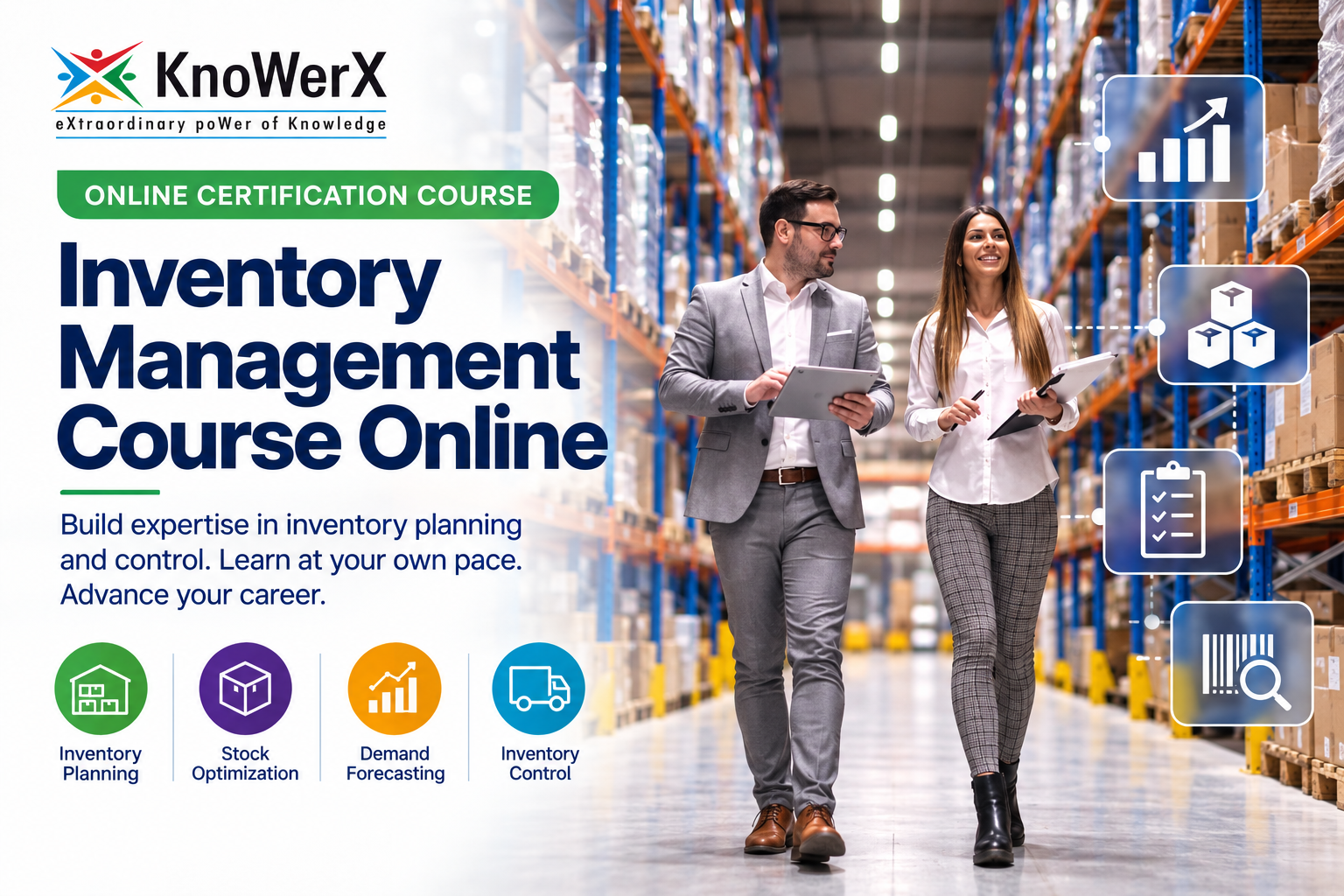
An efficient supply chain relies on an important aspect of inventory management. Stock control, replenishment, inventory costs and planning skills can help professionals contribute to better operational decisions and business performance.
An inventory management course is an easy way to begin to build these capabilities. Define your learning objectives, assess appropriate programmes and select training to match your next career move.
Image Reference: Magnific
Disclaimer: All trademarks, logos, and brand names are the property of their respective owners. All company, product, and service names used in this website are for identification purposes only. Use of these names, trademarks, and brands does not imply endorsement.