Knowerx LogoMenu

Learn Now. Pay Later â€“ KnoWerX Offers Flexible EMIs!

Green Logistics | Sustainable Supply Chains in 2026 | KnoWerX

Green Logistics | Sustainable Supply Chains in 2026 | KnoWerX

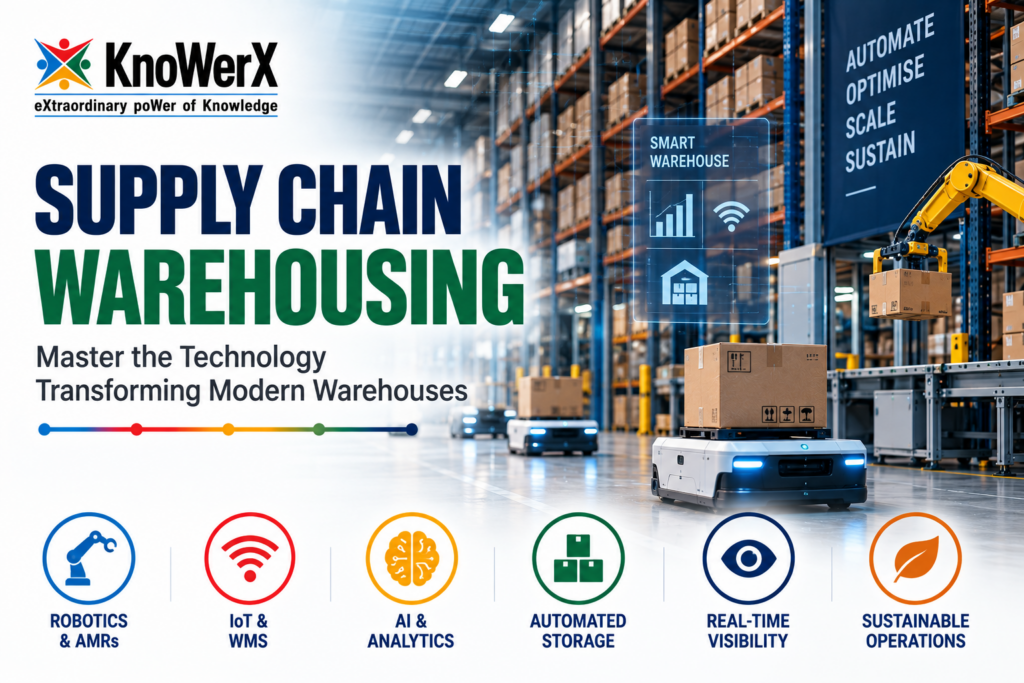
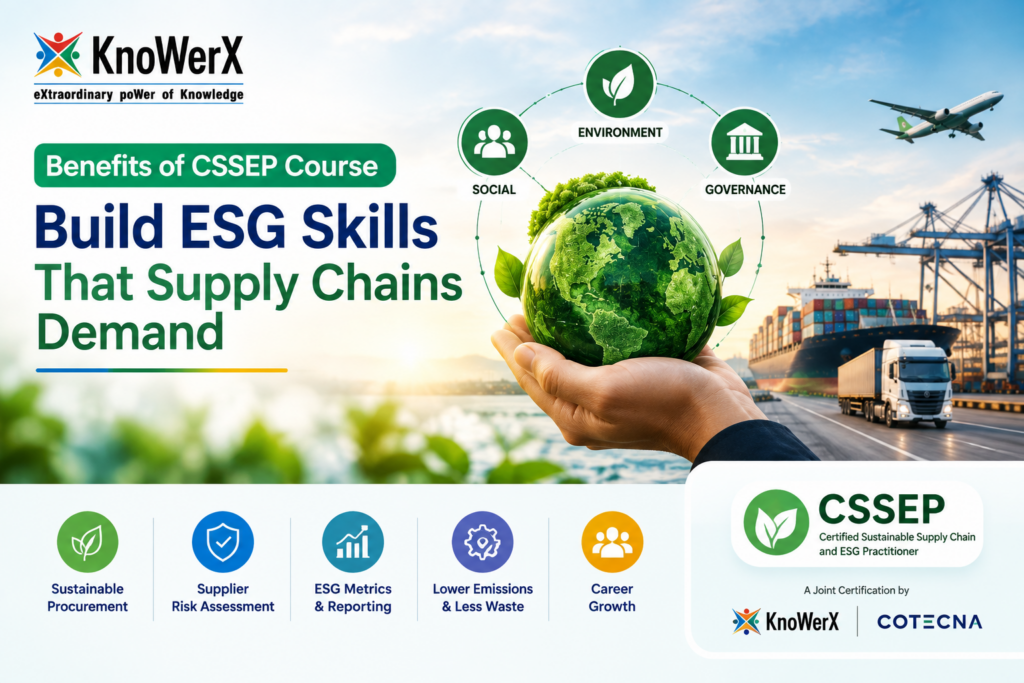
Green Logistics: The Future of Sustainable Supply Chains in 2026 Sustainability is no longer a parallel business objective it is becoming a central pillar of supply chain strategy. In 2026, organizations are under growing pressure to reduce emissions, optimize resource usage, and align logistics operations with environmental goals. At the center of this transformation is green logistics, an approach that integrates sustainability into the movement, storage, and distribution of goods. What was once considered a corporate responsibility initiative has now evolved into a competitive necessity. Businesses that embrace green logistics are reducing environmental impact and improving operational efficiency, strengthening brand reputation, and preparing for future regulatory expectations. What Is Green Logistics and Why It Matters in 2026 Understanding Green Logistics :- Green logistics refers to the implementation of environmentally sustainable practices across logistics and supply chain operations. This includes transportation, warehousing, packaging, inventory management, and reverse logistics. The objective is not simply to reduce emissions it is to redesign logistics systems in a way that balances environmental responsibility with operational performance. Why Green Logistics Is Becoming Critical Global supply chains are responsible for a significant portion of industrial carbon emissions. As governments introduce stricter environmental regulations and consumers become more sustainability-conscious, they push businesses to rethink traditional logistics models. In 2026, green logistics matters because sustainability is directly linked to long-term business resilience. Companies that fail to adapt may face rising compliance costs, reputational risks, and reduced competitiveness. The Shift from Cost-Driven to Sustainability-Driven Logistics Historically, logistics decisions were largely driven by speed and cost optimization. While those priorities remain important, organizations are now integrating sustainability metrics into strategic decision-making. This shift is transforming green logistics from an optional initiative into a core operational framework. Key Green Logistics Strategies Companies Are Adopting To build sustainable supply chains, organizations are implementing a range of green logistics strategies designed to reduce waste, emissions, and inefficiencies. Route Optimization and Smart Transportation Businesses are using advanced routing systems to reduce fuel consumption and improve transportation efficiency. Optimized delivery routes lower emissions while also reducing operational costs. Adoption of Electric and Alternative Fuel Vehicles:- Many organizations are transitioning toward electric delivery fleets and alternative fuel transportation models as part of their green logistics strategy. Sustainable Warehousing Practices:- Energy-efficient lighting, renewable energy usage, and automated systems are helping warehouses reduce their environmental footprint. Packaging Optimization:- Reducing excess packaging, using recyclable materials, and improving packaging design are becoming essential components of sustainable logistics operations. Reverse Logistics and Circular Supply Chains:- Companies are increasingly focusing on product returns, recycling, and reuse. This approach supports circular economy principles while strengthening green logistics initiatives. Localized and Regionalized Supply Chains:- Reducing transportation distances through nearshoring and regional sourcing lowers emissions and improves supply chain resilience simultaneously. When integrated effectively, these strategies allow businesses to align sustainability goals with operational performance. Technology Driving Green Logistics Transformation Technology is playing a critical role in accelerating the adoption of green logistics across industries. Artificial Intelligence and Predictive Analytics:- AI-powered systems help organizations forecast demand more accurately, optimize routes, and reduce unnecessary transportation activities. Internet of Things (IoT):- IoT-enabled sensors provide real-time visibility into vehicle performance, fuel usage, and warehouse operations, improving efficiency and reducing waste. Blockchain for Supply Chain Transparency:- Blockchain technology enhances traceability, enabling companies to verify sustainable sourcing and logistics practices. Automation and Robotics:- Automated warehousing systems reduce energy consumption and improve operational precision, supporting green logistics objectives. Digital Supply Chain Platforms:- Integrated digital platforms improve coordination across suppliers, transport providers, and distributors, enabling more efficient and sustainable operations. These technologies are transforming green logistics from a compliance exercise into a data-driven strategic capability. Challenges in Implementing Green Logistics Initiatives Despite its advantages, implementing green logistics is not without challenges. High Initial Investment:- Transitioning to sustainable infrastructure, electric fleets, and advanced technologies often requires significant capital investment. Infrastructure Limitations:- In many regions, the infrastructure needed to support green transportation and renewable energy adoption is still developing. Balancing Sustainability with Cost Efficiency:- Organizations must manage the challenge of reducing environmental impact without significantly increasing operational costs. Supplier and Partner Alignment:- Achieving sustainability goals requires coordination across the entire supply chain ecosystem. Misalignment among partners can slow progress. Measurement and Reporting Complexity:- Tracking carbon emissions and sustainability performance across complex supply chains remains a major challenge for many businesses. These barriers highlight why green logistics requires not just technology, but also strategic leadership and long-term commitment. Skills Supply Chain Professionals Need for Green Logistics Leadership The evolution of green logistics is changing the role of supply chain professionals. Sustainability-focused supply chains require a broader and more strategic skill set. Sustainability and ESG Knowledge:- Professionals must understand environmental regulations, sustainability frameworks, and ESG principles. Data Analytics and Digital Capability:- The ability to analyze operational and environmental data is critical for improving logistics efficiency and sustainability performance. Strategic Supply Chain Design:- Building sustainable logistics networks requires balancing cost, speed, resilience, and environmental impact. Collaboration and Stakeholder Management:- Sustainability initiatives involve multiple stakeholders across suppliers, logistics providers, and regulatory bodies. Innovation and Change Management:- Driving green logistics transformation requires the ability to lead organizational change and adopt new technologies effectively. At KnoWerX, we equip supply chain professionals with globally aligned learning frameworks that prepare them to lead in evolving logistics environments. The focus is on building strategic capabilities that integrate sustainability, resilience, and operational excellence. Frequently Asked Questions Ending Notes In 2026, green logistics is no longer a future concept, it is a present-day business imperative. Organizations are being challenged to redesign supply chains that are not only efficient but also environmentally sustainable. The future of logistics will be shaped by companies that can reduce emissions, optimize resources, and adapt to changing regulatory and market expectations. Businesses that invest in sustainable logistics strategies, digital transformation, and skilled professionals will better position themselves to lead in this evolving landscape. Because the future of supply chains will not be defined solely by how fast goods move but by how responsibly they move.   Image Reference: Freepik Disclaimer: All trademarks, logos,

Red Sea Shipping Crisis | Impact on Oil, Trade & Shipping | KnoWerX

Red Sea Shipping Crisis | Impact on Oil, Trade & Shipping | Knowerx

Red Sea Shipping Crisis: Impact on Oil, Trade & Shipping Routes Global supply chains in 2026 are operating under increasing pressure, and one of the most significant disruptions affecting international trade today is the Red Sea shipping crisis. What began as a regional security concern has rapidly evolved into a major challenge for shipping networks, oil transportation, and global logistics planning. The Red Sea shipping crisis is not just impacting maritime operations it is reshaping freight economics, increasing supply chain risk, and forcing businesses to rethink how global trade routes are structured. For organizations dependent on international sourcing and transportation, understanding this crisis is essential for building resilience and maintaining continuity. What Is the Red Sea Shipping Crisis and Why It Matters to Global Supply Chains The Red Sea shipping crisis refers to the growing instability and security threats affecting one of the world’s most important maritime trade corridors. The Red Sea connects the Mediterranean Sea to the Indian Ocean through the Suez Canal, making it a critical route for global trade. A substantial portion of international cargo, container traffic, and energy shipments pass through this region every year. Any disruption in this corridor immediately affects global supply chains. A Strategic Trade Corridor Under Pressure The importance of the Red Sea lies in its geographic position. It serves as one of the shortest and most efficient trade routes between Asia, Europe, and parts of the Middle East. However, rising geopolitical tensions and security threats in the region have increased operational uncertainty. Shipping companies are facing higher risks, forcing many to reconsider traditional routing strategies during the Red Sea shipping crisis. Why Businesses Across Industries Are Affected The Red Sea shipping crisis impacts more than just shipping companies. Manufacturers, retailers, logistics providers, and energy-dependent industries all feel the impact. Longer transit times, delayed deliveries, and rising freight costs are disrupting production schedules and inventory planning worldwide. In today’s interconnected economy, a disruption in one maritime corridor can ripple across multiple industries and geographies. How the Red Sea Shipping Crisis Is Affecting Oil and Energy Markets One of the most immediate consequences of the Red Sea shipping crisis is its effect on global oil and energy flows. Disruption of Energy Transportation Routes The Red Sea is a major pathway for crude oil and liquefied natural gas (LNG) shipments moving between producing and consuming regions. When security risks increase, shipping operators may delay transit, reduce movement through affected zones, or reroute vessels entirely. These disruptions create uncertainty in global energy supply chains. Rising Oil Transportation Costs The Red Sea shipping crisis has contributed to higher shipping insurance premiums, increased fuel consumption due to rerouting, and elevated operational expenses. These rising costs eventually impact oil prices and transportation economics globally. Increased Market Volatility Energy markets are highly sensitive to geopolitical developments. Even the possibility of prolonged disruption during the Red Sea shipping crisis can trigger fluctuations in oil pricing and supply expectations. This volatility affects industries far beyond the energy sector, influencing manufacturing, logistics, and overall inflation. Pressure on Global Supply Chains As transportation expenses rise, businesses experience additional pressure on margins and operational planning. The crisis shows how closely energy movement and supply chain stability interconnect. Alternative Trade Routes Companies Are Using During the Red Sea Shipping Crisis To manage disruption, many organizations are adopting alternative routing strategies during the Red Sea shipping crisis. Diversion Around the Cape of Good Hope One of the most common alternatives is rerouting vessels around the Cape of Good Hope in South Africa. While this route allows shipments to avoid high-risk areas, it significantly increases transit time and fuel costs. Longer shipping durations also affect inventory cycles and delivery schedules. Regionalized Sourcing and Nearshoring Some businesses are reducing dependency on long-distance trade routes by moving sourcing and production closer to end markets. Nearshoring strategies help reduce exposure to disruptions associated with the Red Sea shipping crisis and improve supply chain responsiveness. Multi-Modal Transportation Networks Organizations are increasingly using combinations of sea, rail, road, and air transportation to maintain flexibility. Although these alternatives may involve higher costs, they provide critical continuity during periods of instability. Strategic Logistics Diversification Companies are also diversifying ports, carriers, and distribution networks to reduce dependency on any single corridor. This shift reflects a broader movement toward resilient logistics systems capable of adapting to changing global conditions. Supply Chain Risk Mitigation Strategies Amid the Red Sea Shipping Crisis The Red Sea shipping crisis highlights the growing importance of proactive risk management in global supply chains. End-to-End Supply Chain Visibility Real-time tracking and digital monitoring systems enable businesses to identify disruptions early and respond quickly. Visibility is critical in managing delays, rerouting decisions, and inventory allocation. Supply Chain Diversification Reducing reliance on single suppliers, ports, or shipping routes improves resilience and operational flexibility. Diversification helps organizations continue operations even when major corridors are disrupted. Strategic Inventory Planning Maintaining buffer inventory for critical products helps businesses absorb short-term disruptions without halting operations. The challenge lies in balancing resilience with inventory costs. Scenario Planning and Risk Assessment Businesses must regularly evaluate potential disruption scenarios and develop contingency plans in advance. Preparedness reduces response time and minimizes operational impact during crises like the Red Sea shipping crisis. Building Strategic Capability Through Learning Supply chain resilience depends not only on systems and technology, but also on skilled professionals who can manage complexity effectively. At KnoWerX, we train supply chain professionals to understand evolving global trade risks and build adaptive strategies through globally aligned learning frameworks. The focus is on developing the capability to anticipate disruptions, evaluate risks, and make informed strategic decisions. The Strategic Shift in Global Trade The Red Sea shipping crisis reflects a broader transformation in global trade dynamics. Supply chains designed primarily for efficiency are now testing their resilience. Businesses can no longer assume uninterrupted global movement. Geopolitical instability, transportation vulnerabilities, and rising uncertainty are becoming structural realities of international trade. As a result, organizations are shifting toward supply chain models that prioritize flexibility, diversification,

Supply Chain Control Towers | Do They Really Work | KnoWerX

Supply Chain Control Towers: Do They Really Work? Modern supply chains generate massive volumes of data every second. Shipments move across continents, suppliers operate in multiple regions, and disruptions can occur suddenly. In this environment, visibility alone is no longer enough. Businesses now require centralized intelligence that can monitor, analyze, and respond in real time. This is where control towers for supply chain management have become increasingly important. Over the past few years, organizations across industries have invested heavily in digital visibility platforms and integrated monitoring systems. Yet a critical question remains: do these systems genuinely improve supply chain performance, or are they simply another technology trend? The answer depends not just on the technology itself but also on how organizations implement and use it strategically. What Are Supply Chain Control Towers and How Do They Work Understanding the Concept Supply chain control towers are centralized digital platforms designed to provide end-to-end visibility across supply chain operations. They collect and analyze data from suppliers, logistics providers, warehouses, manufacturers, and transportation systems to create a unified operational view. The objective is not only to track activities, but also to enable faster and more informed decision-making. How They Function Most Supply chain control towers operate through the integration of technologies such as cloud platforms, IoT devices, AI-driven analytics, and real-time tracking systems. They typically perform five key functions: Monitoring supply chain activities in real time Detecting disruptions or delays early Generating predictive insights Supporting decision-making through analytics Coordinating responses across stakeholders Instead of relying on disconnected systems, organizations use centralized dashboards that provide a holistic operational perspective. Moving Beyond Visibility Traditional supply chain systems often focus on reporting what has already happened. In contrast, Supply chain control towers aim to create proactive and predictive capabilities. This shift from reactive operations to intelligent orchestration is what makes them strategically valuable in 2026. Key Benefits of Supply Chain Control Towers for Modern Businesses Improved End-to-End Visibility One of the biggest advantages of Supply chain control towers is their ability to provide visibility across the entire network. Organizations can monitor inventory movement, transportation status, supplier performance, and operational bottlenecks in real time. Faster Response to Disruptions Delays, shortages, and logistics disruptions can escalate quickly if not identified early. Control towers help organizations detect issues faster and coordinate corrective actions before disruptions spread across the network. Better Decision-Making Real-time analytics allow businesses to make data-driven decisions rather than relying on assumptions or delayed reporting. This improves agility and operational responsiveness. Enhanced Collaboration Supply chains involve multiple stakeholders. Control towers for supply chains create a shared operational environment where suppliers, logistics providers, and internal teams can collaborate more effectively. Cost Optimization Improved visibility and coordination help reduce inefficiencies, minimize delays, and optimize inventory levels. Over time, this contributes to better cost management and stronger operational performance. Common Challenges in Implementing Supply Chain Control Towers Despite their benefits, implementing Supply chain control towers is not always straightforward. Data Integration Complexity Many organizations operate with fragmented systems across different regions and functions. Integrating these systems into a centralized platform can be technically challenging. Poor Data Quality A control tower is only as effective as the data it receives. Inaccurate or incomplete information limits visibility and reduces decision-making accuracy. High Initial Investment Technology infrastructure, integration, and training require significant investment. Some organizations struggle to justify these costs during early implementation stages. Change Management Resistance Employees and stakeholders may resist new digital processes, especially if they have become accustomed to traditional operational methods. Overdependence on Technology While automation and analytics are powerful, businesses must avoid relying entirely on technology without human judgment and strategic oversight. These challenges explain why some implementations fail to deliver expected outcomes. Do Supply Chain Control Towers Deliver ROI? Measuring Operational Value The return on investment from Supply chain control towers depends on how effectively businesses align them with their objectives. Organizations that implement them strategically often see improvements in: Supply chain visibility Delivery performance Inventory optimization Risk mitigation Operational efficiency Long-Term Strategic Benefits Beyond immediate operational gains, control towers support broader strategic goals such as resilience, agility, and scalability. In volatile global markets, these capabilities can provide a significant competitive advantage. ROI Depends on Execution Not every implementation delivers success. Businesses that treat control towers merely as software installations often fail to realize full value. The highest ROI comes when organizations combine technology with process redesign, strong governance, and skilled professionals who can interpret insights effectively. In many cases, the real value lies not in the platform itself, but in the organization’s ability to act on the intelligence it generates. Skills Professionals Need to Manage Supply Chain Control Towers Technology alone cannot drive transformation. Managing Supply chain control towers requires professionals who understand both operational complexity and strategic decision-making. Data Analytics and Interpretation Professionals must be able to analyze large data sets and convert insights into actionable decisions. Digital Supply Chain Knowledge Understanding AI, IoT, cloud platforms, and automation technologies is increasingly important in modern supply chain environments. Risk Management Capability Control towers are often used to identify and respond to disruptions. This function requires strong risk assessment and scenario-planning skills. Cross-Functional Collaboration Managing supply chain visibility across suppliers, logistics providers, and internal teams requires effective communication and coordination. Strategic Thinking The ability to align operational decisions with broader business goals is critical. At KnoWerX, we equip supply chain professionals with globally aligned learning frameworks that prepare them for technology-driven supply chain environments. The focus is not only on operational efficiency but also on building strategic capabilities needed to manage complex digital ecosystems. Ending Notes Supply chain control towers are not simply visibility tools they represent a broader shift toward intelligent, connected supply chain management. When implemented effectively, they improve agility, strengthen resilience, and support better decision-making across global operations. However, technology alone does not guarantee success. The real effectiveness of Supply chain control towers depends on data quality, organizational alignment, skilled professionals, and the ability to turn insights into action. In 2026 and beyond, businesses

Inflation Due to Supply Chain Disruption | KnoWerX

Inflation Due to Supply Chain Disruption | KnoWerX

Inflation Due to Supply Chain Disruption: Causes & Impact In 2026, inflation is no longer driven only by demand surges or monetary policy shifts. Operational breakdowns within global supply chains account for a significant portion of price increases across industries. This phenomenon inflation due to supply chain disruption has become a defining challenge for businesses navigating an increasingly volatile environment. From delays in raw material sourcing to rising transportation expenses, disruptions at any stage of the supply chain now translate directly into higher prices. For organizations, understanding inflation due to supply chain disruption is critical not just for cost control, but for long-term strategic planning. How Supply Chain Disruptions Lead to Inflation Supply chains are built for efficiency and flow. Disruptions in the flow of supply chains lead to rising costs across multiple layers, resulting in inflation. Supply Shortages and Demand Pressure When disruptions limit the availability of goods or raw materials, demand begins to exceed supply. This imbalance leads to price increases, particularly for essential commodities and high-demand products. Rising Transportation and Logistics Costs Shipping delays, fuel price volatility, and rerouting of cargo increase logistics expenses. Supply chain disruption directly contributes to inflation by passing these additional costs along the value chain. Production Inefficiencies Manufacturing slowdowns caused by labor shortages, equipment issues, or material delays result in higher operational costs. These inefficiencies eventually reflect in product pricing. Inventory Imbalances Companies either face stockouts or hold excess inventory to hedge against uncertainty. Both scenarios create financial pressure, reinforcing inflation due to supply chain disruption. In simple terms, when supply chains lose synchronization, inflation becomes an inevitable outcome. Major Global Events Triggering Supply Chain Inflation A series of global events that have reshaped trade and logistics closely link the rise of inflation to supply chain disruption. Geopolitical Conflicts and Trade Restrictions Sanctions, trade barriers, and political instability disrupt sourcing and transportation routes, increasing costs and uncertainty. Post-Pandemic Structural Shifts Even years after major global health crises, their impact continues to influence labor markets, production capacity, and logistics efficiency. Energy Price Volatility Fluctuating oil prices significantly affect transportation and manufacturing costs, amplifying inflation due to supply chain disruption. Port Congestion and Infrastructure Bottlenecks Overburdened ports, container shortages, and outdated infrastructure slow down trade flows, increasing lead times and expenses. Climate and Environmental Disruptions Extreme weather events disrupt production and logistics networks, adding unpredictability and cost pressure. These overlapping factors ensure that inflation due to supply chain disruption remains persistent rather than temporary. Impact of Supply Chain Inflation on Businesses The consequences of inflation due to supply chain disruption go beyond rising costs they reshape business operations and competitive dynamics. Margin Compression : Increased input and logistics costs reduce profitability, especially when businesses cannot pass on the full cost increase to customers. Pricing Instability : Frequent cost fluctuations make it difficult to maintain consistent pricing strategies, impacting customer trust and demand patterns. Working Capital Pressure : Higher inventory costs and longer lead times tie up capital, limiting financial flexibility. Operational Disruptions : Unpredictable supply conditions affect production planning, scheduling, and delivery performance. Competitive Challenges : Organizations that fail to manage inflation due to supply chain disruption risk losing market share to more agile competitors. In this environment, inflation becomes a direct reflection of supply chain performance. How Supply Chain Professionals Can Mitigate Inflation Risks Managing inflation due to supply chain disruption requires a proactive, structured approach that integrates strategy, technology, and capability building. Supply Chain Diversification : Reducing dependence on single suppliers or regions improves flexibility and minimizes disruption impact. Strategic Sourcing and Contracts : Long-term agreements and flexible pricing models help stabilize costs and reduce exposure to volatility. Digital Visibility and Analytics : Real-time data and predictive insights enable faster decision-making and proactive risk management. Inventory Optimization : Balancing safety stock with lean practices helps absorb disruptions without significantly increasing costs. Scenario Planning and Risk Management : Preparing for different disruption scenarios ensures a quicker response and reduced impact. However, strategies alone are not enough. The ability to manage inflation due to supply chain disruption depends on the expertise of supply chain professionals. This is where advanced learning becomes critical. Certifications such as CSCP (Certified Supply Chain Professional) and CPIM (Certified in Planning and Inventory Management) offer organised frameworks for comprehending and managing complex supply chain dynamics. At KnoWerX, these globally recognized programs are delivered with a strong focus on real-world application. KnoWerX trains professionals to transcend operational efficiency and devise strategies that incorporate resilience, cost control, and long-term performance. Frequently Asked Questions Ending Notes Inflation due to supply chain disruption is not a short-term fluctuation it is a structural reality of modern global trade. Pricing dynamics now deeply interconnect with disruptions in sourcing, production, and logistics. For businesses, the challenge is not just to manage rising costs, but to address the underlying causes strategically. This requires diversification, digital capabilities, and skilled professionals who can navigate complexity. Organizations that invest in these areas will be better positioned to control costs, maintain stability, and compete effectively. Because in 2026 and beyond, managing inflation begins with managing the supply chain.   Image Reference: Freepik Disclaimer: All trademarks, logos, and brand names are the property of their respective owners. All company, product, and service names used in this website are for identification purposes only. Use of these names, trademarks, and brands does not imply endorsement.

Global Trade Disruptions 2026 | What Businesses Should Expect | KnoWerX

Global Trade Disruptions 2026: What Businesses Should Expect

Global Trade Disruptions 2026: What Businesses Should Expect Global trade has entered a phase where disruption is no longer episodic it is continuous. In 2026, supply chains are navigating a landscape shaped by geopolitical shifts, economic realignments, climate risks, and rapid technological change. At the center of this evolving environment are global trade disruptions in 2026, a defining force that is reshaping how businesses operate, plan, and compete. For organizations, the question is no longer whether disruptions will occur, but how frequently and how severely they will impact operations. Understanding the drivers behind global trade disruptions and preparing for them strategically is essential for building resilient, future-ready supply chains. Why Global Trade Disruptions Are Increasing in 2026 Geopolitical Realignments and Trade Fragmentation Geopolitical tensions and shifting alliances increasingly influence the global trade landscape. Redefining trade agreements, strengthening regional blocs, and increasing protectionist policies are reshaping the global trade landscape. These changes are creating fragmentation in global trade networks. Businesses that once relied on stable cross-border flows are now facing uncertainty, making global trade disruptions more frequent and unpredictable. Supply Chain Complexity and Interdependence Modern supply chains exhibit deep interconnectivity. A single disruption in one region can cascade across multiple industries and geographies. This complexity amplifies the impact of disruptions. Whether it is a delay in raw materials or a bottleneck at a major port, the ripple effects contribute significantly to global trade disruptions. Climate and Environmental Pressures Extreme weather events, rising sea levels, and environmental regulations are increasingly affecting trade routes and infrastructure. Ports, shipping lanes, and logistics hubs are vulnerable to climate-related disruptions. These factors are adding a new dimension to global trade disruptions, making them not just economic or political, but environmental as well. Digital Transformation and Cyber Risks As supply chains become more digitized, they also become more exposed to cyber threats. System failures, data breaches, and cyberattacks can disrupt operations on a global scale. In 2026, digital vulnerability is a critical factor contributing to global trade disruptions 2026, requiring businesses to balance innovation with security. Demand Volatility and Economic Uncertainty Fluctuating demand patterns, driven by economic cycles and changing consumer behavior, create additional instability. Rapid shifts in demand pose challenges for supply chains, resulting in imbalances that exacerbate global trade disruptions. Major Global Trade Risks Businesses Should Watch Chokepoints and Strategic Trade Routes Key maritime routes and logistical chokepoints remain highly vulnerable. Any disruption in these areas can significantly impact global trade flows. Dependence on a limited number of critical routes increases the risk exposure associated with global trade disruptions. Regulatory and Policy Changes Frequent changes in trade policies, tariffs, and compliance requirements create uncertainty for businesses operating across borders. These shifts can disrupt sourcing strategies, increase costs, and complicate logistics planning. Energy Supply Instability Energy remains a critical driver of global trade. Fluctuations in oil and fuel supply can impact transportation expenses and availability. Energy-related disruptions are a major contributor to global trade disruptions 2026, influencing both cost structures and operational efficiency. Infrastructure Constraints Aging infrastructure, port congestion, and limited logistics capacity continue to challenge global trade. As trade volumes increase, these constraints create bottlenecks that slow down the movement of goods. Supplier Concentration Risks Over-reliance on specific regions or suppliers increases vulnerability. Disruptions in these areas amplify their impact across the supply chain. Diversification is becoming essential to mitigate risks associated with global trade disruptions. Impact of Trade Disruptions on Supply Chains and Businesses Increased Costs and Margin Pressure One of the most immediate effects of global trade disruptions is rising operational expenses. Delays, rerouting, and increased fuel prices all contribute to higher expenses. These costs often reduce profit margins, especially for businesses operating in highly competitive markets. Supply Chain Delays and Uncertainty Disruptions lead to longer lead times and unpredictable delivery schedules. This uncertainty affects production planning and inventory management. Businesses must adapt to a reality where timelines are fluid rather than fixed. Inventory Imbalances Trade disruptions can result in both shortages and excess inventory. Companies may struggle to maintain the right balance, leading to inefficiencies and increased costs. Customer Experience Challenges Delays and product unavailability directly impact customer satisfaction. In a competitive market, even minor disruptions can lead to lost business. Strategic Reconfiguration of Supply Chains Organizations are being forced to rethink their supply chain models. Centralized, efficiency-driven systems are being replaced with more flexible, distributed networks. In this context, global trade disruptions are not just challenges they are catalysts for transformation. How Organizations Can Prepare for Future Trade Disruption Supply Chain Diversification Reducing dependency on single suppliers or regions is one of the most effective ways to mitigate risk. Diversified supply chains are more adaptable and less vulnerable to localized disruptions. Investment in Digital Visibility Real-time tracking and data analytics provide greater visibility into supply chain operations. This enables faster identification of disruptions and more effective response strategies. Scenario Planning and Risk Management Preparing for multiple disruption scenarios allows organizations to respond quickly when challenges arise. Scenario planning transforms uncertainty into manageable risk. Flexible Logistics Networks Developing alternative transportation routes and modes increases adaptability. Businesses can reroute shipments and maintain continuity even when primary pathways are disrupted. Strategic Inventory Management Maintaining buffer stock for critical components helps absorb short-term disruptions without halting operations. The key is to balance inventory costs with risk exposure. Collaboration and Ecosystem Partnerships Strong relationships with suppliers, logistics providers, and partners improve coordination and resilience. Collaboration enables faster problem-solving and more efficient response during disruptions. Building Capability Through Learning Resilience is not just about systems it is about people. Supply chain professionals must develop the skills needed to navigate complex, dynamic environments. At KnoWerX, professionals are trained to understand the evolving nature of global trade disruptions 2026 and develop strategic responses through globally aligned supply chain frameworks. The focus is on building the capability to anticipate, adapt, and lead in uncertain conditions. The Strategic Shift: From Efficiency to Resilience The rise of global trade disruptions reflects a broader shift in business strategy. Efficiency alone is no longer sufficient.

Oil Supply Chain | Businesses in 2026 | KnoWerX

Oil Supply Chain: What Businesses Must Know in 2026

Oil Supply Chain: What Businesses Must Know in 2026 The oil supply chain in 2026 is no longer a stable, efficiency-driven system it is a dynamic, high-risk network shaped by geopolitical shifts, energy transitions, and demand volatility. What once operated with relative predictability now requires constant monitoring, strategic flexibility, and rapid decision-making. For businesses, the oil supply chain is not just an operational backbone; it is a strategic lever that directly impacts cost structures, continuity, and long-term competitiveness. Understanding its structure and evolving risks is essential in today’s uncertain global environment. Understanding the Oil Supply Chain: From Upstream to Downstream The oil supply chain operates across three interconnected segments upstream, midstream, and downstream each playing a distinct role in the movement of crude oil from source to end user. Upstream involves exploration and production. Companies identify reserves, drill, and extract crude oil. This phase is capital-intensive and highly sensitive to geopolitical developments and environmental factors. Midstream focuses on transportation and storage. Pipelines, tankers, and storage facilities allow oil to move between regions and continents. This stage forms the logistical backbone of the oil supply chain, but also represents one of its most vulnerable links. Downstream includes refining crude oil into usable products such as petrol, diesel, and petrochemicals, followed by distribution to industries and consumers. Demand variability is most visible at this stage, influencing pricing and supply decisions. In 2026, the real challenge lies in integrating these stages seamlessly. Any disruption in one segment can impact the entire oil supply chain, making visibility and coordination critical. Key Challenges Facing the Oil Supply Chain in 2026 The oil supply chain is under increasing pressure from multiple directions, creating a complex and volatile operating environment. Geopolitical instability exposes key oil-producing regions and transit routes to political tensions, sanctions, and conflicts. These disruptions can affect supply availability and pricing almost instantly. Transportation Risks and Bottlenecks Critical shipping routes and infrastructure networks face congestion and potential disruptions. Delays in transportation can ripple across the oil supply chain, impacting delivery timelines and costs. Demand-Supply Volatility Fluctuating global demand, influenced by economic cycles and energy transitions, makes forecasting and planning more difficult. Energy Transition Pressures While oil remains essential, the shift toward renewable energy is reshaping investment priorities and long-term strategies within the oil supply chain. Cost Fluctuations and Inflation Disruptions in supply and transportation directly impact fuel prices, increasing operational expenses across industries. These interconnected challenges amplify risk and reinforce the need for a more resilient and adaptive approach. How Companies Are Strengthening Oil Supply Chain Resilience To navigate uncertainty, organizations are redesigning how the oil supply chain is structured and managed. The focus has shifted from pure efficiency to a balance between efficiency and resilience. Diversification of Supply Sources Companies are reducing dependency on single regions by sourcing from multiple geographies. This helps maintain continuity during regional disruptions. Strategic Inventory Planning Maintaining reserves at key locations provides a buffer against supply interruptions and transportation delays. Digital Visibility and Predictive Analytics Advanced technologies enable real-time monitoring and forecasting, allowing businesses to anticipate disruptions and respond proactively within the oil supply chain. Flexible Logistics Networks Investing in multiple transportation routes and modes reduces reliance on single pathways, improving adaptability. Collaborative Ecosystems Strong partnerships between producers, transporters, and distributors enhance coordination and improve response times during disruptions. At KnoWerX, the focus is on equipping professionals with the strategic mindset required to build such resilient systems. The goal is not just to manage the oil supply chain, but to design networks that can adapt and perform under pressure. Skills Supply Chain Professionals Need in the Energy Sector Managing the oil supply chain in 2026 requires a new set of capabilities that go beyond traditional operational expertise. Strategic Thinking Professionals must understand the broader impact of decisions on cost, risk, and performance across the supply chain. Data and Digital Proficiency The ability to use analytics, forecasting tools, and digital platforms is essential for managing complex networks. Risk Management and Scenario Planning Identifying potential disruptions and preparing contingency plans is a critical skill in a volatile environment. Logistics and Infrastructure Knowledge Understanding transportation systems, storage networks, and regulatory frameworks is key to efficient operations. Collaboration and Relationship Management Managing multiple stakeholders across regions requires strong communication and coordination skills. KnoWerX supports the development of these capabilities through globally aligned supply chain training programs, ensuring professionals are prepared to handle the complexities of modern energy supply chains. The Strategic Perspective The evolution of the oil supply chain reflects a broader shift in global business strategy. Efficiency alone is no longer sufficient. Organizations must now balance cost optimization with resilience, flexibility, and responsiveness. Businesses that invest in diversification, digital capabilities, and skilled professionals will be better equipped to navigate uncertainty and maintain continuity. Frequently Asked Questions Ending Notes In 2026, complexity, volatility, and constant change define the oil supply chain. Disruptions are no longer exceptions they are expected. Organizations that treat the oil supply chain as a strategic priority will be better equipped to manage risks, control costs, and sustain performance. Because in today’s environment, success is not determined by how efficiently a supply chain operates in stable conditions but by how effectively it responds when those conditions change.   Image Reference: Freepik Disclaimer: All trademarks, logos, and brand names are the property of their respective owners. All company, product, and service names used in this website are for identification purposes only. Use of these names, trademarks, and brands does not imply endorsement.  

Crude Oil Transportation Risk | Rising Costs & Disruptions | KnoWerX

Crude Oil Transportation Risk | Rising Costs & Disruptions | KnoWerX

Crude Oil Transportation Risk: Rising Costs & Disruptions The movement of crude oil across continents has always been complex but in 2026, it has become increasingly fragile. What was once a largely optimized logistical function is now exposed to geopolitical tensions, infrastructure constraints, and cost volatility. As a result, crude oil transportation risk is emerging as a critical concern for businesses that depend on stable energy supply. This is no longer just an operational issue. Rising transportation risks are influencing global trade flows, inflating costs, and testing the resilience of supply chains worldwide. For organizations, understanding and managing crude oil transportation risk is now essential to maintaining continuity and competitiveness. Understanding Crude Oil Transportation in the Global Supply Chain Crude oil transportation forms the midstream backbone of the global energy ecosystem. Once extracted, oil must travel vast distances from production sites to refineries and ultimately to end markets. This movement relies on a combination of pipelines, tanker ships, rail networks, and road transport. Each mode plays a distinct role, depending on geography, infrastructure, and cost considerations. However, this complexity also introduces vulnerability. The global nature of oil movement means that even localized disruptions can ripple across the entire system. This interconnectedness is what makes crude oil transportation risk so significant within the broader supply chain. In many ways, transportation is the most exposed segment where physical movement meets geopolitical reality. Major Risks in Crude Oil Transportation Multiple, overlapping factors drive the rise of crude oil transportation risk, amplifying uncertainty across the supply chain. Geopolitical Disruptions Politically sensitive regions often house key oil transit routes. Any conflict, sanctions, or instability can disrupt shipping lanes and delay deliveries. Chokepoints and Route Dependency Critical passages such as narrow straits and canals handle a large portion of global oil movement. Heavy reliance on these routes creates bottlenecks and increases vulnerability to disruption. Infrastructure Limitations Aging pipelines, port congestion, and limited storage capacity can slow down transportation and increase operational risks. Environmental and Climate Risks Extreme weather events storms, floods, and temperature fluctuations can disrupt transportation networks and damage infrastructure. Security Threats Piracy, cyberattacks, and physical sabotage remain ongoing risks, particularly in high-traffic maritime zones. Each of these factors contributes to the growing complexity of managing crude oil transportation risk, making it a priority for supply chain leaders. Impact of Rising Transportation Risks on Global Supply Chains The consequences of increasing crude oil transportation risk extend far beyond the energy sector. They influence the stability and cost structure of global supply chains. Rising Operational Costs Transportation expenses, including delays, rerouting, and insurance premiums, ultimately burden businesses and consumers. Supply Disruptions Interrupted oil flows can impact production schedules across industries, particularly in manufacturing and logistics. Inflationary Pressure Higher fuel costs drive up transportation expenses across sectors, contributing to broader economic inflation. Demand-Supply Imbalance Unpredictable transportation timelines make it difficult to align supply with demand, leading to inefficiencies and lost opportunities. In this context, crude oil transportation risk becomes a systemic issue one that affects not just energy companies, but the entire global economy. How Companies Can Manage Crude Oil Transportation Risks Managing crude oil transportation risk requires a proactive, strategic approach that integrates resilience into supply chain design. Route and Mode Diversification Reducing dependency on single routes or transportation modes helps mitigate disruption risks. Companies are increasingly exploring alternative pathways and multimodal options. Strategic Storage and Buffering Maintaining reserves at key locations provides a cushion against transportation delays and supply interruptions. Real-Time Monitoring and Digital Visibility Advanced tracking systems and predictive analytics enable companies to identify risks early and respond quickly. Collaboration with Logistics Partners Strong partnerships improve coordination, communication, and response efficiency during disruptions. Scenario Planning and Risk Assessment Developing contingency plans for different risk scenarios ensures preparedness and faster recovery. At a deeper level, managing such complexity requires skilled professionals who understand both operational and strategic dimensions of supply chains. This is where structured learning plays a role. Certifications like ASCM CSCP and KnoWerX CIBP provide supply chain professionals with the frameworks and insights needed to navigate challenges such as crude oil transportation risk. Through these programs, professionals learn to integrate risk management, global logistics, and resilience strategies into real-world decision-making. At KnoWerX, the emphasis is on building this strategic capability equipping professionals not just to manage disruptions, but to anticipate and mitigate them effectively. The Strategic Reality The global energy landscape is becoming more interconnected and more unpredictable. Transportation, once considered a stable link in the chain, is now one of its most vulnerable points. Crude oil transportation risk is not a temporary challenge. It is a structural reality that businesses must adapt to. Organizations that invest in diversification, digital visibility, and skilled talent will be better positioned to navigate this uncertainty. Businesses that rely on outdated models will increasingly expose themselves. Frequently Asked Questions Ending Notes In 2026, the movement of oil is as critical as its production. Disruptions in transportation can have immediate and far-reaching consequences. Crude oil transportation risks underscore the necessity of a more resilient, adaptive approach to supply chain management. It calls for strategic thinking, proactive planning, and continuous capability building. Because in today’s world, managing risk is no longer about reacting to disruption it is about staying ahead of it.   Image Reference: Freepik Disclaimer: All trademarks, logos, and brand names are the property of their respective owners. All company, product, and service names used in this website are for identification purposes only. Use of these names, trademarks, and brands does not imply endorsement.

Supply Chain Diversification Strategies | Build Resilience | KnoWerX

Supply Chain Diversification Strategies: How to Build Resilience Before Crisis Hits

Supply Chain Diversification Strategies: How to Build Resilience Before Crisis Hits Supply chains today operate in a state of continuous disruption. The straightforward, efficiency-focused model has transformed into a complicated network influenced by political changes, fluctuating demand, and weak operations. In this environment, supply chain diversification strategies are no longer optional; they are foundational to survival and growth. Organizations that embed diversification into their supply chain design are not simply reacting to uncertainty; they are engineering resilience into the system. The real advantage lies in being prepared before disruption strikes. Why Supply Chain Diversification Matters More Than Ever The increasing frequency of global disruptions has exposed the limitations of over-optimized supply chains. For years, businesses focused on cost efficiency centralized sourcing, minimal inventory, and just-in-time models. While effective in stable conditions, these approaches created structural vulnerabilities. This is where supply chain diversification strategies become critical. By distributing risk across multiple suppliers, geographies, and logistics networks, organizations reduce dependency on any single point of failure. More importantly, diversification enhances agility. Companies can shift sourcing, reroute logistics, and maintain continuity even under pressure. This ability to respond dynamically is at the core of modern supply chain resilience strategies. Diversification is not about replacing efficiency it is about balancing efficiency with adaptability. Key Supply Chain Diversification Strategies Organizations Use Effective supply chain diversification strategies are multi-dimensional. They do not rely on a single lever but combine several approaches to build flexibility and control. Multi-Sourcing Across Suppliers Engaging multiple suppliers for critical components reduces the risk of disruption from a single vendor. It also creates competitive leverage and improves negotiation power. Geographic Diversification Spreading sourcing and production across different regions mitigates risks associated with local disruptions such as political instability, natural disasters, or regulatory changes. Nearshoring and Regionalization Bringing parts of the supply chain closer to end markets reduces lead times and transportation risks. It also improves responsiveness to demand fluctuations. Logistics Network Diversification Using multiple transportation modes and routes guarantees continuity even when one pathway faces disruption. Flexibility in logistics is a key enabler of resilience. Strategic Inventory Management Maintaining buffer stocks for critical items adds a protective layer without completely abandoning lean principles. When implemented together, these supply chain diversification strategies transform supply chains from rigid structures into adaptive networks. How Businesses Can Build a Resilient Supply Chain Before Crisis Hits Resilience is not built during a crisis; it is designed long before it occurs. Businesses must take a proactive, structured approach to implementing supply chain diversification strategies. The first step is end-to-end visibility. Organizations must map their supply chains beyond tier-1 suppliers to identify hidden dependencies and potential risk points. The second step is risk assessment and scenario planning. By analyzing potential disruptions geopolitical, environmental, or economic companies can develop contingency strategies in advance. The third step involves digital transformation. Advanced analytics, AI-driven forecasting, and real-time monitoring provide the insights needed to manage complex, diversified networks effectively. Equally important is aligning diversification with the five principles of supply chain management: planning, sourcing, manufacturing, delivery, and returns. Diversification should enhance these functions, not complicate them. Finally, collaboration plays a critical role. Strong partnerships with suppliers and logistics providers ensure faster response times and better coordination during disruptions. At KnoWerX, the focus is on enabling professionals to think strategically about such transformations. The goal is not just to manage supply chains, but to design systems that can anticipate, absorb, and adapt to disruption seamlessly. Skills Supply Chain Professionals Need to Implement Diversification Executing supply chain diversification strategies requires a shift in skill sets. Traditional operational expertise is no longer sufficient in a world defined by uncertainty. Strategic Thinking and Systems Perspective Professionals must understand how different elements of the supply chain interact and how diversification impacts cost, risk, and performance. Data-Driven Decision Making The ability to analyze data, interpret trends, and use predictive tools is essential for managing diversified networks. Risk Management Capability Understanding and mitigating risks across geographies, suppliers, and logistics networks is a core competency. Supplier Relationship Management Managing multiple suppliers requires strong communication, negotiation, and collaboration skills. Adaptability and Agility In a rapidly changing environment, the ability to make quick, informed decisions is a critical advantage. KnoWerX provides supply chain professionals with globally aligned learning frameworks, ensuring their readiness to lead in complex, evolving environments. The Strategic Shift: From Efficiency to Resilience The evolution of supply chains reflects a broader strategic shift. Efficiency alone is no longer the benchmark of success. Organizations are now measured by their ability to withstand disruption and maintain continuity. Supply chain diversification strategies sit at the center of this transformation. They enable businesses to move beyond fragile optimization toward resilient, adaptive systems. This does not mean abandoning cost considerations, it means integrating resilience into decision-making. The most successful organizations are those that can balance efficiency with flexibility, cost with continuity, and speed with stability. Frequently Asked Questions Ending Notes Disruption is no longer a rare event, it is a constant variable. Waiting for a crisis to act is no longer a viable strategy. Diversifying the supply chain provides a structured pathway to building resilience before disruption occurs. They reduce dependency, enhance agility, and ensure operational continuity in an unpredictable world. The real question is not whether disruption will happen but whether your supply chain is prepared when it does. And in 2026 and beyond, preparation will define performance.   Image Reference: Freepik Disclaimer: All trademarks, logos, and brand names are the property of their respective owners. All company, product, and service names used in this website are for identification purposes only. Use of these names, trademarks, and brands does not imply endorsement.  

Demand Supply Imbalance | Impact on Global Markets | KnoWerX

Demand Supply Imbalance | Impact on Global Markets | KnoWerX

Demand Supply Imbalance: Impact on Global Markets In today’s interconnected economy, stability is increasingly fragile. Markets that once moved in predictable cycles are now shaped by sudden shocks, shifting consumer behavior, and structural inefficiencies. At the center of this volatility lies demand supply imbalance a condition where supply fails to match market demand, creating ripple effects across industries and economies. In 2026, demand supply imbalance is not an occasional disruption. It is a recurring pattern that businesses must actively manage. Understanding its causes, consequences, and control mechanisms is essential for maintaining competitiveness in an unpredictable environment. Understanding Demand–Supply Imbalance in Global Markets At its core, demand supply imbalance occurs when the quantity of goods or services available does not align with market demand. This mismatch can take two forms excess demand (shortages) or excess supply (surplus). In global markets, this imbalance is rarely isolated. Disruptions in one region or sector can quickly influence availability elsewhere due to the interconnectedness of supply chains. A delay in raw materials, for example, can impact manufacturing output, distribution timelines, and ultimately product availability. What makes demand supply imbalance particularly challenging today is the speed at which it develops. Real-time consumption patterns, digital commerce, and global trade dependencies accelerate both the onset and impact of imbalance. Major Causes of Demand–Supply Imbalance The rise of demand supply imbalance is driven by multiple factors that often interact and amplify each other. Demand Volatility Consumer behavior has become increasingly unpredictable. Rapid shifts in preferences, seasonal spikes, and economic uncertainty can create sudden surges or drops in demand, making it difficult for supply chains to respond effectively. Supply Chain Disruptions Delays in sourcing, production, or transportation directly impact supply availability. Events such as geopolitical conflicts, port congestion, or infrastructure failures contribute significantly to demand supply imbalance. Production Constraints Limited manufacturing capacity, labor shortages, and equipment downtime can restrict output, leading to supply shortages even when demand remains stable. Global Trade Dependencies Over-reliance on specific regions or suppliers increases vulnerability. When disruptions occur in these areas, the resulting supply gaps create imbalance across markets. Policy and Regulatory Changes Trade restrictions, tariffs, and regulatory shifts can alter supply flows and pricing structures, further contributing to demand supply imbalance. These causes rarely occur in isolation. Instead, they create layered disruptions that intensify imbalance across the supply chain. Impact of Demand–Supply Imbalance on Businesses The effects of demand supply imbalance extend beyond operational challenges they influence financial performance, customer relationships, and strategic positioning. Price Volatility When demand exceeds supply, prices rise. Conversely, excess supply can lead to price drops. This volatility makes it difficult for businesses to maintain stable pricing strategies. Inventory Challenges Imbalance often results in either stockouts or excess inventory. Both scenarios create inefficiencies lost sales in the case of shortages and increased holding costs in the case of surplus. Operational Disruptions Unpredictable supply and demand patterns disrupt production planning, logistics scheduling, and distribution efficiency. Customer Satisfaction Risks Failure to meet demand can lead to delays, reduced service levels, and customer dissatisfaction, impacting brand reputation. Financial Pressure Fluctuating costs, inefficiencies, and lost revenue opportunities place additional strain on profitability. In this context, managing demand supply imbalance becomes a critical capability rather than a reactive response. How Supply Chain Professionals Can Manage Demand–Supply Imbalance Addressing demand supply imbalance requires a proactive, data-driven approach that integrates planning, execution, and continuous monitoring. Demand Forecasting and Analytics Advanced forecasting tools and data analytics help predict demand patterns more accurately. This enables businesses to align supply with expected demand. Supply Chain Diversification Reducing dependency on single suppliers or regions improves flexibility and ensures continuity during disruptions. Agile Inventory Management Balancing safety stock with lean practices allows businesses to respond to fluctuations without excessive cost burden. Real-Time Visibility End-to-end visibility across the supply chain enables faster identification of imbalances and quicker corrective action. Collaborative Planning Close coordination between suppliers, manufacturers, and distributors improves alignment and reduces the risk of mismatch. Scenario Planning and Risk Management Preparing for different demand and supply scenarios helps organizations respond effectively when conditions change. At a deeper level, managing demand supply imbalance requires skilled professionals who can interpret data, anticipate trends, and make strategic decisions. At KnoWerX, supply chain professionals are equipped with globally aligned knowledge frameworks that focus on real-world challenges such as demand supply imbalance. The emphasis is on building the capability to design adaptive systems ones that can respond dynamically to changing market conditions. The Strategic Perspective The persistence of demand supply imbalance reflects a broader shift in global markets. Stability is no longer the default state. Instead, variability and uncertainty define the operating environment. For businesses, this means rethinking traditional approaches to supply chain management. Efficiency must be balanced with flexibility. Planning must incorporate uncertainty. And decision-making must be driven by data and insight. Organizations that successfully manage demand supply imbalance gain a significant advantage they can respond faster, operate more efficiently, and deliver consistent value to customers. Frequently Asked Questions Ending Notes Demand supply imbalance is not a temporary disruption it is a structural reality of modern global markets. Its impact spans pricing, operations, and overall business performance. The key to managing this challenge lies in proactive planning, technological integration, and skilled professionals who comprehend the complex nature of supply chains. In 2026 and beyond, success will depend not on eliminating imbalance but on the ability to navigate it effectively. Because in a world of constant change, balance is no longer static it is continuously managed.   Image Reference: Freepik Disclaimer: All trademarks, logos, and brand names are the property of their respective owners. All company, product, and service names used in this website are for identification purposes only. Use of these names, trademarks, and brands does not imply endorsement.

Resilient Logistics Networks | Future-Ready Supply Chains | KnoWerX

Resilient Logistics Networks | Future-Ready Supply Chains | KnoWerX

Resilient Logistics Networks: Building Future-Ready Supply Chains The modern supply chain is no longer defined by efficiency alone it is defined by its ability to endure disruption, adapt in real time, and recover without losing momentum. In this evolving landscape, resilient logistics networks have become the backbone of future-ready supply chains. Disruptions are no longer infrequent occurrences but rather constant variables, ranging from demand volatility and infrastructure constraints to geopolitical instability. Businesses that invest in resilient logistics networks are not just protecting operations they are creating a competitive advantage built on continuity, flexibility, and control. Why Resilient Logistics Networks Are Critical for Modern Supply Chains The Shift from Efficiency to Resilience For years, logistics networks were optimized for cost reduction minimal inventory, centralized distribution, and tightly scheduled transportation. While efficient, these models often lacked the flexibility to handle disruptions. Today, the focus has shifted. Resilient logistics networks are designed to absorb shocks, maintain service levels, and recover quickly. This shift reflects a broader transformation in supply chain strategy from lean optimization to adaptive resilience. Increasing Complexity and Global Interdependence Global supply chains are more interconnected than ever. A delay in one region can impact production, inventory, and delivery across multiple markets. Resilient logistics networks address this complexity by introducing redundancy, flexibility, and visibility into the system. They ensure that disruptions do not cascade into full-scale operational failures. Business Continuity as a Strategic Priority In 2026, continuity is not just an operational goal it is a strategic requirement. Organizations must ensure that goods continue to move, even under uncertain conditions. This is where resilient logistics networks play a critical role, enabling businesses to maintain performance despite external pressures. Key Elements of a Resilient Logistics Network Building resilient logistics networks requires a structured approach that integrates multiple elements into a cohesive system. Network Diversification Relying on a single transportation route or logistics partner creates vulnerability. Diversifying routes, carriers, and distribution centers reduces dependency and enhances flexibility. Multi-Modal Transportation Using a combination of air, sea, rail, and road transport allows companies to switch modes when disruptions occur. This adaptability is a key characteristic of resilient logistics networks. Strategic Inventory Positioning Placing inventory closer to demand centers and maintaining buffer stock for critical items helps absorb disruptions without halting operations. End-to-End Visibility Real-time tracking of shipments, inventory, and logistics performance provides the insights needed to make informed decisions quickly. Strong Partner Ecosystem Collaboration with logistics providers, suppliers, and distributors ensures better coordination and faster response during disruptions. Effective integration of these elements transforms resilient logistics networks into dynamic systems that can adapt to changing conditions. Technologies Enabling Future-Ready Logistics Networks Technology is a key enabler of resilient logistics networks, providing the tools needed to manage complexity and uncertainty. Real-Time Tracking and IoT Internet of Things (IoT) devices enable continuous monitoring of shipments, providing visibility into location, condition, and movement. Advanced Analytics and Predictive Modeling Data-driven insights help identify potential disruptions before they occur, allowing proactive decision-making. Artificial Intelligence and Automation AI-powered systems optimize routing, demand forecasting, and inventory management, improving efficiency and resilience simultaneously. Digital Supply Chain Platforms Integrated platforms connect different stakeholders, enabling seamless communication and coordination across the logistics network. Blockchain for Transparency Blockchain technology enhances trust and traceability by providing secure, transparent records of transactions and shipments. These technologies transform resilient logistics networks from reactive systems into predictive and adaptive ecosystems. Skills Supply Chain Professionals Need to Build Resilient Network Developing and managing resilient logistics networks requires a new set of capabilities that go beyond traditional logistics expertise. Strategic Thinking and Network Design Professionals must understand how to design logistics networks that balance cost, efficiency, and resilience. Data Analytics and Digital Proficiency The ability to interpret data and use digital tools is essential for managing complex, technology-driven networks. Risk Management and Scenario Planning Identifying potential disruptions and developing contingency plans is a core competency in building resilience. Collaboration and Relationship Management Strong partnerships with logistics providers and suppliers are critical for effective coordination. Agility and Decision-Making In a dynamic environment, the ability to make quick, informed decisions is invaluable. At KnoWerX, supply chain professionals are equipped with these skills through globally aligned training programs that focus on real-world challenges. The emphasis is on building strategic capability enabling professionals to design and manage resilient logistics networks that can withstand disruption and drive long-term performance. The Strategic Outlook Resilient logistics networks represent a fundamental shift in the design and management of supply chains. Organizations are moving away from fragile, efficiency-only models toward systems that prioritize adaptability and continuity. This transformation is not just about mitigating risk it is about unlocking new opportunities. Businesses with resilient networks can respond faster to market changes, serve customers more effectively, and maintain stability in uncertain conditions. Frequently Asked Questions Ending Notes In an era defined by disruption, resilient logistics networks are no longer optional they are essential. They provide the foundation for supply chains that can adapt, recover, and perform under pressure. For businesses, the focus must shift from short-term efficiency to long-term resilience. This requires investment in diversification, technology, and skilled professionals who comprehend the complexities of modern logistics. Supply chains’ future will depend on how well they adapt to change, not how efficiently they work in stable conditions.   Image Reference: Freepik Disclaimer: All trademarks, logos, and brand names are the property of their respective owners. All company, product, and service names used in this website are for identification purposes only. Use of these names, trademarks, and brands does not imply endorsement.

Confused which course is best for you?

Take the quiz now and take the right decision

Looking for the right SCM certification?

We are happy to help.

Please fill in your details below and we will get back to you.

Looking for the right SCM certification?

We are happy to help.

Please fill in your details below and we will get back to you.