Supply Chain Diversification Strategies | Build Resilience | KnoWerX

Supply Chain Diversification Strategies: How to Build Resilience Before Crisis Hits Supply chains today operate in a state of continuous disruption. The straightforward, efficiency-focused model has transformed into a complicated network influenced by political changes, fluctuating demand, and weak operations. In this environment, supply chain diversification strategies are no longer optional; they are foundational to survival and growth. Organizations that embed diversification into their supply chain design are not simply reacting to uncertainty; they are engineering resilience into the system. The real advantage lies in being prepared before disruption strikes. Why Supply Chain Diversification Matters More Than Ever The increasing frequency of global disruptions has exposed the limitations of over-optimized supply chains. For years, businesses focused on cost efficiency centralized sourcing, minimal inventory, and just-in-time models. While effective in stable conditions, these approaches created structural vulnerabilities. This is where supply chain diversification strategies become critical. By distributing risk across multiple suppliers, geographies, and logistics networks, organizations reduce dependency on any single point of failure. More importantly, diversification enhances agility. Companies can shift sourcing, reroute logistics, and maintain continuity even under pressure. This ability to respond dynamically is at the core of modern supply chain resilience strategies. Diversification is not about replacing efficiency it is about balancing efficiency with adaptability. Key Supply Chain Diversification Strategies Organizations Use Effective supply chain diversification strategies are multi-dimensional. They do not rely on a single lever but combine several approaches to build flexibility and control. Multi-Sourcing Across Suppliers Engaging multiple suppliers for critical components reduces the risk of disruption from a single vendor. It also creates competitive leverage and improves negotiation power. Geographic Diversification Spreading sourcing and production across different regions mitigates risks associated with local disruptions such as political instability, natural disasters, or regulatory changes. Nearshoring and Regionalization Bringing parts of the supply chain closer to end markets reduces lead times and transportation risks. It also improves responsiveness to demand fluctuations. Logistics Network Diversification Using multiple transportation modes and routes guarantees continuity even when one pathway faces disruption. Flexibility in logistics is a key enabler of resilience. Strategic Inventory Management Maintaining buffer stocks for critical items adds a protective layer without completely abandoning lean principles. When implemented together, these supply chain diversification strategies transform supply chains from rigid structures into adaptive networks. How Businesses Can Build a Resilient Supply Chain Before Crisis Hits Resilience is not built during a crisis; it is designed long before it occurs. Businesses must take a proactive, structured approach to implementing supply chain diversification strategies. The first step is end-to-end visibility. Organizations must map their supply chains beyond tier-1 suppliers to identify hidden dependencies and potential risk points. The second step is risk assessment and scenario planning. By analyzing potential disruptions geopolitical, environmental, or economic companies can develop contingency strategies in advance. The third step involves digital transformation. Advanced analytics, AI-driven forecasting, and real-time monitoring provide the insights needed to manage complex, diversified networks effectively. Equally important is aligning diversification with the five principles of supply chain management: planning, sourcing, manufacturing, delivery, and returns. Diversification should enhance these functions, not complicate them. Finally, collaboration plays a critical role. Strong partnerships with suppliers and logistics providers ensure faster response times and better coordination during disruptions. At KnoWerX, the focus is on enabling professionals to think strategically about such transformations. The goal is not just to manage supply chains, but to design systems that can anticipate, absorb, and adapt to disruption seamlessly. Skills Supply Chain Professionals Need to Implement Diversification Executing supply chain diversification strategies requires a shift in skill sets. Traditional operational expertise is no longer sufficient in a world defined by uncertainty. Strategic Thinking and Systems Perspective Professionals must understand how different elements of the supply chain interact and how diversification impacts cost, risk, and performance. Data-Driven Decision Making The ability to analyze data, interpret trends, and use predictive tools is essential for managing diversified networks. Risk Management Capability Understanding and mitigating risks across geographies, suppliers, and logistics networks is a core competency. Supplier Relationship Management Managing multiple suppliers requires strong communication, negotiation, and collaboration skills. Adaptability and Agility In a rapidly changing environment, the ability to make quick, informed decisions is a critical advantage. KnoWerX provides supply chain professionals with globally aligned learning frameworks, ensuring their readiness to lead in complex, evolving environments. The Strategic Shift: From Efficiency to Resilience The evolution of supply chains reflects a broader strategic shift. Efficiency alone is no longer the benchmark of success. Organizations are now measured by their ability to withstand disruption and maintain continuity. Supply chain diversification strategies sit at the center of this transformation. They enable businesses to move beyond fragile optimization toward resilient, adaptive systems. This does not mean abandoning cost considerations, it means integrating resilience into decision-making. The most successful organizations are those that can balance efficiency with flexibility, cost with continuity, and speed with stability. Frequently Asked Questions Ending Notes Disruption is no longer a rare event, it is a constant variable. Waiting for a crisis to act is no longer a viable strategy. Diversifying the supply chain provides a structured pathway to building resilience before disruption occurs. They reduce dependency, enhance agility, and ensure operational continuity in an unpredictable world. The real question is not whether disruption will happen but whether your supply chain is prepared when it does. And in 2026 and beyond, preparation will define performance. Image Reference:Â Freepik Disclaimer: All trademarks, logos, and brand names are the property of their respective owners. All company, product, and service names used in this website are for identification purposes only. Use of these names, trademarks, and brands does not imply endorsement.
Demand Supply Imbalance | Impact on Global Markets | KnoWerX

Demand Supply Imbalance: Impact on Global Markets In today’s interconnected economy, stability is increasingly fragile. Markets that once moved in predictable cycles are now shaped by sudden shocks, shifting consumer behavior, and structural inefficiencies. At the center of this volatility lies demand supply imbalance a condition where supply fails to match market demand, creating ripple effects across industries and economies. In 2026, demand supply imbalance is not an occasional disruption. It is a recurring pattern that businesses must actively manage. Understanding its causes, consequences, and control mechanisms is essential for maintaining competitiveness in an unpredictable environment. Understanding Demand–Supply Imbalance in Global Markets At its core, demand supply imbalance occurs when the quantity of goods or services available does not align with market demand. This mismatch can take two forms excess demand (shortages) or excess supply (surplus). In global markets, this imbalance is rarely isolated. Disruptions in one region or sector can quickly influence availability elsewhere due to the interconnectedness of supply chains. A delay in raw materials, for example, can impact manufacturing output, distribution timelines, and ultimately product availability. What makes demand supply imbalance particularly challenging today is the speed at which it develops. Real-time consumption patterns, digital commerce, and global trade dependencies accelerate both the onset and impact of imbalance. Major Causes of Demand–Supply Imbalance The rise of demand supply imbalance is driven by multiple factors that often interact and amplify each other. Demand Volatility Consumer behavior has become increasingly unpredictable. Rapid shifts in preferences, seasonal spikes, and economic uncertainty can create sudden surges or drops in demand, making it difficult for supply chains to respond effectively. Supply Chain Disruptions Delays in sourcing, production, or transportation directly impact supply availability. Events such as geopolitical conflicts, port congestion, or infrastructure failures contribute significantly to demand supply imbalance. Production Constraints Limited manufacturing capacity, labor shortages, and equipment downtime can restrict output, leading to supply shortages even when demand remains stable. Global Trade Dependencies Over-reliance on specific regions or suppliers increases vulnerability. When disruptions occur in these areas, the resulting supply gaps create imbalance across markets. Policy and Regulatory Changes Trade restrictions, tariffs, and regulatory shifts can alter supply flows and pricing structures, further contributing to demand supply imbalance. These causes rarely occur in isolation. Instead, they create layered disruptions that intensify imbalance across the supply chain. Impact of Demand–Supply Imbalance on Businesses The effects of demand supply imbalance extend beyond operational challenges they influence financial performance, customer relationships, and strategic positioning. Price Volatility When demand exceeds supply, prices rise. Conversely, excess supply can lead to price drops. This volatility makes it difficult for businesses to maintain stable pricing strategies. Inventory Challenges Imbalance often results in either stockouts or excess inventory. Both scenarios create inefficiencies lost sales in the case of shortages and increased holding costs in the case of surplus. Operational Disruptions Unpredictable supply and demand patterns disrupt production planning, logistics scheduling, and distribution efficiency. Customer Satisfaction Risks Failure to meet demand can lead to delays, reduced service levels, and customer dissatisfaction, impacting brand reputation. Financial Pressure Fluctuating costs, inefficiencies, and lost revenue opportunities place additional strain on profitability. In this context, managing demand supply imbalance becomes a critical capability rather than a reactive response. How Supply Chain Professionals Can Manage Demand–Supply Imbalance Addressing demand supply imbalance requires a proactive, data-driven approach that integrates planning, execution, and continuous monitoring. Demand Forecasting and Analytics Advanced forecasting tools and data analytics help predict demand patterns more accurately. This enables businesses to align supply with expected demand. Supply Chain Diversification Reducing dependency on single suppliers or regions improves flexibility and ensures continuity during disruptions. Agile Inventory Management Balancing safety stock with lean practices allows businesses to respond to fluctuations without excessive cost burden. Real-Time Visibility End-to-end visibility across the supply chain enables faster identification of imbalances and quicker corrective action. Collaborative Planning Close coordination between suppliers, manufacturers, and distributors improves alignment and reduces the risk of mismatch. Scenario Planning and Risk Management Preparing for different demand and supply scenarios helps organizations respond effectively when conditions change. At a deeper level, managing demand supply imbalance requires skilled professionals who can interpret data, anticipate trends, and make strategic decisions. At KnoWerX, supply chain professionals are equipped with globally aligned knowledge frameworks that focus on real-world challenges such as demand supply imbalance. The emphasis is on building the capability to design adaptive systems ones that can respond dynamically to changing market conditions. The Strategic Perspective The persistence of demand supply imbalance reflects a broader shift in global markets. Stability is no longer the default state. Instead, variability and uncertainty define the operating environment. For businesses, this means rethinking traditional approaches to supply chain management. Efficiency must be balanced with flexibility. Planning must incorporate uncertainty. And decision-making must be driven by data and insight. Organizations that successfully manage demand supply imbalance gain a significant advantage they can respond faster, operate more efficiently, and deliver consistent value to customers. Frequently Asked Questions Ending Notes Demand supply imbalance is not a temporary disruption it is a structural reality of modern global markets. Its impact spans pricing, operations, and overall business performance. The key to managing this challenge lies in proactive planning, technological integration, and skilled professionals who comprehend the complex nature of supply chains. In 2026 and beyond, success will depend not on eliminating imbalance but on the ability to navigate it effectively. Because in a world of constant change, balance is no longer static it is continuously managed. Image Reference: Freepik Disclaimer: All trademarks, logos, and brand names are the property of their respective owners. All company, product, and service names used in this website are for identification purposes only. Use of these names, trademarks, and brands does not imply endorsement.
Resilient Logistics Networks | Future-Ready Supply Chains | KnoWerX

Resilient Logistics Networks: Building Future-Ready Supply Chains The modern supply chain is no longer defined by efficiency alone it is defined by its ability to endure disruption, adapt in real time, and recover without losing momentum. In this evolving landscape, resilient logistics networks have become the backbone of future-ready supply chains. Disruptions are no longer infrequent occurrences but rather constant variables, ranging from demand volatility and infrastructure constraints to geopolitical instability. Businesses that invest in resilient logistics networks are not just protecting operations they are creating a competitive advantage built on continuity, flexibility, and control. Why Resilient Logistics Networks Are Critical for Modern Supply Chains The Shift from Efficiency to Resilience For years, logistics networks were optimized for cost reduction minimal inventory, centralized distribution, and tightly scheduled transportation. While efficient, these models often lacked the flexibility to handle disruptions. Today, the focus has shifted. Resilient logistics networks are designed to absorb shocks, maintain service levels, and recover quickly. This shift reflects a broader transformation in supply chain strategy from lean optimization to adaptive resilience. Increasing Complexity and Global Interdependence Global supply chains are more interconnected than ever. A delay in one region can impact production, inventory, and delivery across multiple markets. Resilient logistics networks address this complexity by introducing redundancy, flexibility, and visibility into the system. They ensure that disruptions do not cascade into full-scale operational failures. Business Continuity as a Strategic Priority In 2026, continuity is not just an operational goal it is a strategic requirement. Organizations must ensure that goods continue to move, even under uncertain conditions. This is where resilient logistics networks play a critical role, enabling businesses to maintain performance despite external pressures. Key Elements of a Resilient Logistics Network Building resilient logistics networks requires a structured approach that integrates multiple elements into a cohesive system. Network Diversification Relying on a single transportation route or logistics partner creates vulnerability. Diversifying routes, carriers, and distribution centers reduces dependency and enhances flexibility. Multi-Modal Transportation Using a combination of air, sea, rail, and road transport allows companies to switch modes when disruptions occur. This adaptability is a key characteristic of resilient logistics networks. Strategic Inventory Positioning Placing inventory closer to demand centers and maintaining buffer stock for critical items helps absorb disruptions without halting operations. End-to-End Visibility Real-time tracking of shipments, inventory, and logistics performance provides the insights needed to make informed decisions quickly. Strong Partner Ecosystem Collaboration with logistics providers, suppliers, and distributors ensures better coordination and faster response during disruptions. Effective integration of these elements transforms resilient logistics networks into dynamic systems that can adapt to changing conditions. Technologies Enabling Future-Ready Logistics Networks Technology is a key enabler of resilient logistics networks, providing the tools needed to manage complexity and uncertainty. Real-Time Tracking and IoT Internet of Things (IoT) devices enable continuous monitoring of shipments, providing visibility into location, condition, and movement. Advanced Analytics and Predictive Modeling Data-driven insights help identify potential disruptions before they occur, allowing proactive decision-making. Artificial Intelligence and Automation AI-powered systems optimize routing, demand forecasting, and inventory management, improving efficiency and resilience simultaneously. Digital Supply Chain Platforms Integrated platforms connect different stakeholders, enabling seamless communication and coordination across the logistics network. Blockchain for Transparency Blockchain technology enhances trust and traceability by providing secure, transparent records of transactions and shipments. These technologies transform resilient logistics networks from reactive systems into predictive and adaptive ecosystems. Skills Supply Chain Professionals Need to Build Resilient Network Developing and managing resilient logistics networks requires a new set of capabilities that go beyond traditional logistics expertise. Strategic Thinking and Network Design Professionals must understand how to design logistics networks that balance cost, efficiency, and resilience. Data Analytics and Digital Proficiency The ability to interpret data and use digital tools is essential for managing complex, technology-driven networks. Risk Management and Scenario Planning Identifying potential disruptions and developing contingency plans is a core competency in building resilience. Collaboration and Relationship Management Strong partnerships with logistics providers and suppliers are critical for effective coordination. Agility and Decision-Making In a dynamic environment, the ability to make quick, informed decisions is invaluable. At KnoWerX, supply chain professionals are equipped with these skills through globally aligned training programs that focus on real-world challenges. The emphasis is on building strategic capability enabling professionals to design and manage resilient logistics networks that can withstand disruption and drive long-term performance. The Strategic Outlook Resilient logistics networks represent a fundamental shift in the design and management of supply chains. Organizations are moving away from fragile, efficiency-only models toward systems that prioritize adaptability and continuity. This transformation is not just about mitigating risk it is about unlocking new opportunities. Businesses with resilient networks can respond faster to market changes, serve customers more effectively, and maintain stability in uncertain conditions. Frequently Asked Questions Ending Notes In an era defined by disruption, resilient logistics networks are no longer optional they are essential. They provide the foundation for supply chains that can adapt, recover, and perform under pressure. For businesses, the focus must shift from short-term efficiency to long-term resilience. This requires investment in diversification, technology, and skilled professionals who comprehend the complexities of modern logistics. Supply chains’ future will depend on how well they adapt to change, not how efficiently they work in stable conditions. Image Reference:Â Freepik Disclaimer: All trademarks, logos, and brand names are the property of their respective owners. All company, product, and service names used in this website are for identification purposes only. Use of these names, trademarks, and brands does not imply endorsement.
Career Opportunities | Supply Chain Management | KnoWerX

Career Opportunities in SCM (Supply Chain Management) Introduction to Supply Chain Management and Its Growing Importance In today’s interconnected world, businesses no longer operate in isolation. From raw material sourcing to final product delivery, every step is part of a larger, coordinated system known as supply chain management. This is exactly why career opportunities in SCM are expanding rapidly across industries. Supply chain management (SCM) is no longer just about logistics or inventory. It has evolved into a strategic function that drives efficiency, cost optimisation, customer satisfaction, and business resilience. With globalisation, e-commerce growth, and digital transformation, organisations are actively investing in skilled professionals creating diverse career opportunities in SCM. As companies strive to become faster, smarter, and more responsive, the demand for professionals who understand end-to-end supply chain dynamics continues to rise. This makes SCM one of the most promising career paths for both fresh graduates and experienced professionals. Top Career Opportunities in SCM The scope of career opportunities in SCM is vast, covering multiple functions across industries such as manufacturing, retail, e-commerce, pharmaceuticals, and technology. Supply Chain Analyst A supply chain analyst focuses on data-driven decision-making. This role involves analysing demand patterns, optimising inventory levels, and improving operational efficiency. It is one of the most sought-after career opportunities in SCM for professionals who enjoy working with data. Procurement Manager Procurement managers handle supplier selection, contract negotiation, and sourcing strategies. As organisations aim to build resilient supply networks, this role has become a critical part of career opportunities in SCM. Logistics and Distribution Manager This role focuses on transportation, warehousing, and distribution networks. With the growth of e-commerce and global trade, logistics professionals are at the core of expanding career opportunities in SCM. Demand Planner Demand planners forecast customer demand and align it with supply capabilities. This role is essential for balancing inventory and service levels, making it a key area within career opportunities in SCM. Operations Manager Operations managers oversee production and process efficiency. They ensure that supply chain activities run smoothly, making this role one of the most impactful career opportunities in SCM. Supply Chain Consultant Consultants work with organisations to improve supply chain strategies, implement technologies, and optimise processes. This is a high-growth segment within career opportunities in SCM, especially for experienced professionals. Skills Required to Build a Successful Career in SCM To succeed in the evolving landscape of career opportunities in SCM, professionals need a blend of technical knowledge, analytical thinking, and interpersonal skills. One of the most important skills is analytical ability. SCM professionals must interpret data, identify patterns, and make informed decisions. This is particularly important in roles such as demand planning and supply chain analysis. Communication and collaboration are equally critical. Supply chain functions interact with multiple departments, suppliers, and stakeholders. Strong communication skills help professionals manage these interactions effectively within various career opportunities in SCM. Problem-solving is another key skill. Supply chains often face disruptions, delays, and uncertainties. Professionals who can think quickly and find solutions are highly valued in career opportunities in SCM. In addition, digital literacy is becoming essential. Familiarity with tools such as ERP systems, data analytics platforms, and supply chain software enhances performance and opens up more advanced career opportunities in SCM. Certifications and Education That Can Boost SCM Careers While academic qualifications provide a foundation, certifications play a major role in unlocking advanced career opportunities in SCM. They help professionals gain structured knowledge and industry-recognised credentials. Certifications such as CPIM (Certified in Planning and Inventory Management), CSCP (Certified Supply Chain Professional), and CLTD (Certified in Logistics, Transportation, and Distribution) are widely respected in the industry. These programs strengthen core concepts and improve career prospects. Professional training providers like KnoWerX offer structured learning programs, expert guidance, and exam preparation support. Such training helps individuals confidently pursue career opportunities in SCM and achieve certification success. In addition to certifications, continuous learning through workshops, online courses, and industry exposure is essential. The dynamic nature of SCM means that professionals must keep upgrading their skills to stay competitive in evolving career opportunities in SCM. Frequently Asked Questions Ending Notes – Future Trends and Career Growth in Supply Chain Management The future of career opportunities in SCM is being shaped by technology, sustainability, and global market shifts. Digital transformation is playing a major role, with technologies like artificial intelligence, automation, and data analytics redefining supply chain operations. Sustainability is another emerging focus area. Companies are increasingly prioritising environmentally responsible supply chains, creating new career opportunities in SCM related to green logistics and sustainable sourcing. E-commerce and omnichannel distribution models are also driving demand for skilled professionals. Faster delivery expectations and complex distribution networks are expanding the scope of career opportunities in SCM. As supply chains become more strategic, professionals who can combine technical expertise with business understanding will be in high demand. Leadership roles in supply chain strategy, digital transformation, and global operations will continue to grow. In a world where efficiency, agility, and resilience define success, career opportunities in SCM offer not just jobs but long-term, future-ready career paths. Image Reference: Freepik Disclaimer: All trademarks, logos, and brand names are the property of their respective owners. All company, product, and service names used in this website are for identification purposes only. Use of these names, trademarks, and brands does not imply endorsement.
Importance of Supply Chain in Shipping Industry

Understanding the Role of Supply Chain in the Shipping Industry The global economy moves on water. Every day, millions of tonnes of goods travel across oceans, connecting manufacturers, suppliers, and consumers across continents. At the center of this vast movement lies the supply chain in shipping, a structured system that ensures goods are transported efficiently, safely, and on time. The supply chain in shipping is not just about moving cargo from one port to another. It is a coordinated network involving procurement, transportation, warehousing, customs clearance, and final delivery. Each stage must align seamlessly to ensure smooth operations. In the shipping industry, even minor disruptions such as port congestion or documentation delays—can have ripple effects across global markets. This is why a well-managed supply chain in shipping is critical for maintaining trade continuity, controlling costs, and meeting customer expectations. Key Components of Supply Chain in Shipping The effectiveness of the supply chain in shipping depends on several interconnected components that work together to ensure operational efficiency. 1. Transportation and Logistics Shipping forms the backbone of international logistics. It involves route planning, carrier selection, freight management, and timely delivery. Efficient coordination between shipping lines, ports, and inland transport is essential. 2. Warehousing and Inventory Management Goods often need to be stored temporarily at ports or distribution centers. Proper inventory management ensures that stock levels are optimised and goods are readily available for dispatch. 3. Port Operations Ports act as critical nodes in the shipping supply chain. Efficient loading, unloading, and cargo handling operations directly impact turnaround time and overall supply chain performance. 4. Documentation and Compliance Shipping involves complex documentation, including bills of lading, customs declarations, and regulatory approvals. Accurate and timely documentation is crucial to avoid delays and penalties. 5. Supply Chain Visibility Modern shipping relies on real-time tracking systems that provide visibility into cargo movement. This helps businesses monitor shipments, anticipate delays, and make informed decisions. Benefits of an Efficient Supply Chain in Shipping A well-optimised supply chain in shipping offers significant advantages to businesses operating in global trade. 1. Cost Optimisation Efficient planning and coordination reduce transportation costs, minimise delays, and lower inventory holding expenses. This leads to better profit margins. 2. Improved Delivery Timelines A streamlined supply chain ensures timely delivery of goods, which is crucial for maintaining customer satisfaction and business credibility. 3. Enhanced Operational Efficiency When all components of the shipping supply chain work in harmony, businesses experience smoother operations and fewer disruptions. 4. Better Risk Management An efficient supply chain helps identify potential risks early, allowing businesses to take proactive measures and minimise losses. 5. Competitive Advantage Companies with strong supply chain capabilities can respond faster to market demands, giving them an edge over competitors. Challenges Faced in Shipping Supply Chains Despite its importance, managing the supply chain in shipping comes with several challenges that can impact performance and reliability. 1. Port Congestion Busy ports often experience delays due to high traffic, limited infrastructure, or operational inefficiencies. This can disrupt shipment schedules. 2. Regulatory Complexities Different countries have different customs regulations and compliance requirements. Navigating these complexities can be time-consuming and challenging. 3. Demand Fluctuations Unpredictable demand patterns can create imbalances in supply and inventory, leading to inefficiencies. 4. Rising Fuel Costs Fuel is a major expense in shipping operations. Fluctuations in fuel prices can significantly impact overall costs. 5. Limited Visibility In traditional systems, lack of real-time tracking can make it difficult to monitor shipments and respond to disruptions effectively. Future Trends Shaping the Supply Chain in Shipping The supply chain in shipping is evolving rapidly, driven by technological advancements and changing global trade dynamics. 1. Digital Transformation Technologies such as artificial intelligence, blockchain, and IoT are transforming shipping operations. These tools enhance transparency, improve decision-making, and reduce inefficiencies. 2. Automation in Ports Automated cranes, robotics, and smart port systems are improving cargo handling speed and accuracy, reducing turnaround times. 3. Real-Time Tracking and Analytics Advanced tracking systems provide end-to-end visibility, enabling businesses to monitor shipments and optimise supply chain performance. 4. Sustainable Shipping Practices Environmental concerns are pushing the industry toward greener solutions, such as fuel-efficient vessels and reduced carbon emissions. 5. Resilient Supply Chain Models Post global disruptions, companies are focusing on building more resilient and flexible supply chains that can adapt to uncertainties. Frequently Asked Questions Ending Notes The supply chain in shipping is the backbone of global trade, connecting economies and enabling the seamless movement of goods across the world. Its importance extends beyond logistics it directly impacts business performance, customer satisfaction, and economic growth. As the shipping industry continues to evolve, businesses must invest in efficient supply chain strategies, adopt new technologies, and build resilience against disruptions. A strong supply chain in shipping is not just an operational necessity it is a strategic advantage in an increasingly competitive global marketplace. Image Reference: Freepik Disclaimer: All trademarks, logos, and brand names are the property of their respective owners. All company, product, and service names used in this website are for identification purposes only. Use of these names, trademarks, and brands does not imply endorsement.
APICS Certified | Advance Your Career with Best Trainer | KnoWerX

APICS Certified | Advance Your Career with Best APICS Certified Trainer at KnoWerX Supply chains today operate in an environment defined by constant change, digital transformation, and global complexity. Organisations are looking for professionals who can understand planning, procurement, logistics, and operations in an integrated way. This is one of the main reasons why many professionals aim to become APICS certified. Being APICS certified signals that a professional understands globally recognised supply chain standards and best practices. It demonstrates the ability to manage supply chain processes efficiently, make data-driven decisions, and respond to disruptions in a structured way. However, the journey to becoming APICS certified is not only about studying course material. The quality of training and guidance often determines how effectively professionals understand the concepts and pass the certification exam. Learning from an experienced trainer helps translate complex frameworks into practical insights that can be applied in real business situations. For professionals who want to gain industry-recognised credentials and practical supply chain knowledge, choosing the right APICS certified training program becomes a crucial step toward career advancement. What Does It Mean to Learn from an APICS Certified Trainer? An APICS certified trainer is a professional who has not only completed the certification but also possesses deep expertise in supply chain management and teaching methodology. These trainers understand how to simplify complex topics such as demand planning, inventory optimisation, production planning, and supply chain strategy. When professionals learn from an APICS certified trainer, they gain more than theoretical knowledge. Trainers often bring real industry examples, case discussions, and practical scenarios into the classroom. This approach helps learners understand how supply chain frameworks function in real organisations. Another advantage of learning from an APICS certified trainer is structured exam preparation. Certification exams often test conceptual clarity and application-based thinking. Trainers guide participants through key concepts, practice questions, and exam strategies to improve their chances of success. Most importantly, experienced trainers help learners connect different parts of the supply chain. Instead of viewing procurement, planning, logistics, and distribution as isolated functions, participants learn how these elements work together to create efficient and responsive supply networks. Popular APICS Certified Programs for Supply Chain Professionals Several globally recognised programs allow professionals to become APICS certified in specific areas of supply chain management. Each program focuses on different capabilities required in modern supply chain roles. CPIM – Certified in Planning and Inventory Management The CPIM program focuses on production planning, inventory management, demand management, and supply planning. Professionals who become APICS certified through CPIM gain a strong understanding of how organisations manage production and inventory across the supply chain. This certification is particularly valuable for professionals working in manufacturing, operations, and supply planning roles. CSCP – Certified Supply Chain Professional CSCP is designed for professionals who want to understand the entire supply chain ecosystem, from suppliers to end customers. When professionals become APICS certified through CSCP, they gain insights into supply chain design, global logistics, risk management, and digital transformation. This program is suitable for managers, consultants, and professionals responsible for end-to-end supply chain strategy. CLTD – Certified in Logistics, Transportation, and Distribution CLTD focuses on logistics networks, transportation management, warehouse operations, and distribution strategies. Becoming APICS certified in CLTD helps professionals build expertise in one of the most critical areas of supply chain execution. Professionals involved in logistics operations, distribution planning, and transportation management often choose this certification. Each of these programs enables professionals to become APICS certified in their respective domains, strengthening both technical knowledge and strategic thinking. Why Choose KnoWerX for APICS Certified Training Choosing the right training provider can significantly influence how effectively professionals prepare to become APICS certified. KnoWerX Education has established itself as one of the most trusted training providers for supply chain certifications. One of the biggest strengths of KnoWerX is its long-standing industry presence. With 34+ years of excellence in supply chain training, the organisation has consistently helped professionals develop advanced supply chain capabilities. KnoWerX has also been recognised as a Top ASCM Training Partner (2025), highlighting the quality and credibility of its training programs. This recognition reflects the organisation’s commitment to delivering high-quality learning experiences. Another important advantage is the presence of experienced APICS certified trainers who bring both academic knowledge and industry expertise. These trainers help participants understand concepts clearly while connecting them to real supply chain scenarios. The learning structure at KnoWerX is designed to support certification success. Participants benefit from structured learning programs, guided study sessions, and focused exam preparation support that improve both conceptual understanding and exam readiness. Over the years, thousands of professionals across manufacturing, retail, logistics, consulting, and technology sectors have advanced their careers after completing APICS certified programs through KnoWerX. Ending Notes – Career Benefits of Becoming APICS Certified Earning an APICS certified credential can significantly influence a professional’s career growth in supply chain management. Organisations across industries recognise these certifications as a benchmark of professional expertise. One of the key benefits of becoming APICS certified is increased credibility. Employers often view certified professionals as individuals who understand global supply chain standards and structured decision-making approaches. Another major advantage is expanded career opportunities. Many roles in supply chain planning, logistics management, procurement strategy, and operations leadership specifically prefer candidates who are APICS certified. Professionals who achieve APICS certified credentials also tend to develop stronger analytical thinking and process optimisation skills. These capabilities are essential for improving supply chain performance, reducing operational risks, and managing complex global networks. Beyond job opportunities, becoming APICS certified also strengthens long-term career stability. As supply chains continue to evolve with digital technologies, automation, and global trade dynamics, certified professionals remain well-positioned to adapt and lead change. For supply chain professionals seeking structured knowledge, international recognition, and career growth, pursuing APICS certified training with a trusted learning partner like KnoWerX can be a powerful step forward. Image Reference: Freepik Disclaimer: All trademarks, logos, and brand names are the property of their respective owners. All company, product, and service names used in this website are
3 Month CLTD Program: Certified in Logistics, Transportation, and Distribution

3 Month CLTD Program: Certified in Logistics, Transportation, and Distribution Supply chains today move faster, stretch farther, and operate under far more uncertainty than they did a decade ago. Products cross borders, travel through multiple logistics partners, and must reach customers with speed and precision. In this environment, logistics expertise has become a strategic capability rather than just an operational function. This is exactly why the CLTD program has gained importance among supply chain professionals. The CLTD program (Certified in Logistics, Transportation, and Distribution) focuses specifically on the systems and strategies that move products across supply chains efficiently. For professionals looking to build this expertise quickly, a 3 month CLTD program provides a structured and practical pathway to mastering logistics, transportation, and distribution concepts while preparing for a globally recognized certification. What is the CLTD Program? The CLTD program is an internationally respected certification focused on logistics and transportation within supply chain management. It is designed to help professionals understand how goods flow through distribution networks from suppliers and warehouses to customers. Unlike broader supply chain certifications, the CLTD program dives deeper into areas such as transportation management, warehouse operations, logistics strategy, and global distribution systems. Through a structured 3 month CLTD program, professionals gain the knowledge needed to design efficient logistics networks, manage transportation costs, and improve delivery performance. Training providers such as KnoWerX Education India Pvt. Ltd. help candidates prepare for the certification through expert-led programs, structured study plans, and practical learning approaches built on decades of supply chain education experience. Why Choose a 3 Month CLTD Program? Many working professionals prefer a 3 month CLTD program because it balances depth of learning with a manageable study schedule. Focused Learning Timeline A three-month structure allows candidates to study logistics concepts in a disciplined way without overwhelming their professional responsibilities. Certification-Oriented Preparation A structured CLTD program aligns closely with certification exam objectives, helping participants stay focused on the most important topics. Practical Industry Knowledge The CLTD program goes beyond theory and emphasizes real-world logistics challenges such as transportation planning, distribution network design, and warehouse efficiency. Career Advancement Completing a CLTD program strengthens professional credibility and opens opportunities for leadership roles in logistics and supply chain operations. Organizations across industries increasingly value professionals who possess the specialized knowledge gained through a CLTD program. Key Topics Covered in the CLTD Program The CLTD program provides a comprehensive understanding of logistics systems and transportation networks. Logistics and Supply Chain Fundamentals Participants begin by understanding how logistics integrates with overall supply chain strategy. The CLTD program explains how transportation, warehousing, and distribution functions work together to move products efficiently. Transportation Management Transportation is one of the largest cost components in logistics. The CLTD program covers transportation modes, carrier selection, route optimization, and freight cost management. Distribution Network Design A well-designed distribution network improves service levels while reducing operational costs. The CLTD program explores network planning, facility location strategies, and distribution channel optimization. Warehouse and Inventory Operations Warehousing plays a critical role in logistics efficiency. The CLTD program covers warehouse layout planning, inventory positioning, and operational productivity. Global Logistics and Trade Modern supply chains operate globally. The CLTD program introduces professionals to international logistics, customs procedures, and global transportation regulations. Risk and Sustainability in Logistics The CLTD program also addresses risk management, supply chain disruptions, and sustainable logistics practices that support long-term operational resilience. Who Should Enroll in the CLTD Program? The CLTD program is designed for professionals involved in logistics and supply chain operations. Typical participants include: Logistics managers Transportation planners Warehouse managers Supply chain analysts Operations managers Distribution specialists Professionals seeking structured certification preparation often enroll in a 3 month CLTD program offered by experienced training providers like KnoWerX Education India Pvt. Ltd., which has been delivering supply chain education and certification training for more than three decades. Benefits of Completing the CLTD Program Completing the CLTD program provides multiple professional advantages. Specialized logistics expertise Participants develop a deep understanding of transportation systems, distribution strategies, and logistics network optimization. Better supply chain decision-making The CLTD program provides analytical frameworks that help professionals make informed logistics and operational decisions. Global certification recognition The certification associated with the CLTD program is recognized internationally, making it valuable for professionals working in global supply chains. Career growth opportunities Professionals who complete a CLTD program often advance into leadership roles in logistics strategy, supply chain operations, and distribution management. Preparing for a 3 Month CLTD Program Success in a 3 month CLTD program requires consistent preparation and a structured study approach. Helpful strategies include: Following a disciplined weekly study plan Reviewing logistics case studies and examples Practicing transportation and distribution scenarios Participating in guided sessions with experienced instructors Training organizations such as KnoWerX Education India Pvt. Ltd. support candidates through expert instruction, structured learning materials, and exam-focused guidance designed to simplify complex logistics concepts. Ending Notes – Why the CLTD Program Matters Today As global supply chains become more interconnected, logistics efficiency has become a critical competitive advantage. Companies depend on professionals who can design effective transportation networks, manage distribution operations, and respond quickly to disruptions. The CLTD program equips professionals with the knowledge required to manage these complex logistics systems confidently. For individuals looking to build specialized logistics expertise and accelerate their supply chain careers, enrolling in a 3 month CLTD program can be a strategic step toward mastering logistics, transportation, and distribution management. Image Reference:Â Freepik Disclaimer: All trademarks, logos, and brand names are the property of their respective owners. All company, product, and service names used in this website are for identification purposes only. Use of these names, trademarks, and brands does not imply endorsement.
2 Month APICS CTSC Course | Certified in Transformation for Supply Chain

2 Month APICS CTSC Course (Certified in Transformation for Supply Chain) Supply chains are evolving faster than ever. Digital transformation, global disruptions, sustainability goals, and changing customer expectations are reshaping how organisations operate. In this environment, professionals need more than traditional supply chain knowledge. They need the ability to lead transformation. This is where the APICS CTSC certification becomes highly valuable. The APICS CTSC (Certified in Transformation for Supply Chain) program focuses on helping supply chain professionals understand, manage, and lead transformation initiatives across modern organisations. For professionals looking to complete the program efficiently, a 2 month APICS CTSC preparation program by KnoWerX offers a structured pathway to build expertise and achieve certification. What is APICS CTSC? The APICS CTSC certification is designed for professionals who want to understand how supply chains evolve and how organisations can successfully manage transformation. The program focuses on strategic thinking, digital transformation, change management, and modern supply chain practices. Unlike traditional supply chain certifications that focus heavily on operations and planning, APICS CTSC emphasises organisational transformation and the role supply chain plays in driving innovation and business growth. Professionals who pursue APICS CTSC gain knowledge about how organisations adapt to new technologies, changing market demands, and complex global networks. Why APICS CTSC is Important for Modern Supply Chains Supply chains today are no longer static systems. They operate in an environment influenced by automation, data analytics, artificial intelligence, and sustainability initiatives. Businesses need professionals who can guide transformation rather than simply manage processes. The APICS CTSC certification equips professionals with the skills needed to understand transformation frameworks, identify opportunities for improvement, and lead strategic initiatives within supply chains. Organisations value APICS CTSC certified professionals because they bring structured thinking, strategic insight, and the ability to manage large-scale transformation projects. The Advantage of a 2 Month APICS CTSC Program Preparing for APICS CTSC can be challenging without a clear structure. A 2 month APICS CTSC program provides a focused and guided approach to mastering the certification content within a practical timeframe. The APICS CTSC program offered by KnoWerX is designed specifically for working professionals who want to balance learning with their professional responsibilities. Key advantages of the 2 month APICS CTSC program include: Structured Learning Path The APICS CTSC curriculum is divided into clear modules, allowing participants to progress through transformation concepts in a logical sequence. Expert Faculty Guidance Participants learn from experienced trainers who have practical knowledge of supply chain transformation and industry best practices. Exam-Focused Preparation The program is designed to help professionals understand the concepts tested in the APICS CTSC exam while also applying them to real-world supply chain scenarios. Time-Efficient Format A 2 month APICS CTSC program ensures that professionals can prepare effectively without extending their study period unnecessarily. What You Learn in the APICS CTSC Program The APICS CTSC certification focuses on the strategic transformation of supply chains rather than only operational improvement. Participants in the APICS CTSC program learn about: Supply chain transformation frameworks Digital transformation in supply chain operations Change management and leadership Organisational alignment for transformation Data-driven decision making Building resilient and adaptive supply chains Sustainability and future-ready supply chain models These topics help professionals understand how to manage transformation across multiple organisational layers. Who Should Enroll in the APICS CTSC Program? The APICS CTSC certification is suitable for professionals who are involved in strategic supply chain initiatives or organisational transformation. Typical participants include: Supply chain managers Operations leaders Logistics professionals Digital transformation managers Business consultants Strategy and planning professionals The 2 month APICS CTSC program by KnoWerX is particularly valuable for professionals who want a structured learning approach with expert support. Career Benefits of APICS CTSC Certification Earning the APICS CTSC certification helps professionals build credibility in the rapidly evolving supply chain industry. Some key career benefits include: Stronger expertise in supply chain transformation Improved strategic decision-making capabilities Recognition in global supply chain networks Better opportunities in digital transformation roles Enhanced leadership potential in supply chain functions As organisations continue to modernise their supply chains, professionals with APICS CTSC certification are increasingly sought after. Why Choose KnoWerX for APICS CTSC Preparation KnoWerX has long been recognised as a leading provider of supply chain certification training. The organisation has helped thousands of professionals build expertise in globally recognised programs. The 2 month APICS CTSC program from KnoWerX combines structured training, expert instruction, and practical learning to help professionals succeed in the certification journey. Participants benefit from a guided learning experience that simplifies complex transformation concepts and prepares them for real-world supply chain challenges. Ending Notes Supply chain transformation is no longer optional. Organisations need professionals who understand how to navigate change, integrate technology, and build resilient supply networks. The APICS CTSC certification equips professionals with the knowledge required to lead these transformations confidently. With a 2 month APICS CTSC preparation program by KnoWerX, professionals gain a focused and structured path to mastering the concepts, preparing for the exam, and strengthening their role in the future of supply chain management. Image Reference:Â Freepik Disclaimer: All trademarks, logos, and brand names are the property of their respective owners. All company, product, and service names used in this website are for identification purposes only. Use of these names, trademarks, and brands does not imply endorsement.
Promote Sustainability in Supply Chain Practices

Promote Sustainability in Supply Chain Practices In today’s volatile and interconnected global economy, sustainability in supply chain is no longer a peripheral initiative. It has become a strategic priority. Organisations are being evaluated not only on profitability, but also on how responsibly they design, source, produce, and deliver. Customers demand transparency. Regulators expect compliance. Investors look for long-term resilience. Against this backdrop, sustainability in supply chain emerges as a structural capability rather than a branding exercise. It reshapes how companies think about value creation balancing economic performance with environmental stewardship and social responsibility. What is Sustainability in Supply Chain? Sustainability in supply chain refers to the integration of environmental, social, and governance (ESG) principles into end-to-end supply chain operations. It ensures that procurement, manufacturing, warehousing, transportation, and distribution processes minimise environmental impact while promoting ethical practices and long-term viability. Supply Chain Practices This approach moves beyond cost optimisation. It addresses: Responsible sourcing of raw materials Reduction of carbon footprint Ethical labour practices Waste minimisation and circular economy principles Transparent supplier relationships True sustainability in supply chain means designing systems that are resilient, adaptive, and aligned with global sustainability standards. It recognises that every node in the network from supplier to customer contributes to the overall footprint of the organisation for Supply Chain Practices. Key Sustainable Supply Chain Practices Organisations aiming to promote sustainability in supply chain typically focus on structured, measurable practices rather than isolated initiatives. Sustainable Procurement Selecting suppliers who comply with environmental and ethical standards is foundational. This includes evaluating suppliers based on emissions data, labour policies, and compliance certifications. Carbon Footprint Reduction Transportation and logistics often represent a significant share of emissions. Route optimisation, modal shifts, fuel-efficient fleets, and local sourcing help reduce impact while maintaining service levels. Waste and Inventory Optimisation Excess inventory leads to obsolescence and waste. Lean planning, demand-driven replenishment, and lifecycle management improve resource utilisation while supporting sustainability in supply chain objectives. Circular Supply Chain Models Designing products for reuse, refurbishment, or recycling strengthens sustainability in supply chain performance. Reverse logistics and closed-loop systems reduce raw material dependency. Ethical Workforce Practices Ensuring fair wages, safe working conditions, and compliance with international labour standards strengthens reputation and operational stability. When implemented systematically, these practices transform sustainability in supply chain from a compliance requirement into a competitive differentiator. Supply Chain Practices Role of Technology in Promoting Sustainability Technology acts as the enabler of measurable and scalable sustainability in supply chain initiatives. Supply Chain Practices is for sustainability Advanced Analytics Data-driven insights help organisations track emissions, energy usage, and supplier performance in real time. Predictive analytics improves demand forecasting, reducing waste and overproduction for Supply Chain Practices IoT and Smart Monitoring Sensors and IoT-enabled devices provide visibility across warehouses and transportation networks, enabling proactive efficiency improvements. Blockchain for Transparency Blockchain enhances traceability, ensuring ethical sourcing and compliance throughout the supply network. Digital Twins and Simulation Scenario modelling allows companies to evaluate the sustainability impact of strategic decisions before implementation. Without digital infrastructure, sustainability in supply chain remains aspirational. With technology, it becomes quantifiable, manageable, and continuously optimisable. Business Benefits of Sustainability in Supply Chain Many organisations initially adopt sustainability in supply chain to meet regulatory expectations. However, the long-term benefits extend far beyond compliance. Cost Efficiency Energy-efficient operations, reduced waste, and optimised logistics lower operational costs over time. Risk Mitigation Sustainable supply chains are inherently more resilient. Diversified sourcing, ethical governance, and environmental compliance reduce disruption risks. Brand and Investor Confidence Stakeholders increasingly evaluate companies based on ESG metrics. Strong sustainability in supply chain performance enhances credibility and market positioning. Customer Loyalty Consumers prefer brands that demonstrate responsibility. Transparency in sourcing and production builds trust and long-term engagement. Competitive Advantage Organisations that embed sustainability into supply chain strategy often innovate faster and adapt better to regulatory changes. Building Capability for Sustainable Supply Chains Promoting sustainability in supply chain requires more than intent. It demands structured learning, capability development, and cross-functional alignment. This is where organisations like KnoWerX play a critical role. KnoWerX has been instrumental in building advanced supply chain capabilities through globally recognised certifications and professional development programs. By enabling professionals to understand modern planning frameworks, integrated supply chain strategies, and performance measurement systems, KnoWerX supports organisations in embedding sustainability in supply chain thinking at a strategic level for Supply Chain Practices Sustainability is not achieved through isolated projects. It is achieved when leaders, planners, procurement teams, and logistics professionals operate with shared frameworks and measurable objectives. Education and structured methodologies create this alignment. Frequently Asked Questions Ending Notes The future of supply chain management lies at the intersection of efficiency, resilience, and responsibility. Sustainability in supply chain is not a trend it is a structural shift in how value is created and preserved. Organisations that proactively redesign their networks, integrate technology, and invest in capability development will not only reduce environmental impact but also strengthen profitability and resilience. In an era defined by uncertainty and accountability, promoting sustainability in supply chain practices is not just good ethics. It is sound strategy. Image Reference: Freepik Disclaimer: All trademarks, logos, and brand names are the property of their respective owners. All company, product, and service names used in this website are for identification purposes only. Use of these names, trademarks, and brands does not imply endorsement.
Operations Management Course for SCM

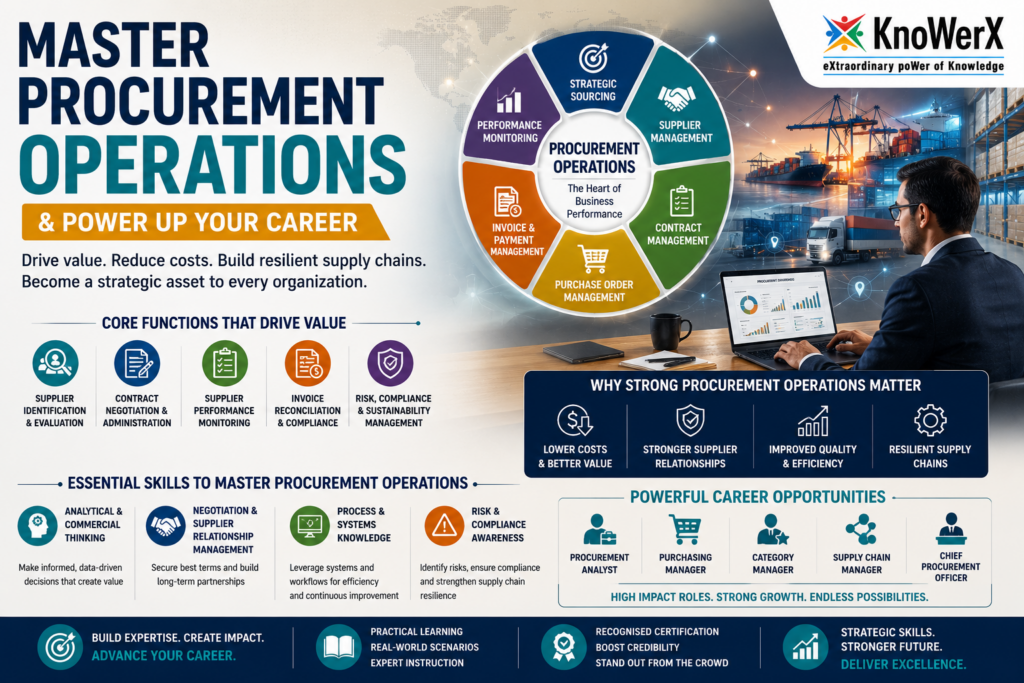
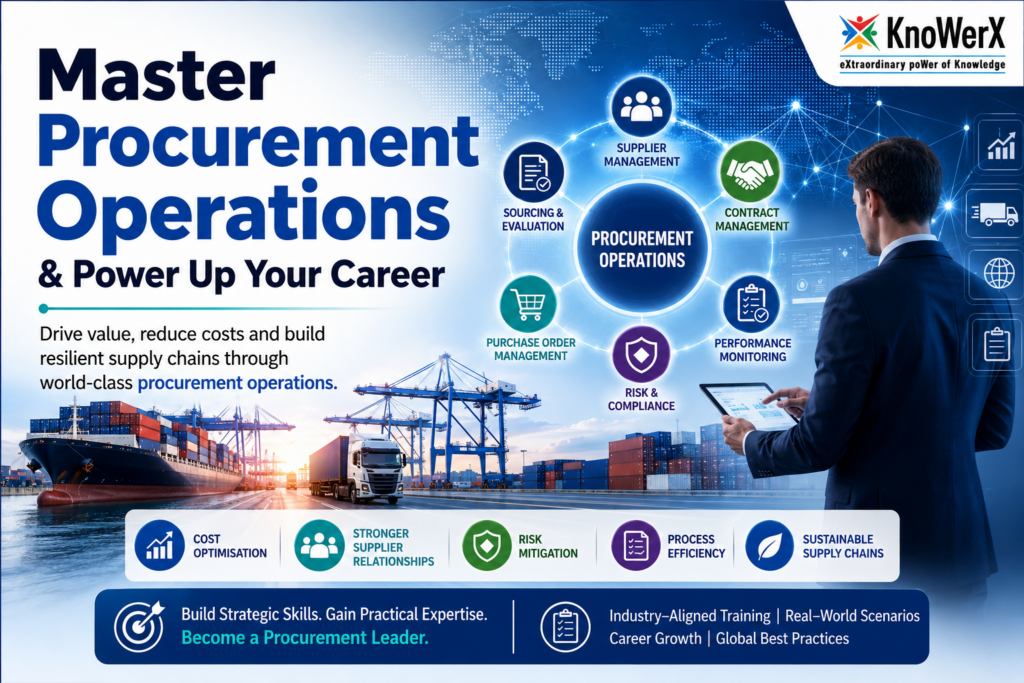
Operations Management Course for SCM In today’s volatile business landscape, supply chains are no longer linear pipelines. They are complex, adaptive networks where speed, precision, and strategic coordination define success. An operations management course tailored for supply chain management (SCM) professionals equips individuals with the structured thinking and practical tools required to manage this complexity. For professionals navigating procurement, production, logistics, and distribution, an operations management course is not just an academic upgrade. It is a strategic capability enhancer. And yes, when it comes to structured, industry-relevant learning in this domain, KnoWerX has built a strong reputation for delivering globally aligned SCM education in India. What is an Operations Management Course in SCM? An operations management course in SCM focuses on designing, managing, and improving processes that create and deliver products or services efficiently. Within the supply chain context, it connects operational decisions to broader business objectives, such as cost optimisation, service excellence, and risk mitigation. Unlike generic management programs, a specialised management course for SCM integrates planning, sourcing, manufacturing, inventory control, and distribution into one coherent framework. It teaches professionals how to align operational workflows with demand patterns, capacity constraints, and performance metrics. The emphasis is practical. Participants learn how operational inefficiencies impact the entire supply chain and how structured methodologies can improve responsiveness and profitability. Key Topics Covered in an Operations Management Course A well-designed operations management course typically covers both foundational concepts and advanced SCM applications. Core areas include: Process design and process optimisation Demand forecasting and capacity planning Inventory management strategies Production planning and control Quality management systems Lean operations and continuous improvement Supply chain integration and coordination Performance measurement and KPIs In advanced modules, learners may also explore digital transformation in operations, analytics-driven decision-making, and resilience strategies for managing disruptions. Leading providers like KnoWerX ensure that their management course content is aligned with global best practices and industry-recognised frameworks, making learning immediately applicable in real-world scenarios. Who Should Enroll in an Operations Management Course? An operations management course is ideal for professionals across multiple functional areas within SCM: Supply chain managers Operations executives Production and plant managers Procurement professionals Logistics and distribution managers Inventory planners and demand analysts It is also valuable for mid-career professionals aspiring to move into leadership roles. Since operations form the backbone of supply chain performance, mastery in this area significantly strengthens managerial credibility. Even business owners and entrepreneurs managing manufacturing or distribution networks can benefit from enrolling in an operations management course, as it provides structured frameworks for scaling efficiently. Benefits of an Operations Management Course for SCM Professionals Investing in an operations management course offers measurable advantages: Improved Decision-Making Participants learn to base operational decisions on data, process mapping, and performance metrics rather than intuition. Cost Optimisation By understanding inventory dynamics, capacity utilisation, and workflow efficiency, professionals can identify cost-saving opportunities across the supply chain. Enhanced Service Levels Better operational planning translates into reduced stockouts, shorter lead times, and improved customer satisfaction. Career Advancement An operations management course strengthens professional profiles. Organisations value certified professionals who can manage complexity with structured methodologies. Strategic Alignment Operations no longer function in isolation. A well-designed operations management course teaches alignment between operational goals and corporate strategy. Institutions like KnoWerX bridge academic theory with industry practice, ensuring that learners gain both conceptual clarity and practical exposure. How to Choose the Right Operations Management Course Selecting the right operations management course requires careful evaluation. Consider the following factors: Accreditation and Industry Recognition Choose programs aligned with globally recognised standards. This enhances credibility and career mobility. Curriculum Relevance Ensure the management course covers modern SCM challenges such as digital supply chains, demand volatility, and risk management. Faculty Expertise Experienced faculty with industry backgrounds can provide real-world insights beyond textbook theory. Practical Application Look for case studies, simulations, and applied learning modules that connect concepts to actual business scenarios. Institutional Reputation Reputed providers like KnoWerX offer structured programs designed specifically for supply chain professionals. Their focus on globally benchmarked certifications makes them a preferred choice among SCM practitioners seeking career advancement. Frequently Asked Question Ending Notes An operations management course for SCM is not merely an educational credential. It is a capability-building investment that transforms how professionals think about processes, performance, and profitability. As supply chains grow more interconnected and unpredictable, structured operational expertise becomes a strategic differentiator. Whether you are early in your career or preparing for senior leadership, enrolling in a well-designed operations management course can accelerate your professional trajectory. With established providers like KnoWerX offering industry-aligned programs, SCM professionals in India and beyond have access to world-class learning pathways designed to build operational excellence that endures. Image Reference: Freepik Disclaimer: All trademarks, logos, and brand names are the property of their respective owners. All company, product, and service names used in this website are for identification purposes only. Use of these names, trademarks, and brands does not imply endorsement.