Six Sigma Green Belt | Lead Process Improvement With Confidence | KnoWerX

Six Sigma certifications are some of the most respected credentials a professional can have in the domain of quality management and process improvement. The Green Belt is in a very interesting place in the Six Sigma belt structure advanced enough to have real professional weight but accessible enough to be undertaken by working professionals alongside their existing responsibilities. But is a Six Sigma Green Belt worth your time and effort? In this article we take a candid look at the credential, who it’s for, what it delivers and how to make the right decision for your career.
What Is a Six Sigma Green Belt and Why Is It Important?
The Six Sigma Green Belt is an intermediate-level certification within the Six Sigma methodology, positioned above the Yellow Belt and below the Black Belt. It equips professionals with a deeper understanding of the DMAIC framework — Define, Measure, Analyse, Improve, Control — along with the statistical tools and project management skills needed to lead process improvement initiatives within their organisations.
Where Yellow Belt holders primarily support improvement projects, Six Sigma Green Belt professionals are expected to lead them. This shift from supporting to leading is significant. It means Green Belt holders take ownership of identifying inefficiencies, analysing root causes, implementing solutions, and sustaining improvements over time — responsibilities that carry genuine visibility and impact within any organisation.
Who Should Pursue a Six Sigma Green Belt Certification?
The Six Sigma Green Belt is a great fit for professionals with some experience in quality or process improvement concepts who are ready to take on a more active leadership role in improvement projects. It’s especially useful for people who work in manufacturing, supply chain, healthcare, financial services and operations – anywhere that process efficiency directly impacts business performance.
Green Belt is a natural progression for candidates who are Yellow Belt and want to increase their capacity. So are professionals who find themselves regularly involved in cross-functional improvement projects and want the structured knowledge and credential to support the work they are already doing.
Note that Six Sigma Green Belts are not only quality specialists. The credential is directly applicable to the day-to-day responsibilities of operations managers, supply chain professionals, project managers and finance and HR practitioners in process-driven organisations.
Is a Six Sigma Green Belt Worth It? Key Career Benefits
Stronger Project Leadership Credentials
Earning a Six Sigma Green Belt demonstrates that you can lead structured improvement projects from problem definition through to sustained solution implementation. This capability is valued across industries and functions, making the credential transferable in a way that role-specific qualifications often are not.
Measurable Impact on Organisational Performance
Green Belt professionals are equipped to deliver quantifiable results reduced defects, lower operational costs, improved cycle times, and better customer outcomes. The ability to demonstrate measurable impact through completed projects is one of the most powerful differentiators a professional can bring to a performance review or job application.
Competitive Advantage in a Crowded Job Market
As organisations increasingly prioritise operational excellence, professionals with Six Sigma Green Belt certification stand out in hiring processes. The credential signals analytical rigour, structured thinking, and a proven commitment to continuous improvement qualities that employers across sectors actively seek.
A Clear Pathway to Black Belt
For professionals with longer-term ambitions in quality management or operational excellence leadership, the Six Sigma Green Belt is the essential stepping stone to Black Belt certification. The knowledge and project experience gained at Green Belt level directly prepares candidates for the more advanced demands of Black Belt training.
What Should You Look for in a Six Sigma Green Belt Training Programme?
The quality of your training programme is a major determinant of how well you perform in your exam and your ability to apply your Green Belt knowledge in practice. Look for courses that combine theory with practical, project-based experience. For the majority of candidates, instructor-led training, which allows an experienced practitioner to walk you through complex statistical concepts and real-world scenarios, typically produces better outcomes than self-paced options.
Make sure the programme covers the whole DMAIC framework in depth. The statistical tools that Green Belt professionals are expected to use with confidence are regression analysis, hypothesis testing, control charts. Also, think about the accreditation and global recognition of the certifying body.
Frequently Asked Questions
Final Verdict: Is a Six Sigma Green Belt the Right Investment for Your Career?
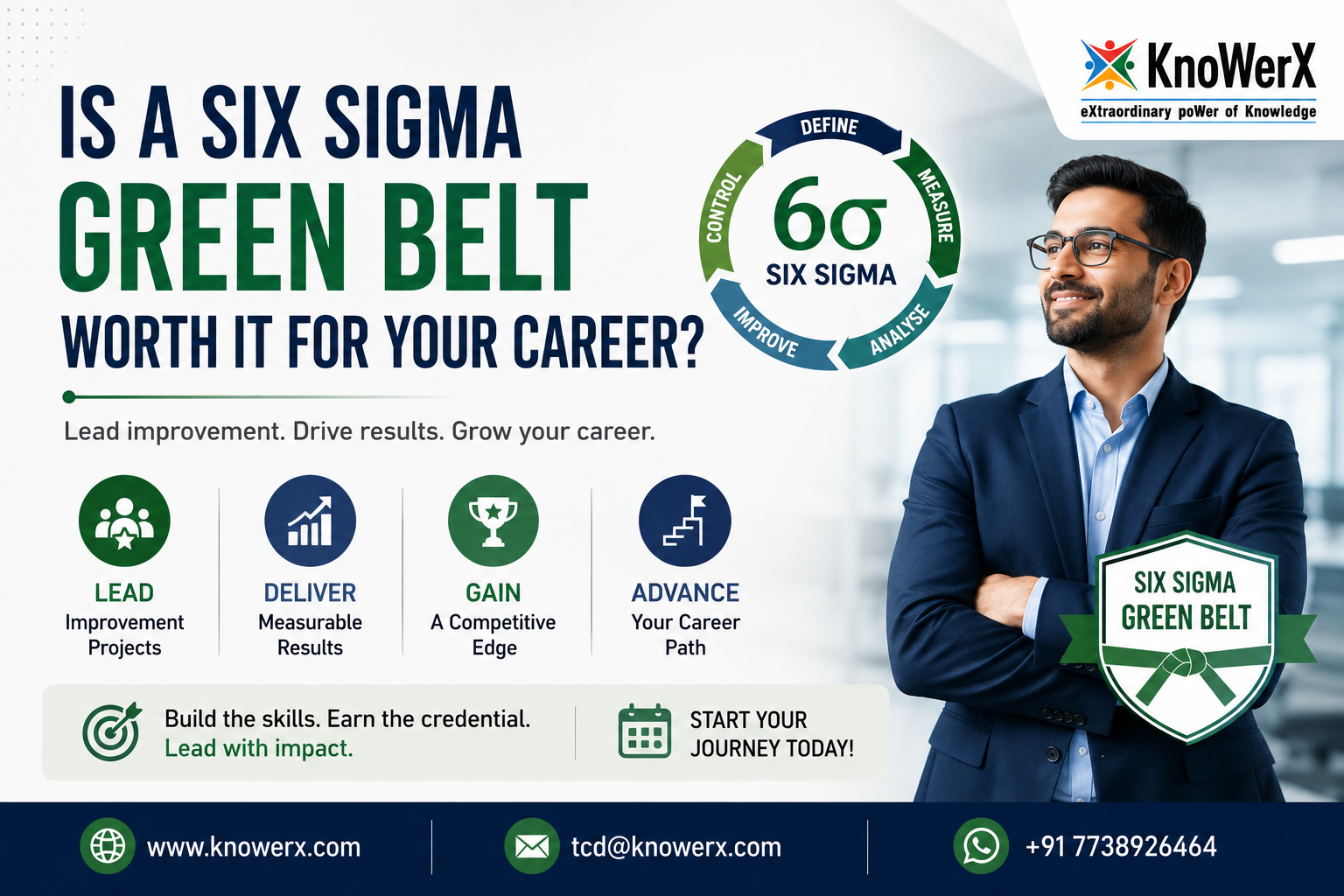
For professionals ready to move from participating in improvement projects to leading them, the Six Sigma Green Belt is absolutely worth pursuing. It builds a skill set that is immediately applicable, delivers credentials that are globally recognised, and opens doors to both senior quality roles and broader operational leadership positions.
At KnoWerX, our Six Sigma Green Belt programme is delivered by experienced instructors who bring real-world process improvement expertise into every session, giving candidates the knowledge, confidence, and practical capability to lead improvement projects and advance their careers with purpose.
Image Reference: Magnific
Disclaimer: All trademarks, logos, and brand names are the property of their respective owners. All company, product, and service names used in this website are for identification purposes only. Use of these names, trademarks, and brands does not imply endorsement.