Supply Chain Risk Management | Strategies for a Resilient Business | KnoWerX
Today’s supply chains are working in a more uncertain business environment. Supplier delays, transportation disruptions, changing customer demand, geopolitical developments, and rising costs can all affect business performance. Organisations must be aware of these risks and be prepared to react accordingly, to protect their operations and keep customers satisfied.

Supply Chain risk management is an approach that helps organisations to identify possible disruptions, evaluate their impact, and create strategies to mitigate the impact. Taking a proactive approach allows organisations to increase supply chain visibility, improve decision making and create more resilient operations.
What Is Supply Chain Risk Management?
Supply Chain Risk Management (SCRM) is the process of identifying, assessing, monitoring and mitigating risks that could interrupt the flow of materials, products, information and services along a supply chain.
These risks can be present at different stages, starting from sourcing of raw materials to manufacturing, warehousing, transportation and final delivery. For instance, relying on one supplier for a critical component can be a major problem if the supplier experiences a production delay.
A sound risk management approach allows a business to know its weaknesses, rank possible risks and make appropriate contingency plans. Instead of responding only after a disruption occurs, organisations can take preventive measures to reduce the likelihood or impact of such disruptions.
What Are the Major Types of Supply Chain Risks?
The essential thing for them to do effectively is to understand the different types of risks.
- Supplier risks: The bankruptcy of suppliers, quality problems, delays in production or dependence on a single source can interrupt the availability of materials.
- Logistics and transportation risks: Lead times and customer commitments can be impacted by port congestion, vehicle breakdowns, infrastructure issues and delivery delays.
- Demand-related risks: Sudden changes in consumer tastes or inaccurate forecasts can lead to excess inventory or shortage of products.
- Operational risks: Operational performance may be affected by equipment failures, shortages in the workforce, interruptions in production and process inefficiencies.
- Financial risks: Changes in the value of currencies, higher prices of materials and financial difficulties of suppliers can result in higher costs and impact profitability.
- External Risks: Events beyond an organisation’s direct control, such as natural disasters, changes in regulations, geopolitical developments and public health emergencies may disrupt supply chains.
Understanding these risks helps businesses decide where they need better controls, more visibility or different means of operating.
Supply Chain Risk Management Strategies for a Resilient Business
Businesses can use several strategies to improve their ability to anticipate and respond to disruptions.
- Identify & assess risks: Identify & map key suppliers, facilities, transportation routes & critical materials. Evaluate each risk for its probability and business impact. This allows teams to focus on the most important vulnerabilities.
- Multiple suppliers: Multiple suppliers (where suitable for the material and business need) can reduce the reliance on a single supplier. When selecting suppliers, we should consider quality, reliability, cost, and geographical exposure.
- Improve inventory planning: Strategic safety stock for critical items can provide a buffer against supply interruptions. However, inventory decisions should balance the cost of holding stock with the consequences of shortages.
- Develop contingency plans: Prepare response plans for scenarios such as supplier failure, transportation delays or sudden demand increases. Clearly defined responsibilities can help teams respond more quickly.
- Improving supplier relationships: Consistent communication, performance reviews and sharing information can help organisations detect emerging issues and coordinate responses with suppliers.
- Performance tracking: Monitor relevant metrics like supplier delivery performance, lead-time variability, inventory availability and forecast accuracy. Regular reviews catch warning signs before they become big problems.
The right combination of strategies depends on the organisation’s industry, supply chain structure, risk exposure and available resources.
How Technology Can Strengthen Supply Chain Risk Management
Data analytics can help with demand forecasting and assist teams in identifying unusual patterns. Decision-makers can also use scenario planning tools to compare possible responses, like changing suppliers or adjusting inventory levels.
But technology alone won’t eliminate risk. Well-defined processes, cross-department collaboration and reliable data are all equally important. The teams should select the tools that help them solve their data analytics, which can help forecast demand and alert teams about unusual patterns. Decision-makers can also use scenario planning tools to compare alternative responses such as switching suppliers or changing inventory levels. Be able to manage risk.
Professionals in procurement, logistics, operations, inventory planning and supply chain management can benefit from risk assessment and problem-solving skills. Management can benefit from developing risk assessment and problem-solving skills.
Learn how to identify supply chain vulnerabilities, assess potential impacts and prioritise mitigation actions. Knowledge of inventory planning, supplier performance, and demand forecasting is essential for professionals involved in procurement, logistics, operations, inventory planning, and supply chain management, as they may find risk management and problem-solving skills particularly useful. “Management can acquire risk assessment and problem-solving skills. and development of contingency plans.
You can build such skills through structured supply chain training. KnoWerX offers a beginning for supply chain education and professional development opportunities. Browse the programmes on offer and the courses they contain to find your career goals for your career. Technology can improve the visibility and timeliness of supply chain risk information. Digital planning systems, inventory management platforms and supplier monitoring tools can help businesses track materials, evaluate performance and identify potential disruptions.
Frequently Asked Questions
What is Supply Chain Risk Management (SCRM)?
Supply Chain Risk Management (SCRM) is the process of identifying, assessing, monitoring and mitigating risks that could disrupt the flow of materials, products, information and services across a supply chain.
What are the major types of supply chain risks?
The major types of supply chain risks include supplier risks, logistics and transportation risks, demand-related risks, operational risks, financial risks and external risks such as natural disasters, regulatory changes and geopolitical events.
Why is Supply Chain Risk Management important?
Supply Chain Risk Management helps organisations anticipate potential disruptions, protect business operations, reduce unexpected costs, improve customer service and build more resilient supply chains.
Ending Notes
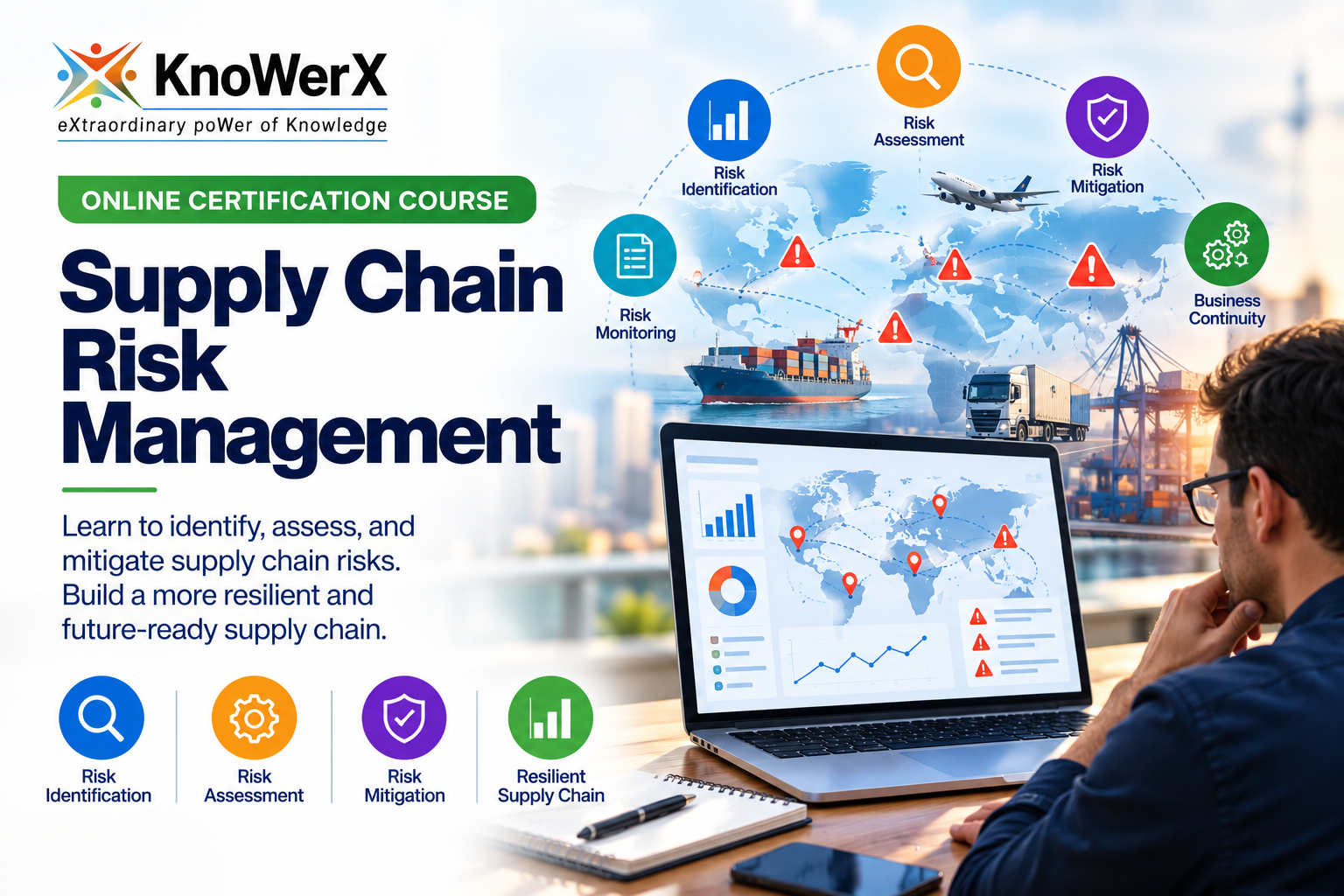
Supply Chain Risk Management is essential for any organisation that wants to protect its operations and manage uncertainty effectively. Businesses can reduce their exposure to disruption by conducting vulnerability assessments, diversifying their supply sources where suitable, improving inventory planning, and effectively using technology.
Expanding risk management knowledge can support supply chain professionals in making better decisions and allow for more resilient operations. By taking a proactive stance, organisations can be ready for challenges, balancing cost, efficiency and customer service.
Image Reference: Magnific
Disclaimer: All trademarks, logos, and brand names are the property of their respective owners. All company, product, and service names used in this website are for identification purposes only. Use of these names, trademarks, and brands does not imply endorsement.