
Lean Manufacturing Fundamentals for Supply Chain Management
Lean Manufacturing Fundamentals for Supply Chain Management Lean manufacturing is no longer a shop-floor tactic. It is a strategic discipline that shapes how modern supply chains think, plan, and execute. In a business environment defined by volatility, cost pressure, and rising customer expectations, manufacturing provides a structured way to eliminate waste, improve flow, and align operations with real demand. For supply chain professionals, understanding manufacturing fundamentals is not optional. It is foundational. At KnoWerX, where supply chain capability building is at the core of professional development, manufacturing is treated not as a theory but as an applied management philosophy that transforms performance across the value chain. What Is Lean Manufacturing? Lean manufacturing is a systematic approach focused on maximising customer value while minimising waste. Originating from the Toyota Production System, manufacturing challenges organisations to do more with less less inventory, less waiting time, less movement, less overproduction without compromising quality or service. The central idea of manufacturing is simple: remove activities that do not create value from the customer’s perspective. In supply chain management, this means synchronising procurement, production, warehousing, and distribution to ensure smooth material and information flow. Manufacturing shifts the focus from isolated efficiency metrics to end-to-end value creation. The Five Core Principles of Lean Manufacturing Understanding manufacturing begins with its five guiding principles: Define Value Value is defined by the customer, not the organisation. Manufacturing requires supply chain leaders to identify what truly matters to the end user speed, reliability, cost, quality and align processes accordingly. Map the Value Stream Value stream mapping visualises every step required to deliver a product or service. In supply chain contexts, this includes suppliers, transport, production, storage, and delivery. Manufacturing uses this mapping to expose bottlenecks and non-value-added activities. Create Flow Interruptions in flow create waste. Manufacturing emphasises continuous movement of materials and information. Smooth flow reduces lead time, lowers inventory, and improves responsiveness. Establish Pull Instead of producing based on forecasts alone, manufacturing promotes pull systems where production is triggered by actual customer demand. This reduces excess inventory and prevents overproduction. Pursue Perfection Lean manufacturing is not a one-time initiative. It is a culture of continuous improvement. Small, incremental changes compound into significant operational gains over time. Lean Manufacturing in Supply Chain Management Lean manufacturing directly influences supply chain performance in multiple ways: Inventory Reduction Excess inventory hides problems. Manufacturing exposes inefficiencies by reducing buffers and encouraging tighter coordination between supply and demand. Lead Time Compression By improving flow and eliminating waiting time, manufacturing shortens order-to-delivery cycles. Faster response enhances customer satisfaction and competitive positioning. Cost Optimisation Waste reduction translates into lower operational costs. Manufacturing targets transportation waste, motion waste, defects, overprocessing, and unnecessary inventory across the supply chain. Improved Collaboration Lean manufacturing encourages closer collaboration with suppliers and distributors. Transparent communication and shared performance metrics support alignment across the network. Common Types of Waste in Lean Manufacturing Lean manufacturing identifies seven classical wastes, often remembered as TIMWOOD: Transportation Inventory Motion Waiting Overproduction Overprocessing Defects In supply chain environments, these wastes manifest as delayed shipments, surplus stock, redundant approvals, inefficient warehouse layouts, and quality failures. Recognising these wastes is the first step. Eliminating them systematically is where manufacturing creates measurable impact. Lean Manufacturing and Professional Capability Implementing manufacturing requires more than tools. It requires mindset transformation. Supply chain professionals must understand root cause analysis, process standardisation, performance measurement, and cross-functional coordination. Without structured learning and practical exposure, manufacturing initiatives often lose momentum. This is where structured training becomes critical. At KnoWerX, lean manufacturing fundamentals are integrated into broader supply chain education frameworks. The focus is not just on definitions but on application how manufacturing connects with demand planning, inventory strategy, production scheduling, and overall supply chain integration. Professionals who build expertise in lean manufacturing gain clarity in decision-making. They learn to question assumptions, challenge inefficiencies, and design systems that are responsive rather than reactive. Lean Manufacturing as a Strategic Imperative In uncertain markets, complexity increases. The instinctive response is often to add buffers more inventory, more approvals, more safety stock. Manufacturing takes the opposite view. It argues that simplicity, visibility, and disciplined execution create resilience. When lean manufacturing principles are embedded in supply chain management: Variability becomes manageable Costs become transparent Service levels become predictable Continuous improvement becomes cultural Lean manufacturing is not about cost cutting alone. It is about building supply chains that are agile, disciplined, and aligned with customer value. Frequently Asked Questions Ending Notes Lean manufacturing remains one of the most powerful operational philosophies available to supply chain leaders. Its principles are straightforward, but its execution demands commitment and capability. For professionals seeking structured knowledge and practical alignment, organisations like KnoWerX play a vital role in translating manufacturing theory into actionable expertise. In today’s dynamic environment, mastering lean manufacturing fundamentals is not just an operational upgrade. It is a strategic advantage for supply chain management. Image Reference: Freepik Disclaimer: All trademarks, logos, and brand names are the property of their respective owners. All company, product, and service names used in this website are for identification purposes only. Use of these names, trademarks, and brands does not imply endorsement.
Lean Manufacturing Principles in Supply Chain Management
Lean Manufacturing Principles in Supply Chain Management In an environment where customer expectations shift faster than inventory cycles, efficiency alone is no longer enough. Retail organisations today must be fast, flexible, and precise without incurring excess costs or complexity. This is where Lean Manufacturing principles, originally developed for production floors, have become highly relevant to modern Retail Supply Chain management. Lean does not advocate for shortcuts. It is about designing systems that deliver value with minimal waste, maximum flow, and disciplined execution. When applied thoughtfully, Lean transforms the Retail Supply Chain from a cost centre into a strategic capability. Lean Thinking and Its Relevance to the Retail Supply Chain Lean thinking begins with a simple question: What truly creates value for the customer? In a Retail Supply Chain, value is defined by product availability, speed, consistency, and cost efficiency. Anything that does not directly support these outcomes becomes a candidate for elimination or redesign. Retail supply chains are uniquely complex. They operate across multiple SKUs, volatile demand patterns, seasonal spikes, and omnichannel fulfilment models. Lean thinking helps retailers move away from reactive firefighting and toward stable, repeatable processes. Instead of buffering uncertainty with excess inventory, Lean focuses on improving flow, responsiveness, and decision accuracy across the Retail Supply Chain. This shift is particularly relevant in an era where margins are thin and customer loyalty is fragile. Key Lean Principles Applied in Retail Supply Chain Several Lean principles translate directly into Retail Supply Chain operations. The first is value stream mapping, which provides end-to-end visibility into how products and information flow from suppliers to stores or end customers. Value stream mapping reveals delays, redundancies, and bottlenecks that frequently hide within functional silos. Another core principle is pull-based replenishment. Rather than pushing inventory based on forecasts alone, Lean Retail Supply Chain models respond to real demand signals. This reduces overstocks, markdowns, and obsolescence while improving availability where it matters most. Standardised processes are equally critical. Consistency in planning, replenishment, and execution reduces variability, improves predictability, and enables scalable growth. Over time, these principles create a Retail Supply Chain that is stable yet adaptable. Waste Reduction in Retail Supply Chain Operations Waste in a Retail Supply Chain extends far beyond excess inventory. It includes unnecessary transportation, over-processing, waiting time, inaccurate data, and poor coordination between teams. Lean identifies these inefficiencies systematically and removes them at the root. For example, long approval cycles delay replenishment decisions. Fragmented systems create duplicate data entry and errors. Poor demand signals lead to frequent expediting. Each of these issues adds cost without adding customer value. By applying Lean practices, retailers streamline workflows, reduce handoffs, and improve information accuracy. The result is a Retail Supply Chain that consumes fewer resources while delivering better outcomes. Role of Collaboration and Visibility in a Lean Retail Supply Chain Lean cannot function in isolation. A truly Lean Supply Chain depends on collaboration and transparency across internal teams and external partners. Suppliers, logistics providers, and retail operations must operate with shared objectives and aligned metrics. Visibility plays a central role. Having real-time information about demand, inventory, and capacity makes it easier and faster to make decisions. When all stakeholders work from a single version of the truth, the Retail Supply Chain becomes more resilient and less reactive. Platforms and frameworks developed within ecosystems such as KnoWerX increasingly support this integration by combining process discipline with analytical insight. This allows Lean principles to scale beyond individual functions and into the broader supply network. Business Benefits of Lean Practices in Retail Supply Chain The impact of Lean on Supply Chain performance is measurable and sustained. Retailers experience lower inventory holding costs, improved service levels, and faster response to market changes. Removing noise from the system improves forecast accuracy, while operational teams spend less time managing exceptions. From a strategic perspective, Lean enhances agility. Retailers can introduce new products faster, adapt to demand shifts, and support omnichannel models without proportional increases in complexity. Over time, the Retail Supply Chain evolves from a constraint into a competitive advantage. Lean also supports sustainability goals by reducing waste, energy consumption, and unnecessary movement across the network. Challenges and Best Practices for Implementing Supply Chain Analytics While Lean principles are powerful, implementation is not without challenges. Cultural resistance, fragmented data, and over-reliance on legacy processes often slow progress. Many organisations attempt to layer analytics over broken workflows, limiting their impact. Best-in-class retailers take a different approach. They stabilise processes first, define clear performance metrics, and then deploy analytics to support decision-making. Supply chain analytics become an enabler of Lean, not a substitute for it. Successful Retail Supply Chain transformations also invest in capability building. Teams are trained to interpret data, identify root causes, and continuously improve processes. Governance structures ensure that Lean practices are sustained rather than treated as one-time initiatives. Frequently Asked Questions Ending Notes Lean Manufacturing principles, when applied with discipline and context, offer a powerful blueprint for Supply Chain excellence. They replace complexity with clarity, reaction with flow, and cost with value. As retail environments grow more volatile, Lean provides the structural stability required to scale intelligently. Supported by platforms, analytics, and integration frameworks such as KnoWerX, organisations can build Retail Supply Chain systems that are efficient, resilient, and strategically aligned ready to compete in a world where execution matters as much as strategy. Image Reference: Freepik Disclaimer: All trademarks, logos, and brand names are the property of their respective owners. All company, product, and service names used in this website are for identification purposes only. Use of these names, trademarks, and brands does not imply endorsement.
Demand Driven Institute Certification: Complete Guide
Demand Driven Institute Certification: Complete Guide for Supply Chain Professionals Supply chains today operate in an environment defined by volatility, compressed response windows, and persistent demand uncertainty. This reality increasingly misaligns traditional planning approaches based on forecasts, averages, and static assumptions. This is where Demand Driven Institute Certification (DDI) emerges as a modern alternative, designed specifically for supply chain professionals navigating complexity rather than stability. The Demand Driven Institute certification framework shifts planning away from prediction and toward responsiveness. Instead of asking “What do we think demand will be?”, it focuses on “How fast and reliably can we respond when demand changes?” For professionals seeking practical relevance over theoretical elegance, demand driven institute certification offers a fundamentally different way of thinking about flow, inventory, and decision-making. What is Demand Driven Institute (DDI) Certification? The Demand Driven Institute (DDI) is the global authority behind Demand Driven methods, including Demand Driven Material Requirements Planning (DDMRP), Demand Driven Sales and Operations Planning (DDS&OP), and Demand Driven Operating Models. Its certification programs are designed to validate not just knowledge, but applied understanding of demand-driven principles. What sets demand driven institute certification apart from traditional planning certifications is its rejection of forecast dependency as the primary control mechanism. Conventional models assume relative demand stability and rely heavily on statistical forecasting accuracy. DDI certifications, by contrast, are built for environments where variability is the norm, not the exception. Rather than optimising plans in advance, demand driven institute certification teaches professionals how to design systems that absorb variability, protect flow, and trigger replenishment based on real demand signals. This makes the approach especially relevant for multi-echelon, global, and high-mix supply chains. Why DDI Certifications Are Different from Traditional Planning Methods Traditional supply chain planning is rooted in efficiency optimisation minimising cost, maximising utilisation, and reducing unit-level variance. While these objectives remain important, they often come at the expense of agility and resilience. Demand driven institute certification introduces a different priority order: Flow over efficiency Responsiveness over forecast accuracy System stability over local optimisation Instead of pushing inventory based on projected demand, DDI methodologies strategically position inventory buffers to decouple variability. These buffers act as shock absorbers, allowing supply chains to respond dynamically without constant replanning. For supply chain professionals, this represents a mental shift as much as a technical one. The certification challenges deeply embedded assumptions about safety stock, service levels, and planning frequency replacing them with clear, visual, and execution-focused controls. Key Concepts Covered in DDI Certifications Demand driven institute certification programs cover a structured set of concepts that build from foundational thinking to advanced application. At the core is Demand Driven MRP (DDMRP), which integrates strategic decoupling points, dynamic buffer profiles, and demand-driven planning logic. Professionals learn how to design buffer positions, size them based on actual variability, and manage them through visual signals rather than static parameters. Another critical area is flow-based metrics. Instead of relying solely on forecast accuracy or utilisation, DDI certifications introduce metrics such as flow efficiency, buffer status, and operational stability. These metrics provide earlier and more actionable signals of system health. Advanced certifications extend into Demand Driven S&OP (DDS&OP), aligning tactical and strategic decisions with real demand patterns. This ensures that financial, operational, and supply decisions are synchronised without relying on unrealistic forecast assumptions. Across all levels, demand driven institute certification emphasises practical application, scenario thinking, and systemic impact skills increasingly valued in modern supply chain leadership roles. Benefits of DDI Certification for Supply Chain Professionals For individual professionals, demand driven institute certification delivers both capability and credibility. It signals proficiency in a globally recognised methodology that is actively adopted across manufacturing, distribution, and retail environments. Practically, certified professionals gain the ability to: Reduce inventory without sacrificing service levels Improve responsiveness to demand variability Simplify planning and execution processes Communicate supply chain priorities more clearly to leadership From a career perspective, demand driven institute certification differentiates professionals who can manage complexity rather than merely optimise spreadsheets. As organisations move toward resilience strategies, demand-driven expertise increasingly aligns with leadership and transformation roles. Within platforms such as KnoWerX, demand driven thinking is positioned not as a standalone methodology, but as part of a broader systems-based approach to supply chain capability building connecting planning, execution, and strategic decision-making into a cohesive whole. Who Should Pursue Demand Driven Institute Certification? Demand driven institute certification is particularly relevant for supply chain professionals operating in volatile, high-variability environments. This includes planners, supply chain managers, operations leaders, and transformation professionals responsible for improving performance under uncertainty. It is also valuable for senior leaders who need a clear, structured framework to evaluate trade-offs between inventory, service, and responsiveness without relying solely on forecast-driven narratives. Consultants, solution architects, and educators benefit as well, as the certification provides a common language and reference model for designing and explaining modern supply chain systems. Importantly, demand driven institute certification is not limited to a specific industry or system landscape. Its principles apply across ERP platforms, organisational structures, and geographic footprints, making it a versatile and future-ready qualification. Frequently Asked Questions Ending Notes As supply chains continue to face structural uncertainty rather than temporary disruption, the relevance of traditional planning logic will continue to decline. Demand driven institute certification (DDI) represents a shift toward systems that are designed for reality, not idealised assumptions. For supply chain professionals seeking to remain relevant, credible, and effective, demand driven institute certification offers more than a credential. It provides a way of thinking one that prioritises flow, visibility, and adaptability in an increasingly complex world. When embedded within broader learning ecosystems like KnoWerX – An Institute of Supply Chain Mangement, demand-driven principles become part of a sustained capability journey, enabling professionals and organisations to move beyond firefighting toward structured, resilient performance. Image Reference: Freepik Disclaimer: All trademarks, logos, and brand names are the property of their respective owners. All company, product, and service names used in this website are for identification purposes only. Use of these names, trademarks, and brands does not imply endorsement.
One of the Fundamentals Is Classification of Inventory

One of the Fundamentals Is Classification of inventory. In supply chain management, complexity rarely comes from volume alone. It comes from variety. Different materials move at different speeds, serve different purposes, carry different risks, and consume different amounts of capital. Treating all inventories the same may seem simple, but it is one of the most expensive mistakes organisations make. This is why one of the fundamentals of effective inventory management is Classification of inventory. Modern supply chains are no longer linear or predictable. Demand volatility, shorter product lifecycles, global sourcing, and rising service expectations have made blanket inventory policies obsolete. Classification of inventory provides the structural intelligence required to manage stock deliberately rather than reactively. It enables organisations to align control mechanisms with their business priorities instead of relying on averages and assumptions. What Classification of Inventory Really Means At its core, Classification of inventory is the systematic grouping of stock items based on defined criteria such as value, usage rate, criticality, demand variability, or sourcing risk. The objective is not administrative labelling, but differentiated control. By determining which items matter most, organisations can allocate managerial attention, capital, and technology more effectively. We widely use classic models like ABC, VED, FSN, XYZ, and HML because they address different dimensions of inventory behaviour. High-value items require tighter financial control, fast-moving items demand execution excellence, and critical items require risk buffers. Each classification highlights a different truth about the inventory portfolio. Used together, they create a multi-dimensional view that supports better decisions. Rather than asking “How much inventory do we have?”, classification encourages a more useful question: “Which inventory deserves what level of control, and why?” How Classification Enables Better Inventory Control Inventory control fails most often because attention is spread evenly across unequal items. Classification of inventory corrects this imbalance. When stocks are categorised intelligently, control policies become precise instead of generic. For high-value or high-impact items, organisations can implement tighter review cycles, a lower tolerance for variance, and more robust forecasting methods. For low-value or stable items, simpler replenishment rules reduce administrative effort without increasing risk. This targeted control reduces noise in the system and allows planners to focus on what truly affects performance. Classification also improves visibility. By structuring dashboards and reports based on inventory classes instead of raw stock lists, management conversations transition from reactive to proactive. Exceptions are clearer, root causes are easier to identify, and corrective actions become faster and more effective. From a governance perspective, classification creates accountability. Teams can own different inventory classes, measuring performance against relevant metrics instead of uniform KPIs that distort behaviour. Impact on Cost Reduction and Working Capital Few levers in supply chain management influence working capital as directly as inventory. However, indiscriminate stock reduction often damages service levels or increases risk. Classification of inventory allows cost optimisation without blunt-force cuts. By identifying which items consume the most capital, organisations can focus their reduction efforts where they matter financially. Slow-moving, high-value stock often represents trapped cash rather than operational necessity. Classification brings this visibility to the surface. At the same time, carrying cost reductions can be achieved by aligning safety stock policies with demand variability and criticality. Not every item needs the same buffer. Some need protection; others need discipline. Classification enables this distinction. Procurement costs also benefit. Clear inventory classes support differentiated sourcing strategies, supplier contracts, and order quantities. Strategic items can justify long-term partnerships and risk mitigation investments, while non-critical items can be managed for efficiency and price. The cumulative effect is leaner inventory profiles, healthier cash flow, and reduced cost leakage across the supply chain. Service Levels and Customer Experience Service failures usually occur for reasons other than generally low inventory. They occur because the wrong inventory is unavailable at the wrong time. Classification of inventory directly addresses this mismatch. By identifying items that are critical for customer service, production continuity, or regulatory compliance, organisations can protect availability where it matters most. Planning, replenishment, and distribution decisions can prioritise these items, ensuring the maintenance of service levels even during disruptions. Conversely, over-investing in low-impact items often creates false comfort while masking real risks. Classification replaces this illusion with clarity. It aligns service level targets with business importance, not item count. In customer-facing supply chains, this approach translates into higher fill rates, fewer backorders, and more predictable delivery performance without unnecessary stock inflation. Why One-Size-Fits-All Inventory Management No Longer Works Traditional inventory systems were built for stability. Modern supply chains operate in constant motion. Demand patterns shift faster, product portfolios expand, and disruptions are no longer exceptions. One-size-fits-all inventory policies in this environment are structurally flawed. Classification of inventory introduces adaptability into the system. It acknowledges that different items behave differently and should be managed accordingly. This is not complexity for its own sake; it is complexity where it adds value. Digital supply chains amplify this need. Advanced planning systems, analytics, and automation perform best when inventory is segmented intelligently. Classification provides the logic that these systems execute at scale. Organisations utilising KnoWerX frequently find that classification serves as the crucial connection between the availability of data and the quality of decisions. Without it, even sophisticated tools produce average outcomes. With it, inventory management becomes intentional, strategic, and resilient. Frequently Asked Questions Ending Notes Inventory is not just stock on hand; it is a reflection of business priorities, risk appetite, and operational maturity. The classification of inventory transforms it from a passive asset into an actively managed capability. By enabling better control, reducing cost and working capital pressure, and protecting service levels, classification lays the foundation for modern inventory excellence. In a world where supply chains must balance efficiency with resilience, this fundamental is no longer optional. It is essential. Image Reference: Freepik Disclaimer: All trademarks, logos, and brand names are the property of their respective owners. All company, product, and service names used in this website are for identification purposes only. Use of these names, trademarks, and brands does not imply endorsement.
Supply Chain Management Integration: Concepts, Models, and Applications
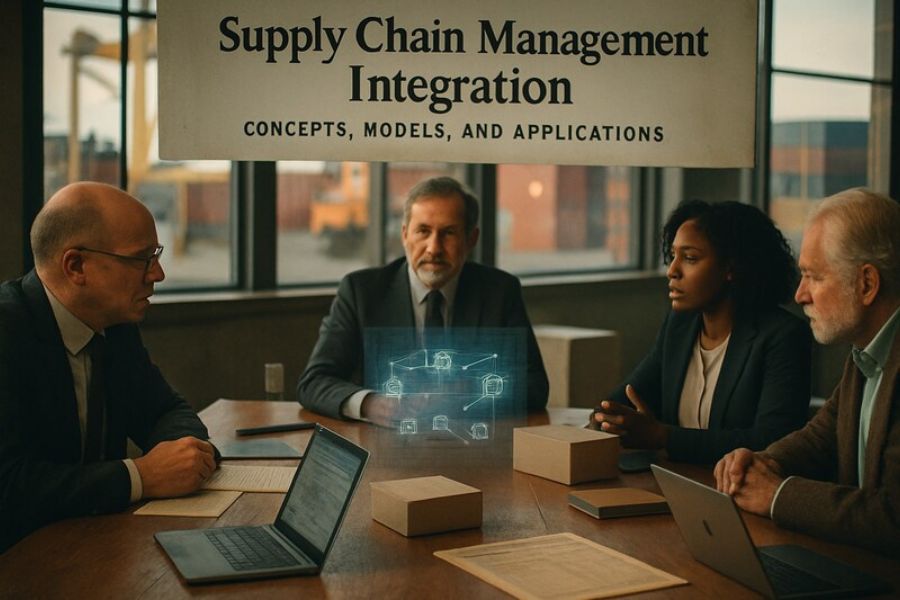
Supply Chain Management Integration: Concepts, Models, and Applications As supply chains become more complex and interconnected, isolated optimisation efforts will no longer deliver sustainable results. Functional silos, fragmented data, and misaligned objectives often prevent organisations from achieving scaling benefits. This is where supply chain management integration becomes a strategic imperative rather than an operational option. Integrated supply chains enable seamless coordination across functions, partners, and systems, driving efficiency, resilience, and competitive advantage. Core Concepts of Supply Chain Integration At its foundation, supply chain management integration refers to the alignment and coordination of processes, information, and decision-making across the entire supply chain. This integration operates on multiple levels internal, external, and strategic. Internal integration focuses on synchronising activities across procurement, production, warehousing, logistics, and sales. When internal functions operate with shared goals and real-time information, organisations reduce delays, duplication, and conflicting priorities. External integration extends this alignment to suppliers, logistics partners, and customers. Information sharing, collaborative planning, and joint performance metrics enable smoother material and information flows. Strategic integration goes a step further by aligning supply chain objectives with overall business strategy, ensuring that operational decisions support long-term growth and competitiveness. Together, these concepts position supply chain management integration as a holistic capability that connects people, processes, and performance. Key Supply Chain Integration Models Several established models support effective supply chain management integration, each of which addresses different organisational contexts and maturity levels. One widely adopted approach is process integration, which aligns core processes such as demand planning, order fulfilment, and replenishment across functions and partners. Models for integrating information focus on how visible and accurate data is. Shared forecasts, inventory data, and performance dashboards ensure that decisions are based on a single version of the truth. This reduces uncertainty and improves coordination across the supply chain. Another important model is relationship-based integration. This approach emphasises trust, collaboration, and long-term partnerships rather than transactional interactions. Clear governance structures, joint planning forums, and aligned incentives form the backbone of this model. Network integration models address multi-tier supply chains, enabling coordination beyond immediate suppliers and customers. These models are increasingly relevant in global supply networks where risks and dependencies extend across multiple layers. By selecting and combining suitable models, organisations can tailor supply chain management integration to their operational realities. Technology Enablers of SCM Integration Technology plays a critical role in enabling supply chain management integration at scale. Manual coordination and disconnection systems are inadequate for environments characterised by speed and volatility. Digital platforms provide the visibility and connectivity required for integrated decision-making. Enterprise Resource Planning (ERP) systems form the backbone of internal integration by linking functions through shared data and workflows. Advanced planning systems support synchro nised demand and supply planning, while transportation and warehouse management systems enable execution-level coordination. Data analytics and dashboards convert raw information into actionable insights, supporting faster and more informed decisions. Cloud-based platforms facilitate collaboration with external partners, enabling real-time data sharing and joint planning. Emerging technologies, such as artificial intelligence and automation, further enhance supply chain management integration by improving forecast accuracy, identifying risks early, and optimising complex tradeoffs across the network. Real-World Uses and Effects on Business The practical impact of effective supply chain management integration is visible across multiple dimensions of business performance. Integrated supply chains experience fewer disruptions, lower operating costs, and improved service levels. Decision-making becomes faster and more consistent, reducing reliance on reactive firefighting. In manufacturing, integration aligns production schedules with real demand, reducing inventory imbalances and capacity bottlenecks. In distribution networks, it improves order fulfilment reliability and transportation efficiency. For global supply chains, integration enhances risk visibility and enables quicker response to disruptions. From a strategic perspective, supply chain management integration supports scalability and innovation. Integrated partners collaborate on product development, sustainability initiatives, and continuous improvement efforts. This creates a supply chain that not only supports the business but actively contributes to its competitive positioning. Frequently Asked Questions Ending Notes In today’s interconnected business environment, excellence cannot be achieved through isolated optimisation. Supply chain management integration provides the structural alignment required to synchronise processes, systems, and stakeholders across the value chain. By understanding key integration concepts, applying appropriate models, and leveraging enabling technologies, organisations can transform fragmented operations into coherent, high-performing networks. The result is a supply chain that is more efficient, resilient, and strategically aligned capable of delivering sustained value in an increasingly complex world through effective supply chain management integration. Image Reference: Freepik Disclaimer: All trademarks, logos, and brand names are the property of their respective owners. All company, product, and service names used in this website are for identification purposes only. Use of these names, trademarks, and brands does not imply endorsement.
SCM Professional Certificate for Your High-Profile Future

SCM Professional Certificate for Your High-Profile Future Supply chains have moved from the background to the boardroom. In an era shaped by disruptions, digitalisation, and rising customer expectations, organisations increasingly rely on skilled experts who can design, manage, and optimise complex networks. This shift has elevated the role of the scm professional from an operational executor to a strategic leader. For professionals looking to stand out, formal certification has become a powerful differentiator. An SCM professional certificate is no longer just an academic credential it is a signal of credibility, capability, and long-term career intent. Why Supply Chain Professionals Are in High Demand Global supply chains are under constant pressure. Volatile demand, regulatory changes, sustainability goals, and geopolitical uncertainty have made supply chain decision-making more complex than ever. As a result, companies actively seek an scm professional who understands end-to-end planning, risk management, and data-driven optimisation. The demand spans industries manufacturing, retail, e-commerce, healthcare, and logistics making supply chain expertise highly transferable. At KnoWerX, this growing demand is visible across organisations that are investing in skilled professionals to strengthen resilience, reduce costs, and improve service performance. How Professional SCM Certifications Elevate Your Career Profile Experience is valuable, but certification adds structure and global relevance to it. A recognised SCM credential validates that a professional understands industry best practices, frameworks, and standards. For an scm professional, certification helps bridge the gap between practical exposure and strategic capability. It demonstrates commitment to continuous learning and positions the individual as someone ready for higher responsibility. Certified professionals are often trusted with cross-functional roles, transformation initiatives, and leadership tracks because their knowledge is standardised and benchmarked globally. Skills That Define a “High-Profile” SCM Professional A high-profile scm professional is defined by more than technical know-how. Employers look for a blend of strategic, analytical, and leadership skills. Key capabilities include demand and supply planning, inventory optimisation, supplier collaboration, and risk assessment. Equally important are communication skills, stakeholder alignment, and the ability to translate data into business decisions. Certifications help formalise these skills, giving structure to what would otherwise be fragmented learning. KnoWerX focuses strongly on building this balanced skill show technical depth supported by real-world applicability. Career Growth, Salary impacts, & Leadership Opportunities Certification has a measurable impact on career progression. Globally, certified supply chain professionals often experience faster promotions, broader role scope, and improved compensation. For an scm professional aiming for leadership roles, certification strengthens credibility with senior management. It signals a willingness to contribute beyond day-to-day operations and engage in strategic discussions around growth, cost optimisation, and resilience. Many leadership roles in planning, procurement, and supply chain transformation now explicitly prefer or require certified professionals, making certification a long-term career investment. Global Certifications That Employers Trust Not all certifications carry equal weight. Employers consistently value globally recognised credentials that follow structured curricula and rigorous assessment standards. Programs such as CPIM, CSCP, CLTD, and CTSC are trusted because they focus on real-world application and globally accepted supply chain frameworks. For an scm professional, these certifications provide international credibility and career mobility. KnoWerX works closely with such globally respected certification programs, ensuring professionals receive learning that is relevant, practical, and aligned with industry expectations. Choosing the Right Certification Partner for Long-Term Success Selecting the right certification partner is as important as choosing the certification itself. A strong partner offers expert guidance, structured learning paths, and ongoing professional support. At KnoWerX, certification is positioned as part of a long-term career journey, not a one-time course. KnoWerX supports professionals by providing clear guidance on which certification aligns with their experience level, career goals, and industry focus. This approach ensures that every scm professional invests time and effort in a credential that delivers real career value. Turning Your Network into Rewards with KnoWerX Beyond certification, KnoWerX has introduced a unique way for professionals to create value for themselves and their networks. The KnoWerX Connect Rewards Program allows individuals to earn rewards by referring others to trusted SCM certification programs. For every successful referral to ASCM certification programs such as CPIM, CSCP, CLTD, or CTSC, participants can earn ₹5,000. There are no limits and no complexity just refer, enroll, and earn, while helping others grow as scm professionals. Those interested can register through the KnoWerX referral form and explore the program details through the official KnoWerX newsletter. It is a practical way to combine professional networking with tangible rewards. Frequently Asked Questions Ending Notes The future belongs to professionals who can think strategically, act decisively, and adapt continuously. For an scm professional, certification is a critical step toward building a high-profile, future-ready career. By choosing globally trusted certifications and the right learning partner, professionals can unlock leadership opportunities, accelerate career growth, and strengthen their position in an increasingly competitive market. As KnoWerX continues to support talent development across supply chains, certification remains one of the most powerful tools for long-term success. Image Reference: Freepik Disclaimer: All trademarks, logos, and brand names are the property of their respective owners. All company, product, and service names used in this website are for identification purposes only. Use of these names, trademarks, and brands does not imply endorsement.
Inventory Control Strategies for Operational Efficiency

Inventory Control Strategies for Operational Efficiency Operational efficiency improves gradually, not dramatically. It is built through disciplined control of everyday processes, especially those that silently consume working capital and management attention. Inventory is one such area. When poorly managed, it locks cash, creates waste, and disrupts service levels. When managed well, it becomes a strategic asset. This is why Inventory Control sits at the core of operational efficiency across industries. Organisations that treat inventory as a dynamic system rather than a static stock position consistently outperform those that rely on intuition or outdated practices. Importance of Inventory Control in Operational Efficiency At its core, Inventory Control is about balance having the right material, in the right quantity, at the right time. Excess inventory ties up capital, increases storage and handling costs, and raises the risk of obsolescence. Insufficient inventory, on the other hand, leads to stock-outs, production delays, and customer dissatisfaction. Operational efficiency depends on how well this balance is maintained. Effective Inventory Control improves cash flow, stabilises operations, and enables predictable planning. It also strengthens coordination between procurement, production, warehousing, and distribution, reducing firefighting and reactive decision-making. In complex supply chains, even small lapses in inventory discipline can ripple across the entire operation. This makes structured Inventory Control a foundational capability rather than a tactical function. Key Inventory Control Strategies and Techniques Successful Inventory Control relies on a combination of proven strategies and consistent execution. One of the most widely used approaches is inventory classification, such as ABC analysis, which helps organisations focus attention on high-impact items rather than treating all stock equally. Reorder point planning and safety stock optimisation are equally critical. These techniques ensure supply continuity by minimising excess buffers. Cycle counting replaces disruptive annual stock takes with continuous accuracy checks, improving data reliability and accountability. Another essential strategy is demand alignment. By linking inventory planning with actual consumption patterns, organisations can reduce variability and improve forecast accuracy. Lean principles, including waste elimination and flow optimisation, further strengthen Inventory Control by reducing unnecessary movement and holding costs. When used together, these techniques transform inventory from a passive cost centre into an actively managed performance lever. Technology and Data-Driven Inventory Management Modern Inventory Control is increasingly powered by technology and data. Manual tracking and spreadsheet-based planning are no longer sufficient in fast-moving, multi-location operations. Real-time visibility has become a necessity, not a luxury. Inventory management systems, ERP platforms, and analytics tools enable organisations to monitor stocks, consumption trends, and replenishment performances with precision. Data-driven insights support better decision-making, from supplier scheduling to production planning. Advanced analytics also enables scenario modelling, which helps organisations prepare for demand fluctuations, supply disruptions, and seasonal variations. When technology is combined with disciplined processes, Inventory Control becomes proactive rather than reactive. At KnoWerX, training programs emphasise not just the tools but also the thinking required to interpret data correctly and translate insights into operational action. Business Impact and Practical Applications The business impact of strong Inventory Control is both measurable and sustainable. Organisations experience reduced working capital requirements, lower carrying costs, and improved service levels. Operational teams benefit from smoother workflows, fewer disruptions, and clearer priorities. In manufacturing environments, effective Inventory Control supports stable production schedules and reduces line stoppages. In distribution and retail networks, it improves order fulfilment accuracy and responsiveness. It makes it possible to recover from supply and demand shocks more quickly, which increases resilience across sectors. KnoWerX works with professionals and enterprises to build these capabilities through structured, application-oriented learning. By connecting inventory theory with real operational scenarios, KnoWerX helps teams embed Inventory Control practices that deliver long-term efficiency rather than short-term fixes. Frequently Asked Questions Ending Notes Operational efficiency is not achieved by chance. It is the result of disciplined systems, informed decisions, and consistent execution. Inventory Control plays a decisive role in this equation by aligning material flow with business demand and strategic objectives. By adopting structured Inventory Control strategies, supported by data and technology, organisations unlock cash, reduce waste, and create more predictable operations. With capability-building support from KnoWerX, businesses can move beyond basic stock management and build inventory systems that actively drive operational efficiency and competitive advantage. Image Reference: Freepik Disclaimer: All trademarks, logos, and brand names are the property of their respective owners. All company, product, and service names used in this website are for identification purposes only. Use of these names, trademarks, and brands does not imply endorsement.
What Is Supply Chain Management (SCM): An Overview
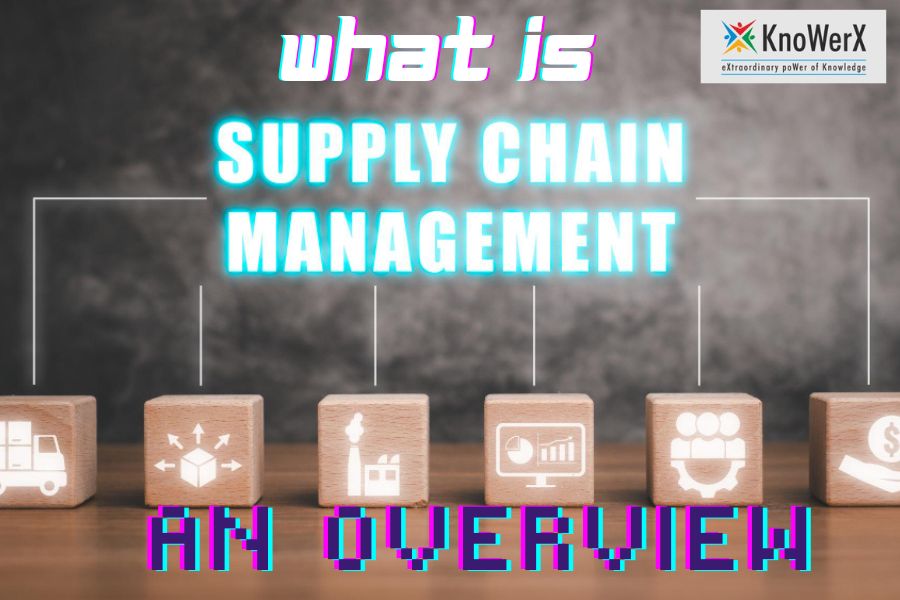
What Is Supply Chain Management (SCM): An Overview The question what is a scm is often asked in simple terms, yet the answer sits at the centre of how modern businesses survive, scale, and compete. Supply Chain Management is no longer a back-office function concerned only with moving goods from one place to another. It has evolved into a strategic discipline that determines cost structures, customer experience, risk exposure, and long-term resilience. In an era of global uncertainty, rapid demand shifts, and intense margin pressure, leaders, professionals, and organisations alike must understand what SCM truly means. Definition of Supply Chain Management (SCM) To understand what is a scm, it helps to move beyond narrow definitions. Supply Chain Management refers to the coordinated management of the flow of materials, information, finances, and decisions across the entire network that transforms raw inputs into finished products and delivers them to customers. At its core, SCM integrates suppliers, manufacturers, warehouses, transport providers, distributors, and customers into a single operating system. The objective is not just movement, but optimisation ensuring the right product reaches the right place, at the right time, at the right cost, and with the right level of quality. Unlike logistics, which focuses primarily on transportation and storage, SCM takes a holistic view. It connects planning with execution, operations with finance, and demand signals with supply responses. When businesses ask what is a scm, the most accurate answer is that it is the discipline that aligns operational activity with business strategy. Key Components of Supply Chain Management Understanding what is a scm also requires clarity on its core components and how they function together as an integrated system rather than isolated departments. The first component is planning and forecasting. This component defines how demand is anticipated and how supply is structured to meet it. It includes demand forecasting, sales and operations planning, capacity planning, and inventory strategy. Weak planning creates instability across the entire supply chain. Sourcing and Supplier Management Sourcing involves selecting suppliers, negotiating contracts, and managing supplier performance. Effective SCM treats suppliers as strategic partners rather than transactional vendors, focusing on reliability, quality, cost, and risk. Production and Operations Management This area governs how goods are manufactured or assembled. It includes production scheduling, process optimisation, quality control, and capacity utilisation. Decisions made here directly impact cost, lead time, and service levels. Warehousing and Inventory Management Warehousing is not just storage; it is a control point for inventory accuracy, order fulfilment speed, and working capital efficiency. Inventory management balances availability with cost, ensuring neither excess nor shortage dominates the system. Transportation and Distribution This component manages the physical movement of goods across the supply chain. It includes route planning, carrier selection, freight optimisation, and last-mile delivery performance. Technology and Data Visibility Modern SCM relies on integrated systems that provide real-time visibility across planning and execution. Data enables performance measurement, exception management, and informed decision-making. Together, these components define the practical reality behind the question what is a scm. How Supply Chain Management Works (End-to-End Flow) Supply Chain Management works as an end-to-end flow rather than a sequence of disconnected activities. To truly understand what is a scm, one must see how value moves across the entire lifecycle. The process begins with suppliers, where raw materials or components are sourced based on demand forecasts and production plans. Information flows upstream in the form of forecasts, schedules, and purchase orders, while materials flow downstream into manufacturing or assembly operations. In production, raw materials are turned into finished or semi-finished goods. Inventory levels, production rates, and quality outputs are continuously monitored to maintain balance between efficiency and responsiveness. The finished goods are then moved to warehouses or distribution centres, where they are stored, picked up, packaged, and prepared for delivery. Distribution channels vary depending on business models direct-to-customer, retail distribution, or business-to-business networks. Parallel to the physical flow is the information flow. Demand signals, order statuses, inventory data, and performance metrics move across systems to enable coordination. Financial flows payments, credits, and working capital move alongside goods and information. This interconnected movement explains what is a scm: a dynamic system where decisions at one point affect performance across the entire network. Importance of SCM for Businesses Today The importance of Supply Chain Management has grown dramatically in recent years. When businesses ask what is a scm, they are often responding to real pressures impacting performance and growth. Cost Control and Margin Protection SCM directly influences procurement costs, manufacturing efficiency, logistics expenses, and inventory holding costs. Small improvements in supply chain efficiency often translate into significant financial gains. Customer Experience and Service Reliability On-time delivery, product availability, and order accuracy are all outcomes of effective SCM. Inconsistent supply chain performance quickly erodes customer trust. Risk Management and Resilience Disruptions whether caused by supplier failures, transportation delays, or demand volatility expose weak supply chains. Strong SCM designs resilience for the network through diversification, visibility, and contingency planning. Scalability and Growth enablement. As businesses grow, supply chains must scale without becoming inefficient or fragile. SCM ensures growth does not lead to uncontrolled complexity. Competitive Advantage In many industries, supply chain performance is the primary differentiator. Faster response times, lower costs, and greater reliability often matter more than product features alone. These factors explain why understanding what is a scm is now essential at the leadership level. Modern Trends Shaping Supply Chain Management The answer to what is a scm continues to evolve as new trends reshape how supply chains are designed and managed. Digital Supply Chains and Real-Time Visibility Companies are investing in integrated platforms that provide end-to-end visibility during planning and execution. Real-time data enables faster, more accurate decisions. Automation and Advanced Analytics Automation is improving efficiency in warehouses, production lines, and planning processes. Analytics and artificial intelligence are enhancing forecasting accuracy and scenario modelling. Resilience-Focused Network Design Instead of optimising purely for cost, businesses are redesigning their supply networks to balance efficiency with resilience, reducing their dependence on single sources or routes. Sustainability and
Understanding SCM and Logistics: Differences and Their Importance
Understanding SCM and Logistics: Differences and Their Importance In an interconnected business environment, organisations no longer compete as isolated entities. They compete as part of complex supply networks that span suppliers, manufacturers, distributors, and customers. This reality has made supply chain management and logistics essential business capabilities rather than back-office support functions. At KnoWerX, we frequently observe the challenges organisations face when they misunderstand or handle these two disciplines independently. Although closely related, supply chain management and logistics serve different purposes, operate at different levels, and require distinct skill sets. Understanding their differences and how they work together helps businesses improve efficiency, manage risk, and build long-term resilience. What Is Supply Chain Management (SCM)? Supply Chain Management is the strategic coordination of all activities involved in sourcing, producing, and delivering goods or services. It focuses on planning and optimisation across the entire value chain. SCM covers supplier selection, procurement strategy, production planning, inventory policy, network design, and performance management. The objective is to create balance between cost, service levels, flexibility, and risk. From a KnoWerX perspective, supply chain management and Logistics must be driven by data and cross-functional alignment. Poor visibility or siloed decision-making weakens the supply chain and exposes organisations to unnecessary disruptions. What are Logistics? Logistics is a core function within the broader supply chain, but its role is primarily operational. It focuses on the execution of plans defined through supply chain strategy. Logistics includes transportation management, warehousing, inventory handling, packaging, order fulfilment, and last-mile delivery. While SCM decides what should happen, logistics ensures that goods move accurately, safely, and on time. In practical terms, supply chain management and Logistics are deeply connected. Weak logistics execution can undermine even the best supply chain strategy, leading to delays, damaged goods, or rising costs. Key Differences Between SCM and Logistics The main difference between supply chain management and logistics lies in scope and time horizon. Supply chain management is strategic and long-term. It considers how decisions made today such as supplier location or inventory policy will impact cost, service, and risk over time. Logistics is execution-focused and short-term. It deals with daily operational challenges such as transport planning, warehouse efficiency, and order accuracy. At KnoWerX, we often summarise this difference simply: Supply Chain defines direction, while logistics delivers results. How SCM and Logistics Work Together Although distinct, supply chain management and Logistics function best when tightly integrated. Strategic decisions directly affect logistics complexity and cost. For example, a supply chain strategy aimed at reducing inventory levels requires faster transportation, more responsive warehousing, and precise order fulfilment. Logistics teams must then adapt systems and processes to support these goals. KnoWerX experience shows that organisations achieve better outcomes when Supply Chain Management and Logistics share common data, aligned KPIs, and coordinated governance structures. This alignment reduces firefighting and enables proactive decision-making. The importance of SCM and Logistics in Today’s Business Environment Modern supply chains operate under constant pressure from demand volatility, regulatory changes, geopolitical risks, and transportation constraints. In such conditions, weak coordination between planning and execution quickly leads to cost overruns and service failures. Strong supply chain management and Logistics capabilities help organisations anticipate risks, respond faster to disruptions, and maintain service continuity. They also improve cost visibility, allowing leadership teams to make informed trade-offs rather than reactive decisions. From KnoWerX’s industry exposure, companies that treat supply chain management and Logistics as strategic capabilities consistently outperform those that view them as operational necessities. Career Opportunities and Skills in SCM vs Logistics Both supply chain management and Logistics offer strong career opportunities, but they demand different competencies. SCM professionals require analytical thinking, scenario planning, systems understanding, and cross-functional coordination. Their focus is on optimisation, risk management, and long-term value creation. Logistics professionals focus on operational excellence. Skills in transportation planning, warehouse management, process improvement, and vendor coordination are essential. As technology becomes central to Supply Chain Management and Logistics, digital literacy and data-driven decision-making are now critical across both career paths. Frequently Asked Questions Ending Notes Supply Chain and Logistics are distinct but inseparable disciplines. SCM provides strategic direction and structure, while logistics delivers execution on the ground. Organisations that integrate Supply Chain and Logistics effectively are better equipped to control costs, manage uncertainty, and meet customer expectations. KnoWerX’s experience in different industries shows that it’s important to view Supply Chain Management and Logistics as key parts of a business strategy, not just as tasks to be done later Image Reference: Freepik Disclaimer: All trademarks, logos, and brand names are the property of their respective owners. All company, product, and service names used in this website are for identification purposes only. Use of these names, trademarks, and brands does not imply endorsement.
Supplier Relationship Management Certificate for Supply Chain Excellence
Supplier Relationship Management Certificate for Supply Chain Excellence Supply chains today are no longer linear networks focused only on cost and delivery. They are complex ecosystems where suppliers play a direct role in innovation, resilience, and competitive advantage. As volatility, risks, and customer expectations continue to rise, organisations will recognise that structured collaboration with suppliers is essential. This is where a certificate in supplier relationship management becomes a strategic capability rather than a functional add-on. A formal certification in supplier relationship management gives professionals the frameworks, tools, and mindset they need to build strong supplier partnerships that lead to long-term supply chain excellence. The importance of Supplier Relationship Management (SRM) in modern supply chains cannot be overstated. Traditional procurement models often treated suppliers as transactional vendors. Price negotiations, short-term contracts, and reactive issue resolution dominated the relationship. Today, this approach limits agility and exposes businesses to operational and reputational risks. Modern supply chains demand collaboration, transparency, and shared value creation. Effective supplier relationship management enables organisations to go beyond transactions and develop partnerships focused on performance, innovation, and risk mitigation. Strong SRM practices improve supply continuity, quality consistency, and responsiveness to market changes. As supply chains become more global and interdependent, the ability to manage supplier relationships systematically has become a core driver of supply chain excellence. What an SRM Certification Covers A structured certificate in supplier relationship management provides comprehensive coverage of both strategic and operational dimensions of supplier engagement. It is designed to help professionals understand not just what to do, but how and why SRM creates value. Key areas typically covered include supplier segmentation and relationship models, governance frameworks, performance management, and collaboration mechanisms. Participants learn how to align supplier strategies with business objectives, ensuring that critical suppliers receive the right level of engagement and investment. The certification also addresses communication structures, contract alignment, conflict resolution, and continuous improvement frameworks. The SRM approach integrates risk management, compliance, and ethical sourcing, reflecting real-world supply chain expectations. Professionals gain a structured view of supplier relationship management as a discipline that connects procurement, operations, quality, and leadership. Business Impact of SRM Certification on Supply Chain Excellence The real value of an SRM certification lies in its business impact. Organisations that have well-developed practices for managing supplier relationships consistently outperform those that rely on transactional sourcing models. Certified professionals are better equipped to reduce supplier-related disruptions, improve on-time delivery, and enhance quality performance. Structured supplier performance reviews and data-driven engagement lead to early identification of risks and improvement opportunities. Beyond operational stability, SRM certification supports innovation and cost optimisation. Strategic suppliers become contributors to product development, process improvement, and sustainability initiatives. This collaborative approach strengthens supply chain resilience and supports long-term growth. As a result, organisations experience measurable improvements in efficiency, predictability, and overall supply chain excellence. Career and Organizational Benefits of SRM Certification From a career perspective, a certificate in supplier relationship management strengthens professional credibility and leadership capability. It signals a shift from tactical procurement execution to strategic supply chain thinking. Professionals with SRM certification are better positioned for roles in procurement leadership, supply chain strategy, and operations management. Industries increasingly value the certification’s enhancement of decision-making skills, stakeholder management, and cross-functional collaboration competencies. It also helps professionals work better with both senior management and suppliers. For organisations, the benefits are equally compelling. A workforce trained in supplier relationship management creates consistency in supplier engagement, reduces dependency risks, and improves governance. Teams with certification align better with business goals and can sustain performance improvements over time. Building Sustainable Supply Chain Excellence Systems or technology alone cannot achieve supply chain excellence. It is built through disciplined processes, skilled professionals, and strong external relationships. A supplier relationship management certificate plays a critical role in developing these capabilities. By formalising SRM knowledge and application, organisations move from reactive supplier management to proactive partnership building. This shift enhances resilience, supports innovation, and creates a competitive edge in uncertain markets. Frequently Asked Questions Ending Notes In an environment where supplier performance directly influences business outcomes, investing in structured SRM capability is no longer optional. A supplier management certificate provides the knowledge, frameworks, and practical skills needed to build strong supplier partnerships and achieve sustained supply chain excellence. For professionals, it is a career-defining credential. For organisations, it is a strategic investment in stability, performance, and long-term value creation through effective supplier relationship management. Image Reference: Freepik Disclaimer: All trademarks, logos, and brand names are the property of their respective owners. All company, product, and service names used in this website are for identification purposes only. Use of these names, trademarks, and brands does not imply endorsement.