
Delivering World-Class Professional Training for Business Efficiency

Delivering World-Class Professional Training for Business Efficiency: KnoWerX In an era defined by rapid transformation, competitive pressure, and constant disruption, organisations can no longer rely on legacy skills or ad-hoc learning models. The real differentiator today is how effectively people translate knowledge into performance. This is where professional training becomes a strategic lever for business efficiency, not a peripheral HR initiative. KnoWerX operates at this intersection of capability, execution, and measurable impact designing training ecosystems that help professionals and enterprises perform better, faster, and smarter. The Need for World-Class Professional Training in Today’s Business Environment Modern businesses operate within complex systems global supply chains, digital platforms, regulatory frameworks, and evolving customer expectations. Even minor inefficiencies can cascade into cost overruns, delays, and lost opportunities. Traditional training often focuses on theories or generic skills, leaving organisations with only limited improvements in business efficiency. World-class professional training addresses this gap by aligning learning with real operational challenges. It equips professionals not only with knowledge, but with the ability to diagnose problems, optimise processes, and drive sustained performance improvements. In this environment, training must be structured, industry-relevant, and outcome-driven to meaningfully support business efficiency. KnoWerX’s Mission: Bridging Skill Gaps with Global Standards KnoWerX was founded with a clear mission: to bridge critical skill gaps using globally benchmarked training standards. Rather than offering isolated courses, KnoWerX builds capability frameworks that align with international best practices while remaining deeply grounded in real business contexts. The focus is not on credentials alone, but on competence that translates into operational value. By aligning training design with performance metrics, KnoWerX ensures that learning directly contributes to business efficiency, productivity, and decision quality across functions and industries. Industry-Expert Trainers and Applied Learning Approach A defining strength of KnoWerX lies in its trainers. Industry experts deliver each program, bringing deep practical experience rather than just academic knowledge. These trainers comprehend the creation or loss of efficiency within actual organisations. The applied learning approach ensures that participants work on realistic scenarios, case studies, simulations, and process-improvement exercises. This bridges the gap between learning and execution, enabling professionals to apply tools immediately within their roles. As a result, improvements in business efficiency are not theoretical; they are visible in cycle times, cost control, quality, and operational discipline End-to-End Learner Support and Structured Training Delivery Effective training requires more than strong content. KnoWerX delivers a structured, end-to-end learning experience that supports participants before, during, and after the program. Clear learning pathways, defined milestones, and practical assessments ensure consistency and depth. Learners receive guidance, mentoring, and performance feedback that reinforces application on the job. This structured delivery model reduces drop-offs, increases completion rates, and strengthens long-term capability development. Organisations experience sustained gains in business efficiency when they support learning holistically, as opposed to temporary improvements. Business Impact: Driving Efficiency and Measurable Results The true measure of professional training lies in business outcomes. KnoWerX programmes are designed with measurable impact in mind improved process stability, reduced waste, faster decision-making, and stronger cross-functional alignment. By embedding performance metrics in training designs, KnoWerX helps organisations track improvements in business efficiency with clarity and confidence. Participants are equipped to identify bottlenecks, streamline workflows, and build repeatable systems that support scalability. Over time, these improvements compound, strengthening competitiveness and operational resilience. Why KnoWerX Is a Trusted Partner for Professionals and Enterprises Consistency, relevance, and results build trust. Professionals choose KnoWerX because its programs enhance credibility, career advancement, and real-world effectiveness. Enterprises partner with KnoWerX because training investments deliver tangible improvements in business efficiency, not just certificates. KnoWerX combines global standards, expert-led delivery, and a performance-focused mindset to create training that matters. KnoWerX’s reputation is built on the outcomes achieved by teams that think systemically, leaders who act decisively, and organisations that operate with greater precision and control. Frequently Asked Questions Ending Notes In today’s performance-driven environment, professional training must do more than educate it must enable execution. KnoWerX delivers world-class professional training designed to strengthen business efficiency at every level. By connecting global standards with applied learning and measurable impact, KnoWerX empowers professionals and enterprises to operate with clarity, discipline, and sustained efficiency. Image Reference: Freepik Disclaimer: All trademarks, logos, and brand names are the property of their respective owners. All company, product, and service names used in this website are for identification purposes only. Use of these names, trademarks, and brands does not imply endorsement.
Black Belt Six Sigma for End-to-End Supply Chain Optimization
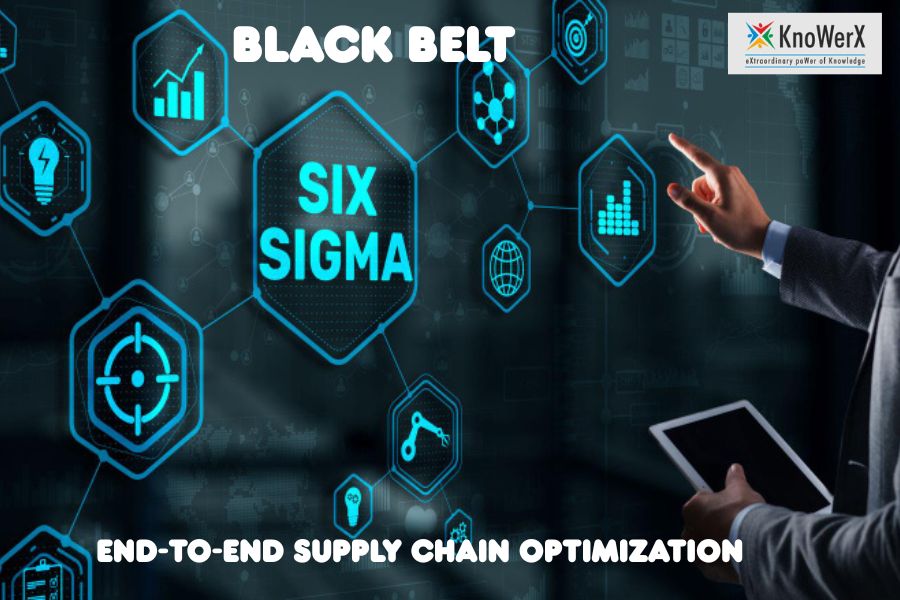
Black Belt Six Sigma for End-to-End Supply Chain Optimization Supply chains do not fail loudly. They drift. Margins thin quietly, buffers swell unnoticed, service levels decay in increments too small to trigger alarms until leadership asks why scale no longer delivers advantage. In this silent erosion, black belt six sigma emerges not as a methodology, but as a discipline of attention. It is the difference between managing movement and mastering flow. Why Six Sigma Black Belt Matters in Modern Supply Chains Modern supply chains are no longer constrained by capacity alone. They are constrained by decision quality. Signals move faster than judgment, data outpaces interpretation, and complexity disguises inefficiency as inevitability. A black belt six sigma perspective challenges this normalization of waste. It reframes volatility not as chaos, but as measurable variation. Where others see uncertainty, Black Belts see unstable processes, misaligned incentives, and unmanaged handoffs. In this context, Black Belt capability becomes essential not to optimise faster, but to optimise correctly. Role of a Black Belt in End-to-End Supply Chain Optimization The Black Belt does not sit inside the supply chain. They sit across it. Their authority is not hierarchical; it is analytical. Their influence comes from the ability to connect procurement decisions to warehouse congestion, planning assumptions to logistics cost inflation, and service promises to working capital leakage. A black belt six sigma professional acts as a systems interpreter translating operational noise into structured insight, and converting fragmented improvements into enterprise-level performance coherence. Applying DMAIC Across the Supply Chain Lifecycle DMAIC, when reduced to a checklist, loses its power. In advanced supply chain environments, it functions more like an operating rhythm. Define becomes strategic intent—what must not fail. Measure becomes truth extraction—what the system is actually doing. Analyze becomes exposure—where decisions amplify variation. Improve becomes design—reshaping flow, not fixing tasks. Control becomes governance preventing regression disguised as flexibility. Through this lens, black belt six sigma turns DMAIC into a lifecycle discipline that travels seamlessly from supplier interfaces to customer fulfilment. Key Supply Chain Problems Solved Using Black Belt Methodologies The most damaging supply chain problems are usually hidden on dashboards. They live between functions. Black Belt methodologies excel in resolving: Inventory paradoxes where excess and shortage coexist Planning cycles that optimise forecasts but destabilise execution Logistics networks that grow more expensive despite higher volumes Quality escapes rooted in upstream process tolerance Performance KPIs that reward local success and global failure A black belt six sigma approach dismantles these contradictions by redesigning how work flows not just how it is measured. Business Impact of Black Belt–Driven Supply Chain Excellence When Black Belt logic is embedded into supply chain operations, outcomes shift from improvement to control. Organisations experience: Cost reduction that does not compromise resilience Service reliability that survives demand volatility Inventory reductions that strengthen, not weaken, availability Decision-making clarity across planning, execution, and finance The true impact of black belt six sigma is not operational efficiency it is predictability. And predictability, in complex supply chains, is power. Career Advantage of Black Belt Certification for SCM Professionals For supply chain professionals, Black Belt certification is no longer a differentiator it is a signal of readiness. It signals the ability to: Lead ambiguity without defaulting to firefighting Translate data into executive-level decisions Challenge legacy processes without disrupting continuity Deliver results that withstand scale and stress In an era where supply chains define enterprise reputation, Black Belt Six Sigma positions professionals as architects of performance, not custodians of process. Frequently Asked Question Ending Notes End-to-end supply chain optimisation is not achieved by adding tools. It is achieved by removing distortion between data and decision, intent and execution, cost and value. Black belt six sigma provides that clarity. Not as a framework to be implemented, but as a discipline to be embedded. At KnoWerX, we see Black Belt capability as the quiet force behind supply chains that do not merely function but endure. Image Reference: Freepik Disclaimer: All trademarks, logos, and brand names are the property of their respective owners. All company, product, and service names used in this website are for identification purposes only. Use of these names, trademarks, and brands does not imply endorsement.
Tariff Classification in SCM: One Mistake Can Cost You

Tariff Classification in SCM: One Mistake Can Cost You In global supply chain management, accuracy is everything. You can have advanced forecasting tools, strong vendor relationships, and smooth warehouse operations, but if one detail is wrong in customs paperwork, everything comes to a halt. This phenomenon is especially true for tariff classification, a small but powerful part of trade compliance. Many companies underestimate how critical it is, but the truth is simple: one mistake in tariff classification can cost money, time, and long-term trust with customs authorities. This topic becomes even more important as supply chains become more complex. Businesses are importing a greater variety of materials, dealing with new regulations, and selling into multiple markets. In this environment, ignoring tariff classification or treating it lightly is a direct invitation for financial losses and operational headaches. What Is Tariff Classification? Understanding HS Codes and Their Purpose At its core, tariff classification is the process of assigning the correct HS (Harmonized System) code to every product that crosses a border. These HS codes are part of a global system used by customs authorities to determine the duties, taxes, and rules applicable to each product category. The system looks simple on paper – a few digits that describe what the product is but each code carries a very specific meaning. Customs officers rely on these codes to identify products, understand what they’re made of, and determine the right duty rate. So, when a company gets the code wrong, the duty calculation becomes inaccurate. This is where the trouble begins. Why Tariff Classification Matters in Supply Chain Management From a supply chain perspective, tariff classification directly affects: How smoothly your goods cleared customs. How predictable are your landing costs? Whether your paperwork stands up during audits How efficiently your cross-border shipments move When the tariff classification is correct, clearance becomes predictable. When it is wrong, everything from inventory planning to customer delivery commitments becomes uncertain. The financial impact of the wrong tariff classification Overpayment of Duties One of the most common problems happens when companies unintentionally choose an HS code with a higher duty rate. This is especially true in large manufacturing and retail operations where product catalogues run into thousands of SKUs. Even a small percentage difference in duty rate can lead to massive overpayments. For high-volume importers, the cumulative cost of wrong tariff classification quietly drains profits year after year. Underpayment, Fines, and Customs Penalties The opposite scenario is even more serious. When a company underpays duties because of incorrect tariff classification, customs authorities eventually notice. Sometimes it happens during routine audits, and sometimes it happens at the border. Either way, the result is expensive. Authorities generally require: Back payment of duties Interest on unpaid amounts Monetary penalties In severe cases, legal action Even if the error was unintentional, the company still pays. Customs authorities don’t treat ignorance as an excuse. The financial impact can hit cash flow, create unplanned expenses, and disrupt budgets for the entire fiscal year. Increased Risk of Customs Audits Once customs identifies a classification mistake, they may place the company under closer observation. This increases the frequency of audits and inspections. Audits take time, documentation, manpower, and expertise. For a busy supply chain team, this becomes a major distraction from daily operations. Common Tariff Classification Mistakes Companies Make Most companies don’t deliberately make mistakes. The problem usually stems from poor processes or limited knowledge. Some of the most common mistakes include: Using very broad or generic HS codes Copying tariff classification from suppliers without verification Misclassifying a part as a finished product Using old classification data for new product versions Missing supporting documents that help justify the classification Assuming similar-looking products automatically share the same code Small mistakes like these accumulate. A company may operate for years without issues, and suddenly customs flags something. That’s when the business realizes the cost of long-term inaccuracy. Real-World Cost Consequences of Misclassification Shipment Delays When customs notices a mismatch between documentation and the actual product, they don’t just ignore it. They flag the shipment for inspection. This leads to delays that ripple across the entire supply chain delayed production, delayed customer deliveries, and increased storage costs at ports. Border Holds and Detentions A more serious consequence is a border hold. Customs may detain the cargo until the company provides detailed technical documents, product descriptions, or even laboratory test results. These delays can last days or sometimes weeks. Every extra day costs money. Penalties and Legal Repercussions Wrong tariff classification can result in penalties that go far beyond duty corrections. Customs authorities impose fines based on the level of error and the financial impact. Repeat violations may cause authorities to restrict or suspend the company’s import/export privileges. Disrupted Supply Chain Operations Stuck shipments at the border lead to instability downstream. Inventory levels drop unexpectedly. Production schedules are disrupted. Customers get frustrated. And once trust breaks, it takes a long time to rebuild it. Tools and Databases Used for Accurate Tariff Classification Getting tariff classification right requires reliable tools and data. Supply chain teams often refer to: The WCO HS Database National tariff portals such as EU TARIC, US CBP, India ICEGATE Explanatory Notes that help interpret the rules Binding rulings from customs authorities Engineering specifications, product drawings, test reports Expertise from customs brokers and trade consultants These tools help supply chain teams make informed decisions. The global trade environment changes frequently, so depending on old data is risky. Consistent updates and verification are essential. Importance of Training and Certified Trade Compliance Professionals Why Skilled Professionals Matter The rules around tariff classification are detailed and often complex. A small difference in product material, function, or composition can entirely change the HS code. Because of this complexity, companies increasingly depend on trained professionals who understand how classification rules work and how to interpret them correctly. Professionals who understand tariff classification reduce the risk of errors, maintain documentation consistency, and help companies stay audit-ready throughout the year. How KnoWerX Helps Build Expertise
Warehouse optimisation hacks can significantly reduce costs
Warehouse optimisation hacks can significantly reduce costs in a short period. Warehouse costs rarely explode overnight, but they do silently drain profitability every single day. From excess handling and poor layouts to inaccurate inventory and safety incidents, inefficiencies compound faster than most organisations realise. In today’s cost-sensitive and disruption-prone supply chains, warehouse optimization is no longer optional; it is a strategic necessity. At KnoWerX, we work closely with supply chain professionals to transform warehouses from cost centers into performance engines. Let’s explore practical warehouse optimization hacks that can deliver measurable cost savings faster than you expect. Why Warehouse Optimization Is Critical for Cost Control Warehousing typically accounts for a significant share of total supply chain costs, often second only to transportation. When processes are inefficient, even small delays or errors multiply across labour, inventory carrying costs, and service levels. Optimized warehouses reduce: Excess labour hours. Unnecessary inventory holding Picking and dispatch errors Damage and rework costs More importantly, warehouse optimization improves cash flow, responsiveness, and customer satisfaction – key outcomes for competitive supply chains. Hidden Cost Drivers Inside Warehouses Many warehouse costs remain invisible until they are mapped end-to-end. Common hidden cost drivers include: Poor layout design, causing excessive travel time for pickers Overstocking or understocking, driven by inaccurate demand signals Manual data entry errors, leading to reconciliation efforts Low space utilization, forcing unnecessary expansion or outsourcing Unplanned downtime, due to equipment failures or congestion Without structured analysis, these costs blend into “normal operations.”. Warehouse optimization starts by making inefficiencies visible through data and process mapping. Real-Time Inventory Visibility to Reduce Stock Discrepancies One of the fastest ways to cut warehouse costs is improving inventory accuracy. Lack of real-time visibility leads to: Emergency replenishments Excess safety stock Order fulfilment delays Loss of trust between planning and operations Using real-time inventory tracking through WMS, barcode scanning, or RFID ensures that stock data reflects reality, not assumptions. Accurate inventory enables better replenishment decisions, reduces write-offs, and frees up working capital. At KnoWerX, we emphasise inventory positioning and demand-driven principles that align stock levels with actual consumption, not forecasts alone. Use of Automation for Repetitive Tasks Automation doesn’t always mean heavy investment in robotics. Many cost savings come from automating repetitive, low-value tasks, such as: Order picking validation Label printing and documentation Slotting recommendations Cycle counting Even partial automation reduces manual errors, speeds up throughput, and allows skilled labour to focus on exception handling and value-added activities. The key is right-sized automation, deploying technology where it delivers the highest return, not where it looks impressive. Safety Improvements That Reduce Accident-Related Costs Warehouse safety is often viewed as a compliance requirement, but it is also a major cost lever. Accidents result in: Medical expenses and insurance claims Downtime and labour shortages Damaged goods and equipment Regulatory penalties Simple optimization steps Clear aisle marking, ergonomic picking heights, proper training, and standardised material handling dramatically reduce incident rates. A safer warehouse is not only more humane but also more productive and predictable, leading to lower operating expenses over time. KPIs to Track Warehouse Cost Efficiency You cannot optimize what you do not measure. By tracking the appropriate KPIs, you can sustain cost improvements rather than just temporary ones. Key warehouse cost efficiency KPIs include: Cost per order shipped Inventory accuracy percentage Order picking productivity (lines per hour) Space utilization rate Dock-to-stock cycle time Safety incident frequency At KnoWerX, we help professionals link these KPIs to business outcomes, ensuring that warehouse optimization aligns with broader supply chain performance goals. Frequently Asked Questions Final Thoughts: Optimization Is a Mindset, Not a One-Time Project Warehouse optimization is not about quick fixes; it’s about building agile, data-driven operations that adapt as demand and complexity increase. The most successful organisations treat optimization as an ongoing discipline, supported by skilled people, clear metrics, and proven frameworks. Through KnoWerX’s training and certification programmes, supply chain professionals gain the practical knowledge needed to identify cost leaks, implement effective solutions, and lead sustainable warehouse transformations. Image Reference: Freepik Disclaimer: All trademarks, logos, and brand names are the property of their respective owners. All company, product, and service names used in this website are for identification purposes only. Use of these names, trademarks, and brands does not imply endorsement.
Inventory Positioning Strategies That Cut Delays Fast
Inventory Positioning Strategies That Cut Delays Fast In a volatile supply chain environment, speed is no longer a competitive advantage; it is a necessity. Delays caused by poor inventory placement lead to missed sales, unhappy customers, and rising operational costs. This is why inventory positioning strategies have become a critical focus area for supply chain leaders aiming to improve service levels without increasing overall inventory. At KnoWerX, we consistently see high-performing supply chains succeed not by holding more stock, but by positioning the right inventory in the right location at the right time. Let’s explore proven inventory positioning strategies that help organizations cut delays fast and build resilient, demand-driven operations. 1. Strategic Stock Placement Closer to Demand Centers One of the most effective ways to reduce delivery lead times is placing inventory closer to where demand actually occurs. Centralized warehouses may offer cost efficiency, but they often increase transit time and risk. Strategic stock placement involves analyzing customer demand patterns, order frequency, and regional sales data to determine optimal inventory locations. By positioning fast-moving products near high-consumption areas, companies can shorten delivery cycles, reduce transportation expenses, and improve customer satisfaction. This approach is especially critical in omnichannel environments, where customers expect fast and reliable fulfilment regardless of location. 2. Smart Use of Safety Stock and Buffer Positioning. Safety stock is essential, but excess safety stock is costly. The key lies in buffer positioning, not blanket inventory build-up. Effective inventory positioning strategies aim to place extra stock where there are the most uncertainties, like long wait times from suppliers, changes in demand, or limits in production. Instead of spreading safety stock evenly across all locations, leading organizations concentrate buffers at strategic decoupling points. This approach protects service levels while keeping overall inventory investment under control. At KnoWerX, we emphasize demand-driven principles that help professionals determine where buffers create the most value, rather than simply increasing stock everywhere. 3. ABC Classification to Prioritize High-Impact Inventory Not all inventory deserves the same level of attention. ABC’s classification helps organisations prioritise inventories based on value, demand, criticality, or business impacts. A-items: High-value or high-impact products requiring tight control and optimal positioning B-items: Moderate importance, balanced placement C-items: Low-value items with flexible positioning By aligning inventory positioning decisions with ABC classification, companies ensure that critical items are always available near demand centers, while lower-impact items are managed more cost-effectively. This targeted approach significantly reduces delays for products that matter most to customers. 4. Real-Time Inventory Visibility Across Locations Inventory positioning fails without visibility. Many delays occur not due to lack of stock, but due to lack of information. Real-time inventory visibility allows supply chain teams to see stock levels across warehouses, distribution centers, and stores in one unified view. This enables faster decision-making, dynamic reallocation of inventory, and proactive response to demand spikes or disruptions. With accurate visibility, organizations can redirect inventory to the most critical locations before shortages occur, cutting delays without emergency shipments or last-minute firefighting. 5. Multi-Location Fulfillment and Regional Warehousing Strategy A single-warehouse model is no longer sufficient for complex supply chains. Multi-location fulfilment strategies use a network of regional warehouses to support faster delivery and risk mitigation. Regional warehousing allows companies to: Serve customers faster Reduce dependence on one location Absorb disruptions more effectively Support flexible order fulfilment Inventory positioning across multiple locations requires strong planning capabilities, data-driven decisions, and clear rules for replenishment and redistribution. When executed well, it significantly improves responsiveness while maintaining cost efficiency. Turning Strategy into Execution with KnoWerX Inventory positioning is not just a planning exercise; it is an execution capability. The best strategies fail without skilled professionals who understand demand patterns, variability, and supply chain trade-offs. At KnoWerX, we help supply chain professionals develop practical expertise in inventory positioning through globally recognized learning frameworks and real-world application. Our programmes focus on building decision-making skills that translate theories into measurable performance improvements. Frequently Asked Questions Ending Notes Delays in the supply chain are rarely caused by a single issue. More often, they stem from poor inventory placement, weak visibility, and outdated planning assumptions. By adopting smart inventory positioning strategies, from strategic stock placement and buffer positioning to ABC classification and multi-location fulfilment organizations can cut delays fast without inflating inventory costs. In a world of uncertainty, the ability to position inventory intelligently is what separates reactive supply chains from truly resilient ones. Image Reference: Freepik Disclaimer: All trademarks, logos, and brand names are the property of their respective owners. All company, product, and service names used in this website are for identification purposes only. Use of these names, trademarks, and brands does not imply endorsement.
Supply Chain Professionals: Don’t Ignore This 2025 Shift

Supply Chain Professionals: Don’t Ignore This 2025 Shift The world of supply chains is changing faster than ever. What worked a few years ago is no longer enough to survive in today’s unpredictable, technology-driven environment. As companies face new levels of complexity, supply chain professionals must rethink their approach, upgrade their skills, and adapt to a future defined by intelligence, speed, and resilience. 2025 is not bringing small improvements; it’s bringing a complete shift in how supply chains operate. At KnoWerX, we have seen this change happening directly across industries and training cohorts. Businesses aren’t just looking for professionals who “manage operations.”. They want people who can anticipate disruption, leverage data, and build systems that stay strong even under pressure. Below are the four biggest shifts happening right now, and why no supply chain professional can afford to ignore them. 1. AI-Powered Planning Is Becoming the New Standard Artificial intelligence is no longer a futuristic buzzword; it has become the engine behind modern supply chain planning. Companies are using AI tools to forecast demand, optimize inventory, and detect issues before they become problems. What’s driving this change? AI and machine learning improve forecast accuracy. Predictive analytics can simulate multiple scenarios at once. Automated planning reduces human effort and increases speed. For supply chain professionals, this means one thing: manual planning will not survive. Organizations are shifting from spreadsheets to smart algorithms, and professionals who understand AI-enabled planning tools will have a clear advantage. Those who upgrade their tech skills, especially in demand planning, optimization engines, and real-time forecasting, will be the ones leading transformation initiatives in 2025. 2. From Reactive to Proactive: A New Risk Management Mindset In the last few years alone, global supply chains have faced geopolitical disruptions, port closures, natural disasters, cyber attacks, inflation, and labour shortages. The old approach of reacting after a disruption happens has failed multiple times. Today, leading companies are investing in proactive risk management: Continuous monitoring of supply chain signals Predictive tools that warn about disruptions Scenario modelling and contingency mapping. Multi-sourcing and network redesign This shift requires professionals who can think strategically, identify early warning signs, and build mitigation plans before crises hit. KnoWerX has seen a rising demand for training in risk and resilience frameworks because organizations want people who can prevent losses not just manage them after damage is done. 3. Resilience Matters More Than Cost Efficiency For decades, supply chains operated on a single principle: reduce cost as much as possible. 2025 marks the end of that era. Post-pandemic lessons, shifting sourcing patterns, and volatile markets have pushed businesses to prioritize resilience over pure cost savings. What does this look like? Building inventory buffers instead of running ultra-lean Diversifying suppliers instead of depending on one low-cost vendor Nearshoring and friend-shoring instead of chasing cheap labor Designing flexible, agile networks Organizations now understand that saving money means nothing if the supply chain collapses during a disruption. This mindset shift opens new career opportunities for supply chain professionals who can design resilient, adaptable systems. Professionals trained in DDMRP, demand-driven operations, and adaptive planning models—areas that KnoWerX specializes in — are becoming extremely valuable. 4. Real-Time Visibility Is No Longer Optional In a network as distributed and unpredictable as today’s global supply chain, visibility is critical. Companies want to see what is happening across suppliers, transport routes, warehouses, and customer nodes in real time. Real-time visibility enables: Faster decision-making Accurate ETA prediction Better inventory positioning Lower operational risks Higher customer satisfaction Cloud platforms, IoT sensors, control towers, and digital twins are making end-to-end visibility possible. But these technologies need skilled professionals who can interpret data, act quickly, and integrate insights into daily operations. Supply chain professionals who understand digital visibility tools will become essential assets for future-ready organizations. Ending Notes : 2025 Belongs to the Skilled, Adaptable, and Future-Focused Supply chain is no longer a back-end support function. It is a strategic, tech-driven, intelligence-led discipline at the core of business success. The shift happening in 2025 clearly shows: AI is changing the way planning works. Risk management must be proactive, not reactive. Resilience is now more important than cost optimization. Real-time visibility defines operational excellence. For supply chain professionals, this is the moment to evolve. Those who upskill now — especially through globally recognized programs like the ones offered by KnoWerX — will be the leaders shaping the future of supply chain excellence. If you’re ready to stay competitive, embrace this shift today. Your future career growth depends on it. Image Reference: Freepik Disclaimer: All trademarks, logos, and brand names are the property of their respective owners. All company, product, and service names used in this website are for identification purposes only. Use of these names, trademarks, and brands does not imply endorsement.
Cross Border Logistics: Avoid These Costly Pitfalls
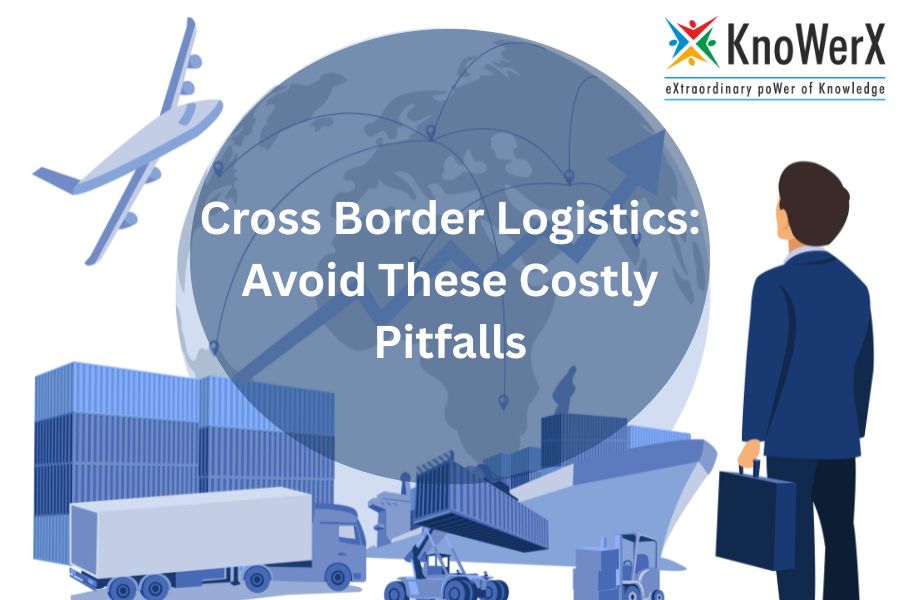
Cross Border Logistics: Avoid These Costly Pitfalls In an increasingly globalized economy, businesses are no longer limited by geography. Companies source raw materials from one country, manufacture in another, and sell across multiple markets. At the heart of this global movement lies cross border logistics a complex but critical function that determines whether international operations run smoothly or become a costly headache. Despite its importance, cross border logistics is often treated as an operational afterthought. Documentation gaps, unplanned costs, route dependencies, and poor visibility can disrupt supply chains overnight. At KnoWerX, years of working with supply chain professionals have shown that most cross-border failures are not caused by big decisions, but by small, repeatable mistakes. What Cross Border Logistics Involves in Modern Supply Chains At its core, cross border logistics refers to the planning, execution, and management of goods movement across international borders. Unlike domestic logistics, it involves navigating multiple regulatory environments, currencies, tax structures, and transportation networks simultaneously. Modern cross border logistics typically includes: International transportation (air, sea, road, or rail) Customs clearance and regulatory compliance Trade documentation and classification Duties, taxes, and fee management Coordination among multiple logistics partners What makes cross border logistics particularly challenging is that every country has its own import-export regulations, customs procedures, and compliance standards. A process that works seamlessly in one region may fail entirely in another. As supply chains become more interconnected, businesses must manage these complexities with greater precision and visibility. Common Documentation Errors That Cause Shipment Delays One of the most frequent and costly issues in cross-border logistics is incorrect or incomplete documentation. Customs authorities rely heavily on paperwork to determine whether a shipment complies with regulations. Even minor errors can lead to inspections, delays, penalties, or shipment rejection. Most Common Documentation Mistakes Documentation Issue Impact on Cross Border Logistics Incorrect HS codes Delays, penalties, reclassification costs Incomplete commercial invoices Customs holds and re-submission Missing certificates of origin Loss of duty benefits or shipment rejection Data mismatch across documents Increased inspections and audits Incorrect declared value Fines, reassessments, or shipment seizure In cross border logistics, documentation errors often occur due to poor coordination between sales, finance, and logistics teams. Without standardized processes and centralized data, inconsistencies creep in and disrupt the entire supply chain. Failure to Account for Hidden Costs in Cross Border Logistics Many businesses calculate international shipping costs based only on freight charges. However, cross border logistics involves several hidden expenses that can significantly impact margins if not planned for properly. Common Hidden Costs to Watch For Import and export duties Value-added tax (VAT) or goods and services tax (GST) Port handling and terminal charges Inspection and compliance fees Demurrage and detention costs Currency conversion and banking charges Typical Hidden Cost Breakdown Cost Type Why It’s Often Overlooked Duties & taxes Misclassified products or poor forecasting Port & terminal charges Not included in freight quotes Demurrage Caused by documentation or clearance delays Detention Slow unloading or warehouse congestion Compliance penalties Regulatory changes not tracked At KnoWerX, supply chain diagnostics often reveal that organizations lack a consolidated view of landed cost. Without this visibility, cross border logistics decisions are based on assumptions rather than accurate financial data. Without end-to-end cost visibility, cross border logistics becomes unpredictable. Businesses may win sales contracts only to discover later that hidden charges have eroded profitability. Risks of Relying on a Single Carrier or Route Another major pitfall in cross border logistics is over-dependence on one carrier, freight forwarder, or transportation route. While this may simplify operations initially, it exposes businesses to significant risk. Global trade is vulnerable to: Port congestion Labor strikes Geopolitical tensions Natural disasters Regulatory changes If a single route is disrupted, shipments can be delayed for weeks. In cross border logistics, delays don’t just affect delivery timelines they can trigger cascading costs such as storage fees, missed production schedules, and dissatisfied customers. Diversifying carriers and routes is no longer a “nice-to-have”; it is a core risk management strategy in resilient cross border logistics operations. Role of Technology in Minimizing Cross Border Logistics Errors Technology has become a powerful enabler in reducing complexity and risk in cross border logistics. Manual processes and spreadsheets simply cannot keep up with the volume, speed, and regulatory changes involved in international trade. How Technology Improves Cross Border Logistics Digital documentation reduces human errors and duplication Automated compliance checks flag issues before shipment Real-time tracking provides visibility across borders Predictive analytics anticipate delays and cost overruns System integration aligns logistics, finance, and compliance teams Technology vs Manual Processes Area Manual Approach Technology-Driven Approach Documentation Error-prone, repetitive Automated and standardized Visibility Limited, delayed updates Real-time tracking Compliance Reactive Proactive and rule-based Cost forecasting Inaccurate Data-driven and predictive By adopting digital tools, organizations transform cross border logistics from a reactive function into a strategic advantage. Best Practices to Prevent Costly Cross Border Logistics Mistakes Avoiding pitfalls in cross border logistics requires more than experience; it requires disciplined processes, reliable partners, and continuous improvement. Proven Best Practices Standardize Documentation Processes Use templates, checklists, and automated systems to ensure consistency across shipments. Plan duties and taxes in advance. Accurate product classification and valuation reduce surprise costs. Build routes and carrier redundancy. Maintain alternative options to handle disruptions without panic. Invest in training. Keep teams updated on changing regulations and trade requirements. Leverage Technology Platforms Centralize data, improve visibility, and reduce manual intervention. Work With Experienced Partners Reliable logistics providers bring local knowledge and compliance expertise. When these practices are embedded into daily operations, cross border logistics becomes predictable, efficient, and scalable. Frequently Asked Questions Ending Notes – Turning Cross-Border Logistics Into a Competitive Advantage Cross border logistics is no longer just about moving goods; it is about managing risk, cost, and compliance in a volatile global environment. Businesses that treat it as a strategic capability outperform those that treat it as a back-office function. By avoiding documentation errors, planning for hidden costs, diversifying routes, and using the right technology, companies can turn cross-border logistics into a competitive advantage.
DDLP Certification: Advance Your Supply Chain Career

DDLP Certification: Advance Your Supply Chain Career In today’s fast-changing global market, supply chains are no longer linear, predictable systems. They are interconnected, technology-driven, and highly exposed to volatility. Businesses now need professionals who can make fast, data-backed decisions and lead organizations with confidence. This is exactly where the DDLP Certification (Demand Driven Leader Professional) steps in a globally respected credential that empowers supply chain leaders with modern decision-making capabilities. The DDLP Certification, offered through leading education partners like KnoWerX, equips professionals with the strategic skills needed to manage complexity, eliminate noise in decision-making, and drive sustainable performance. It has quickly become one of the most valued qualifications for those aiming to excel in supply chain leadership roles. What is DDLP Certification and Why It Matters Today The Demand Driven Leader Professional (DDLP) Certification is a specialized credential built on the principles of Demand Driven Adaptive Enterprise (DDAE). It focuses on transforming traditional planning and execution methods into modern, demand-driven models. In a world where forecasting alone is no longer reliable, DDLP helps organizations shift from reactive to proactive operations. Certified professionals learn to anticipate risks, optimize inventory, manage flow, and build resilient supply chains that can adapt to disruptive market conditions. In short, the certification represents future-ready leadership in supply chain management. Who Is DDLP Designed For? The program is ideal for professionals who influence or lead decision-making in supply chain, operations, and strategic planning. This includes: Supply Chain Managers & Directors Demand Planners & Schedulers Operations Managers Inventory & Procurement Leaders Plant Managers Senior Executives involved in business transformation Consultants specializing in SCM and process improvement Even mid-level professionals preparing for leadership roles will find this certification extremely valuable. With KnoWerX’s structured learning approach, participants get an accessible yet advanced pathway to elevate their career. Key Skills and Competencies Covered The DDLP Certification gives professionals the tools and frameworks needed to navigate complexity. Key competencies include: Demand-Driven Decision-Making Understand how to align operations with real-time market signals instead of outdated forecasts. Flow-Based Metrics Learn how to use flow, buffers, and variability management to stabilize operations. Strategic Planning & Scenario Management Gain the ability to build adaptive strategies in environments with high uncertainty. Leadership in Demand-Driven Operations Develop the mindset needed to lead cross-functional teams and drive enterprise-wide transformation. Supply Chain Performance Optimization Master techniques to reduce lead times, improve service levels, and optimize working capital. These skills turn professionals from task executors into strategic leaders capable of shaping business performance. Career Opportunities After DDLP Certification The industry demand for DDLP-certified professionals continues to grow. Organizations recognize the value of leaders who can change traditional supply chains into agile, demand-driven systems. After completing the certification, candidates unlock roles such as: Supply Chain Lead / Senior Manager Demand Driven Transformation Manager Operations Excellence Manager Strategic Planning Specialist Inventory Optimization Expert Business Transformation Consultant Companies across manufacturing, retail, FMCG, pharma, automotive, e-commerce, and logistics actively seek DDLP-certified talent. Building Leadership and Strategic Thinking What makes DDLP unique is its focus on leadership rather than just technical skills. The program helps professionals: Think beyond spreadsheets and data reports Lead with confidence in a volatile environment Create alignment between supply chain, sales, finance, and operations Improve decision-making speed and accuracy Build collaborative and responsive teams This leadership-focused approach ensures that DDLP graduates become forward-thinking business contributors, not just supply chain operators. Global Recognition and Industry Relevance DDLP is recognized globally and trusted by leading enterprises that rely on modern supply chain strategies. Its frameworks are used by industry giants across the US, Europe, and Asia. As one of India’s most respected supply chain education providers, KnoWerX delivers DDLP through certified trainers, real-world case studies, and structured content that matches global standards. This makes the certification not only credible but also industry-relevant and future-proof. Success Stories from DDLP-Certified Professionals Many professionals who completed DDLP through KnoWerX report: Faster promotions Ability to lead digital and demand-driven transformation projects Better collaboration across functions Enhanced credibility and leadership visibility Improved business performance in their organizations Their success reflects the practical, real-world value the program offers. Future Demand for DDLP-Certified Talent As businesses accelerate digital transformation and shift toward resilience-focused supply chains, the demand for demand-driven leaders will continue rising. Organizations need professionals who understand flow, predict disruptions, and build adaptive planning models. This makes DDLP one of the most promising and future-ready certifications in supply chain leadership. Frequently Asked Questions Ending Notes The DDLP Certification is more than just another qualification it is a leadership accelerator for supply chain professionals who want to stay ahead in a world driven by uncertainty and rapid change. By mastering demand-driven principles, strategic thinking, and modern operational frameworks, learners gain the confidence to lead with clarity and impact. With global recognition, industry relevance, and a growing demand for adaptive supply chain leaders, DDLP stands out as one of the most future-ready credentials today. For professionals aiming to elevate their career, drive transformation, and become trusted decision-makers in their organizations, DDLP through KnoWerX is a powerful step forward. Image Reference: Freepik Disclaimer: All trademarks, logos, and brand names are the property of their respective owners. All company, product, and service names used in this website are for identification purposes only. Use of these names, trademarks, and brands does not imply endorsement.
Agile and Resilient Operations for Modern Supply Chains

Agile and Resilient Operations for Modern Supply Chains Supply chains today are operating in a world where uncertainty has become the new normal. From geopolitical tensions and extreme climate events to sudden demand spikes and global pandemics, disruptions are no longer exceptions; they are an everyday possibility. For organisations that want to stay competitive, relying on traditional, forecast-driven supply chains is simply not enough. What they need is a model that is quick, flexible, and robust. This is where agile and resilient operations emerge as essential capabilities. KnoWerX’s focus has always been on helping supply chain professionals build modern competencies through internationally recognised educational frameworks and practical, industry-tested knowledge. Understanding the Difference: Agility vs. Resilience Although agility and resilience work toward the same goal stronger supply chain performance – they are not the same. What is supply chain agility? Agility is the ability to respond quickly to changes. It’s about speed, adaptability, and responsiveness. Agile operations allow organisations to adjust production, shift sources, realign inventory, or modify transportation routes almost instantly when market conditions fluctuate. What is Supply Chain Resilience? Resilience focuses on stability and recovery. A resilient supply chain is built to absorb shocks, maintain continuity, and bounce back with minimal impact. It’s like having shock absorbers; even if a disruption occurs, operations continue without collapsing. The Difference in Simple Terms Agility = Speed Resilience = Strength Modern supply chains need both—speed to react and strength to endure. Why Modern Supply Chains Need Speed and Stability The old approach of building “lean” supply chains worked during stable times, but today’s volatility demands a smarter balance. Being fast is useless if the system collapses under stress. Similarly, being resilient is not enough if an organisation reacts too slowly to changing customer needs. Companies that combine agility and resilience are able to: Quickly adjust to market shifts Minimize the impact of unforeseen events Maintain service levels despite disruptions Build long-term operational confidence Make proactive, data-backed decisions This combined approach helps businesses transform uncertainty into competitive advantage. Key Drivers of Disruption in Today’s World The last decade has shown us how vulnerable global supply networks can be. Some of the biggest disruption drivers include: Geopolitical Instability Trade restrictions, conflicts, sanctions, and cross-border tensions can halt the flow of goods overnight. Organisations must prepare for sudden route closures or supplier unavailability. Climate and Environmental Risks Floods, droughts, heatwaves, and other extreme weather events disrupt manufacturing plants, shipping lanes, and agricultural production. Sustainability and risk planning are now business imperatives. Demand Volatility Customer preferences now change faster than ever. E-commerce growth, personalisation, and fluctuating buying behaviours create unpredictable demand patterns that supply chains must adapt to in real time. Why Real-Time Data and Visibility Matter Modern supply chains cannot function effectively without end-to-end visibility. Real-time data is what fuels agility. With the right digital tools, businesses gain immediate insights into: Inventory positions Production capacity Supplier lead times Transportation status Customer demand changes Real-time visibility allows organisations to detect disruptions early, accelerate informed decisions, and shift operations before a small issue turns into a major crisis. KnoWerX emphasises the value of data-driven operations in all its training programmes, equipping professionals to use modern digital platforms and analytical models effectively. Scenario Planning and Stress Testing: The Backbone of Resilience To build resilience, organisations must not wait for disruptions — they must simulate them. Scenario Planning This involves analysing “what if” possibilities, such as: What if a supplier shuts down? What if demand doubles overnight? What if a key port becomes inaccessible? Scenario planning helps businesses create alternative pathways and contingency strategies. Stress Testing Just like financial institutions test economic shock impacts, supply chains must test operational stress levels. Stress testing reveals how well the system can handle extreme pressure and highlights vulnerabilities that need strengthening. These strategies guarantee that organisations remain prepared and unsurprised when disruptions arise. Frequently Asked Questions Ending Notes – The Path Forward: Building a Future-Ready Supply Chain Agile and resilient operations are no longer optional. They are core capabilities that define a company’s competitive edge. Businesses must invest in: Digital visibility platforms Adaptive planning systems Skilled supply chain talent Long-term risk management structures Collaborative supplier ecosystems KnoWerX continues to empower professionals with the knowledge and certifications needed to build modern, demand-driven, disruption-proof supply chains. With the right blend of agility and resilience, organisations can confidently navigate uncertainty and position themselves for sustained success in a dynamic global marketplace. Image Reference: Freepik Disclaimer: All trademarks, logos, and brand names are the property of their respective owners. All company, product, and service names used in this website are for identification purposes only. Use of these names, trademarks, and brands does not imply endorsement.
Improve Supply Chain Efficiency with This Simple Trick

Improve Supply Chain Efficiency with This Simple Trick Every organisation is trying to improve supply chain efficiency without increasing costs or overloading its teams. The truth is, most companies don’t need complex systems or massive restructuring to see real improvements. What they actually need is a clear understanding of how their supply chain works end to end and the ability to make fast, informed decisions. At KnoWerX, we’ve spent years helping supply chain professionals transform slow, reactive processes into agile and efficient operations. And through this journey, we’ve found one simple trick that consistently creates the biggest impact: visibility. When businesses gain complete visibility of their processes, bottlenecks suddenly become obvious, planning gets sharper, and execution becomes smoother. Below is how visibility combined with the right strategies helps you unlock real, measurable efficiency across your entire supply chain. Map Your End-to-End Process to Spot Hidden Bottlenecks Most supply chain disruptions don’t start where you think they do. They begin in small, unnoticed process gaps like delayed approvals, slow vendor communication, inaccurate data entries, or unbalanced inventory. End-to-end process mapping gives you a complete picture of your operations from procurement to delivery. By laying out every step clearly, you can: Identify delays in material flow Spot redundant or duplicated tasks See where decisions get stuck Understand how information moves between teams This single exercise often reveals inefficiencies no technology can fix unless the root cause is understood. KnoWerX teaches modern frameworks such as Demand Driven methods and Lean principles that help you re-engineer your supply chain with precision. Use Real-Time Demand Forecasting for Smarter Decisions The next major factor that helps companies improve supply chain efficiency is real-time demand forecasting. Traditional forecasting models rely on historical data, which can quickly become outdated, especially in dynamic markets. Real-time forecasting brings in: Current sales signals External market trends Seasonality shifts Customer buying behaviour With this, planners avoid overproduction, understocking, and unnecessary inventory holding. When your forecasts reflect real-world conditions, you reduce waste, improve service levels, and maintain healthier working capital. KnoWerX helps professionals master demand-driven planning tools that modernise forecasting and add accuracy to daily decision-making. Break Silos with Cross-Functional Collaboration Supply chains fail not because teams lack skill, but because they lack alignment. Planning may not have visibility into procurement challenges. Procurement may not know about logistics constraints. Logistics may not be informed about production changes. By enabling cross-functional collaboration, you: Reduce miscommunication Speed up issue resolution Streamline the flow of materials and information Ensure everyone works toward the same goals Practical collaboration frameworks such as integrated business planning (IBP) give teams a structured way to share insights, forecast changes, and plan proactively. KnowerX’s globally recognized certification programs teach professionals how to break silos and lead highly synchronized operations. Automate Repetitive Tasks to Reduce Manual Errors Every supply chain has dozens of repetitive tasks: data entry, report generation, order updating, scheduling, and tracking. These tasks consume time and are prone to human errors, especially under pressure. Automation tools can take over these low-value activities, allowing teams to: Focus on root-cause analysis Improve supplier relationships Handle exceptions faster Reduce overall lead times Whether it’s RPA (Robotic Process Automation), automated inventory alerts, or AI-based procurement systems, automation strengthens your supply chain and increases reliability. KnoWerX helps organizations understand which processes are ready for automation and how to adopt technology without disrupting operations. Track Performance Continuously with KPIs and Dashboards You cannot improve what you don’t measure. That’s why clear KPIs and real-time dashboards are essential for efficient operations. The right KPIs offer suggestions for: Forecast accuracy Order cycle time Inventory accuracy Supplier performance Service levels When you track these metrics continuously, you can act before a small deviation becomes a major disruption. Visibility into performance helps teams stay proactive, data-driven, and aligned with business priorities. KnoWerX also trains professionals in performance measurement models and dashboard interpretation so they can make quick, confident decisions. Frequently Asked Questions Ending Notes – The Simple Trick That Changes Everything All the strategies above work because they are anchored around a single, powerful concept: visibility. When you can clearly see every part of your supply chain – its processes, data, people, and performance – you can transform it effortlessly. KnoWerX empowers supply chain professionals with the skills, certifications, and real-world tools needed to build highly efficient, resilient, and agile supply chains. Whether you want to reduce costs, improve service levels, or streamline operations, the journey always begins with visibility and the right knowledge. Image Reference: Freepik Disclaimer: All trademarks, logos, and brand names are the property of their respective owners. All company, product, and service names used in this website are for identification purposes only. Use of these names, trademarks, and brands does not imply endorsement.