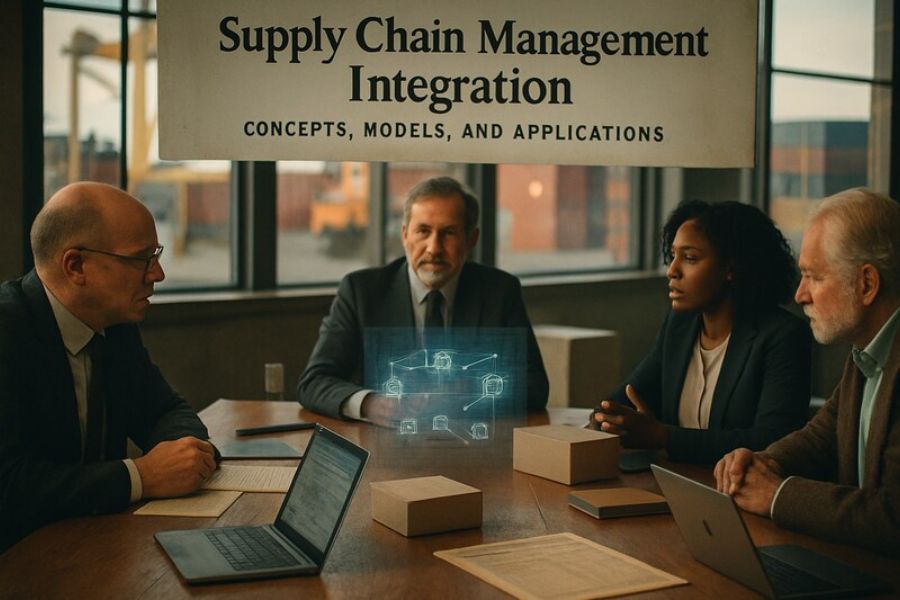
Supply Chain Management Integration: Concepts, Models, and Applications
As supply chains become more complex and interconnected, isolated optimisation efforts will no longer deliver sustainable results. Functional silos, fragmented data, and misaligned objectives often prevent organisations from achieving scaling benefits.

This is where supply chain management integration becomes a strategic imperative rather than an operational option. Integrated supply chains enable seamless coordination across functions, partners, and systems, driving efficiency, resilience, and competitive advantage.
Core Concepts of Supply Chain Integration
At its foundation, supply chain management integration refers to the alignment and coordination of processes, information, and decision-making across the entire supply chain. This integration operates on multiple levels internal, external, and strategic.
Internal integration focuses on synchronising activities across procurement, production, warehousing, logistics, and sales. When internal functions operate with shared goals and real-time information, organisations reduce delays, duplication, and conflicting priorities.
External integration extends this alignment to suppliers, logistics partners, and customers. Information sharing, collaborative planning, and joint performance metrics enable smoother material and information flows. Strategic integration goes a step further by aligning supply chain objectives with overall business strategy, ensuring that operational decisions support long-term growth and competitiveness.
Together, these concepts position supply chain management integration as a holistic capability that connects people, processes, and performance.
Key Supply Chain Integration Models
Several established models support effective supply chain management integration, each of which addresses different organisational contexts and maturity levels. One widely adopted approach is process integration, which aligns core processes such as demand planning, order fulfilment, and replenishment across functions and partners.
Models for integrating information focus on how visible and accurate data is. Shared forecasts, inventory data, and performance dashboards ensure that decisions are based on a single version of the truth. This reduces uncertainty and improves coordination across the supply chain.
Another important model is relationship-based integration. This approach emphasises trust, collaboration, and long-term partnerships rather than transactional interactions. Clear governance structures, joint planning forums, and aligned incentives form the backbone of this model.
Network integration models address multi-tier supply chains, enabling coordination beyond immediate suppliers and customers. These models are increasingly relevant in global supply networks where risks and dependencies extend across multiple layers.
By selecting and combining suitable models, organisations can tailor supply chain management integration to their operational realities.
Technology Enablers of SCM Integration
Technology plays a critical role in enabling supply chain management integration at scale. Manual coordination and disconnection systems are inadequate for environments characterised by speed and volatility. Digital platforms provide the visibility and connectivity required for integrated decision-making.
Enterprise Resource Planning (ERP) systems form the backbone of internal integration by linking functions through shared data and workflows. Advanced planning systems support synchro nised demand and supply planning, while transportation and warehouse management systems enable execution-level coordination.
Data analytics and dashboards convert raw information into actionable insights, supporting faster and more informed decisions. Cloud-based platforms facilitate collaboration with external partners, enabling real-time data sharing and joint planning.
Emerging technologies, such as artificial intelligence and automation, further enhance supply chain management integration by improving forecast accuracy, identifying risks early, and optimising complex tradeoffs across the network.
Real-World Uses and Effects on Business
The practical impact of effective supply chain management integration is visible across multiple dimensions of business performance. Integrated supply chains experience fewer disruptions, lower operating costs, and improved service levels. Decision-making becomes faster and more consistent, reducing reliance on reactive firefighting.
In manufacturing, integration aligns production schedules with real demand, reducing inventory imbalances and capacity bottlenecks. In distribution networks, it improves order fulfilment reliability and transportation efficiency. For global supply chains, integration enhances risk visibility and enables quicker response to disruptions.
From a strategic perspective, supply chain management integration supports scalability and innovation. Integrated partners collaborate on product development, sustainability initiatives, and continuous improvement efforts. This creates a supply chain that not only supports the business but actively contributes to its competitive positioning.
Frequently Asked Questions
What is supply chain management integration?
Supply chain management integration is the coordinated alignment of processes, information, and decision-making across internal functions and external partners. It ensures that procurement, production, logistics, and demand planning operate as a connected system rather than isolated activities.
Why is supply chain management integration important?
As supply chains become more complex, fragmented operations create delays, excess costs, and risk exposure. Supply chain management integration improves visibility, coordination, and responsiveness, enabling organisations to operate efficiently while supporting long-term business strategy.
What is the difference between internal and external supply chain integration?
Internal integration focuses on aligning functions within the organisation, such as sales, operations, procurement, and logistics. External integration extends this alignment to suppliers, logistics providers, and customers through shared data, collaborative planning, and aligned performance objectives.
Ending Notes
In today’s interconnected business environment, excellence cannot be achieved through isolated optimisation. Supply chain management integration provides the structural alignment required to synchronise processes, systems, and stakeholders across the value chain.
By understanding key integration concepts, applying appropriate models, and leveraging enabling technologies, organisations can transform fragmented operations into coherent, high-performing networks. The result is a supply chain that is more efficient, resilient, and strategically aligned capable of delivering sustained value in an increasingly complex world through effective supply chain management integration.
Image Reference: Freepik
Disclaimer: All trademarks, logos, and brand names are the property of their respective owners. All company, product, and service names used in this website are for identification purposes only. Use of these names, trademarks, and brands does not imply endorsement.