AI in Supply Chain | Improve Efficiency with AI | KnoWerX
Artificial intelligence is changing the way companies manage their supply chains. Artificial intelligence (AI) tools are helping organisations make faster, data-driven decisions from demand forecasting and inventory management to transportation planning and warehouse operations.
Today’s supply chains generate enormous amounts of data in purchasing, production, inventory, transportation and customer interactions. Doing this type of analysis manually can be difficult and time-consuming. Artificial intelligence can help businesses manage complex data, detect trends, and help with better decision-making.
Artificial Intelligence in Supply Chain Management is an important professional knowledge area as organisations seek to improve efficiency, reduce costs and respond to changing customer expectations.
What Is Artificial Intelligence in Supply Chain Management?
Artificial Intelligence in supply chain management is the use of artificial intelligence (AI) tools to analyse data, detect trends, automate certain activities, and support business decisions across the supply chain operations.
AI uses technologies like machine learning, predictive analytics, natural language processing and intelligent automation to process information and create insights.
For instance, businesses can use AI-powered forecasting tools that look at historical sales, market trends and seasonal patterns to predict future demand. Intelligent systems can also signal possible transportation delays or highlight abnormal inventory movement.
The goal is to increase visibility, planning and operational efficiency while helping supply chain professionals make better decisions.
7 Powerful Applications of AI in Modern Supply Chains
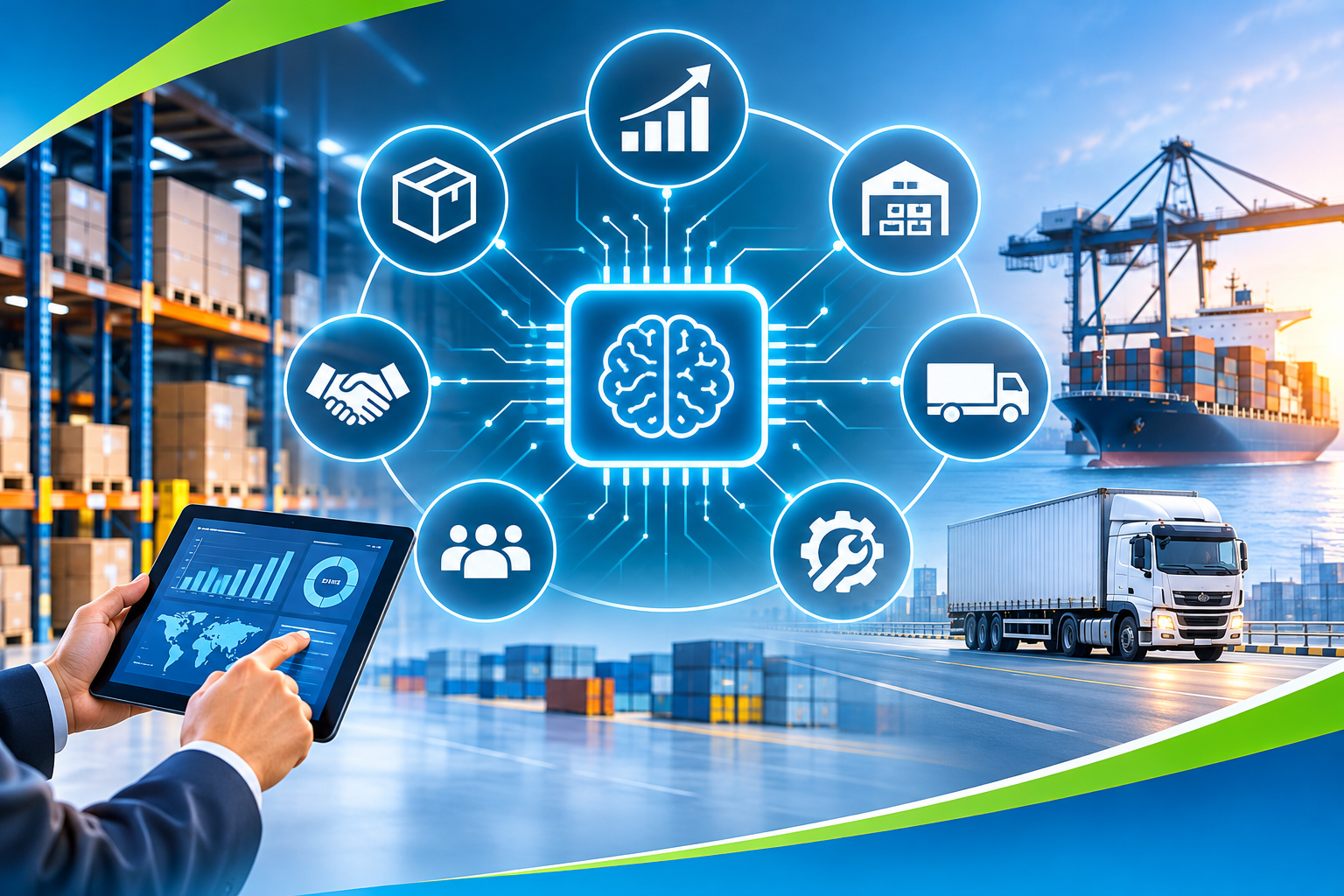
AI can support several supply chain activities. Here are seven important applications.
- Demand Forecasting
AI can analyse historical sales, customer behaviour, seasonal trends and other relevant information to identify demand patterns. This can help businesses develop more informed forecasts and respond to changing customer requirements.
- Inventory Management
AI-powered inventory systems can analyse stock levels, demand patterns and replenishment information. These insights can help businesses identify potential stock shortages, excess inventory and replenishment requirements.
- Warehouse Management
AI can support warehouse operations through intelligent picking systems, automated sorting, robotics and resource planning. These technologies can help improve warehouse productivity and operational accuracy.
- Transportation and Route Optimisation
AI can analyse traffic conditions, delivery schedules, transportation costs and route information to support more efficient logistics planning. Businesses can use these insights to improve delivery planning and resource utilisation.
- Supplier Risk Management
AI tools can help analyse supplier performance, delivery patterns and relevant risk information. This can help organisations identify potential supplier-related concerns and evaluate supply chain vulnerabilities.
- Predictive Maintenance
In manufacturing and logistics environments, AI can analyse equipment performance data to identify patterns that may indicate potential failures. Predictive maintenance can help businesses plan maintenance activities and reduce unexpected equipment downtime.
- Supply Chain Visibility
AI can help process information from different supply chain systems and identify unusual patterns or potential disruptions. Improved visibility can support faster responses and better coordination between teams.
Benefits of Artificial Intelligence in Supply Chain Management
The use of AI can provide several advantages when implemented effectively.
- Improved forecasting: Data analysis can help organisations understand demand patterns and improve planning decisions.
- Better inventory control: AI-supported insights can help businesses manage stock levels and replenishment more effectively.
- Operational efficiency: Automation can reduce repetitive manual activities and support faster processes.
- Cost optimisation: Better planning and resource utilisation can help identify opportunities to reduce operational costs.
- Improved decision-making: AI-generated insights can help professionals evaluate business conditions and make informed decisions.
- Greater supply chain visibility: Analysing information across supply chain activities can help identify potential problems earlier.
The actual benefits depend on data quality, technology capabilities, implementation and how effectively employees use AI-generated insights.
Challenges, Risks and Future Trends of AI in Supply Chain
“AI offers a lot of opportunities, but organisations need to think about the challenges of implementation.
Data quality and availability – Artificial intelligence systems require good information. Incomplete, inaccurate or inconsistent data can impact the quality of insights.
Integration with existing systems: Businesses may need to integrate AI solutions with existing enterprise resource planning, warehouse management and supply chain systems.
Cost of implementation: conventional artificial intelligence (AI) technology, infrastructure and employee training can require a significant investment.
Data security: Companies need to safeguard confidential business and supplier information.
Skills and expertise Employees need to know how to interpret AI-generated recommendations and apply them appropriately.
Looking ahead, artificial intelligence will increasingly play an important role in forecasting, planning, intelligent automation, digital supply chains and real-time decision support. Generative AI could also assist professionals in accessing information, summarising reports and aiding supply chain analysis.
But to make it work successfully, it will take a mix of technology, reliable data, process improvement and human expertise.
How Can Supply Chain Professionals Develop AI Skills?
As AI is increasingly used across supply chain functions, professionals need to understand the effects of these technologies on planning and operations.
You don’t have to be a data scientist or software developer to get AI-related skills. Supply chain experts can start by learning how data analytics, automation and predictive tools power business decisions.
Important areas to explore include:
- Understanding basic AI and machine learning concepts.
- Developing data interpretation and analytical skills.
- Learning how AI supports demand and inventory planning.
- Understanding digital supply chain technologies.
- Evaluating AI-generated insights before making business decisions.
- Staying informed about emerging supply chain technology trends.
Professional training in supply chain management can provide the operational knowledge needed to understand where and how AI can be applied.
KnoWerX has been involved in supply chain education and professional training since 1992. Its programmes cover areas such as planning, procurement, inventory, warehousing and supply chain technology. Professionals can explore relevant learning opportunities to strengthen their understanding of modern supply chain practices.
Frequently Asked Questions
How is AI used in supply chain management?
AI is used for demand forecasting, inventory optimisation, warehouse automation, transportation planning, supplier risk assessment and predictive maintenance.
How does AI improve inventory management?
AI analyses historical sales, demand patterns and other relevant data to help businesses forecast requirements, reduce excess stock and prevent stockouts.
What are the benefits of AI in supply chain management?
AI can improve forecasting accuracy, operational efficiency, supply chain visibility, decision-making and responsiveness to disruptions.
Ending Notes – Prepare for the Future of AI-Driven Supply Chains
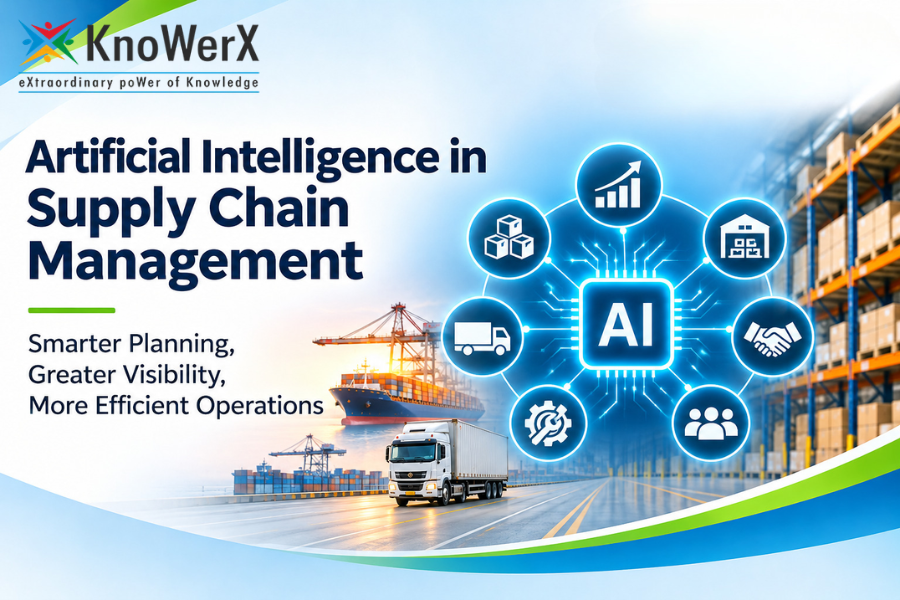
Artificial Intelligence is transforming the way organisations predict demand, manage inventory, operate warehouses and align supply chain activities. Companies that understand how to use standard artificial intelligence can improve visibility, make better decisions and respond more efficiently to operational challenges.
Supply chain professionals need to know more and more about the traditional supply chain principles and emerging technologies.
Explore our professional training programmes at KnoWerX to broaden your supply chain knowledge and equip yourself for the changing demands of modern supply chain management.
Contact KnoWerX to find out more about the supply chain management and technology training programmes offered.
Image Reference: Magnific
Disclaimer: All trademarks, logos, and brand names are the property of their respective owners. All company, product, and service names used in this website are for identification purposes only. Use of these names, trademarks, and brands does not imply endorsement.