Operations Management Skills | Enhance Your Professional Growth | KnoWerX
Efficient operations are the foundation of every successful business. Whether an organisation is engaged in manufacturing, retail, logistics, healthcare or services, its ability to manage resources, processes and people has a direct impact on business performance.
Operations management is concerned with planning, organising and improving the activities needed to deliver products and services. Those working in this area require a combination of technical knowledge, analytical thinking and management capabilities.

Having the right operations management skills can help professionals increase productivity, control costs, solve operational problems and contribute to organisational growth. These are skills that are useful not only for operations managers but also for supply chain professionals, production planners, warehouse managers and business leaders.
What Are Operations Management Skills and Why Are They Important?
Operations management skills are the abilities required to manage business processes, resources, people and activities efficiently. They help organisations deliver products and services that meet quality, cost and time requirements.
Strong operations management skills are important because they help businesses:
- Improve productivity and operational efficiency.
- Reduce unnecessary costs and process waste.
- Maintain consistent product and service quality.
- Manage resources effectively.
- Improve coordination between departments.
- Respond to operational challenges.
- Support continuous business improvement.
As businesses face increasing competition and changing customer expectations, professionals with strong operational capabilities can make valuable contributions.
10 Essential Operations Management Skills Every Professional Should Develop
1. Planning and Organisational Skills
Planning is a critical skill in operations management. Professionals must organise activities, allocate funds, and set priorities to achieve business objectives.
Effective planning enables teams to manage workloads, coordinate schedules and avoid unnecessary delays.
2. Problem-Solving and Decision-Making
Operational challenges can arise from equipment failures, material shortages, process inefficiencies or unexpected changes in demand.
Professionals need the ability to identify problems, analyse possible causes and evaluate appropriate solutions. Strong decision-making enables organisations to respond effectively and minimise disruptions.
3. Supply Chain Management Knowledge
Operations closely connect with procurement, inventory, production, warehousing, and distribution.
Supply chain management understanding helps professionals to understand the interrelation of different business functions. It also helps to improve the coordination between suppliers, internal departments and customers.
4. Inventory Management Skills
It is important to keep the right stock levels for operational efficiency. Excess inventory adds to holding costs. Insufficient inventory can halt production and damage customer service.
Professionals need to know how to do inventory planning, stock control, replenishment and inventory performance measurement.
5. Leadership and Team Management
Operations managers often work across business functions, coordinating teams. Leadership skills help professionals set expectations, delegate tasks and inspire staff to work towards common goals.
Good team management also promotes accountability, collaboration and a positive working environment.
6. Analytical and Data Interpretation Skills
Operational decisions increasingly depend on accurate information. Professionals must be comfortable reviewing performance data, identifying trends and interpreting operational metrics.
Analytical skills can help identify bottlenecks, evaluate productivity and highlight opportunities for improvement.
7. Communication and Collaboration
Operations involve multiple departments, suppliers and stakeholders. Clear communication ensures that everyone understands requirements, responsibilities and timelines.
Professionals who communicate effectively can coordinate activities, resolve misunderstandings and support cross-functional teamwork.
8. Quality Management Skills
Maintaining quality is essential for customer satisfaction and business reputation.
Professionals should understand quality standards, process monitoring, corrective actions and continuous improvement. Knowledge of quality management approaches such as Six Sigma can also support process improvement initiatives.
9. Technology and Digital Skills
Modern operations increasingly use digital systems to manage inventory, production, procurement and business information.
Understanding technologies such as Enterprise Resource Planning (ERP), warehouse management systems and data analytics tools can help professionals work more effectively and make informed decisions.
10. Adaptability and Continuous Improvement
Business requirements and operating conditions can change quickly. Professionals must be willing to learn, adapt processes and explore better ways of working.
A continuous improvement mindset helps organisations identify inefficiencies, reduce waste and improve operational performance over time.
How Do Operations Management Skills Improve Business Performance?
Strong operations management skills can deliver quantifiable improvements across an organisation.
Increased productivity: Better planning and allocation of resources allow teams to complete activities more efficiently.
Cost control: Waste and inefficiencies in processes can be identified to cut unnecessary spending.
Better quality: Quality management practices help ensure consistent products and services.
Improved customer satisfaction: Efficiency in operations can boost the reliability of deliveries and the level of service.
Improved coordination – Communication and collaboration help departments work towards common business goals.
Improved decision-making: Analytical capabilities help managers make decisions based on relevant operational information.
These benefits together contribute to the improvement of the business performance and the long-term growth of the organisation.
How to Develop and Improve Your Operations Management Skills?
Operations management skills can be developed through professional experience, structured learning and continuous practice.
Here are some practical ways to improve them:
- Get professional training: Enrol in relevant operations and supply chain management courses to acquire structured knowledge.
- Learn from real business processes: How procurement, production, inventory and distribution activities work.
- Sharpen your analytical skills: Learn how to read operational data and performance indicators better.
- Participate in improvement projects: Get involved and experience the identification and correction of inefficiencies in the process.
- Build leadership skills: Look for opportunities to lead teams and take ownership of tasks.
- Stay current: Learn about new technologies, industry practices and modern ways of running operations.
Professional education and practical experience combined can be a good basis for career development.
Best Courses and Certifications to Strengthen Operations Management Skills
Professional certifications and specialised training programmes can help individuals learn the knowledge they need for operations and supply chain jobs.
KnoWerX Education offers a variety of learning opportunities in the area of operations management, including:
- ASCM CPIM – Develops knowledge of inventory and planning management.
- ASCM CSCP: Covers supply chain management end to end.
- ASCM CLTD: Logistics, transportation and distribution focus.
- CIMO: Certified Inventory Management Officer, knowledge related to inventory.
- CWMP – Certified Warehouse Management Professional. It is for Warehouse Management.
- Six Sigma: Knowledge of process improvement and quality management.
- Supply Chain Trends and Techniques: Helps professionals in analysing modern supply chain concepts and processes.
KnoWerX has been involved in supply chain education and professional training since 1992. Its programmes include classroom instructor-led and virtual instructor-led learning options, depending on programme availability.
Professionals can explore these programmes based on their current responsibilities and future career objectives.
Frequently Asked Questions
What are operations management skills?
Operations management skills are the abilities required to plan, organise, monitor and improve business processes and resources.
What are the most important operations management skills?
Key skills include planning, problem-solving, leadership, communication, analytical thinking, inventory management, quality management and continuous improvement.
Which courses can help develop operations management skills?
Professional programmes in operations, supply chain management, inventory management and process improvement can help build relevant knowledge and capabilities.
Strengthen Your Operations Management Capabilities with KnoWerX
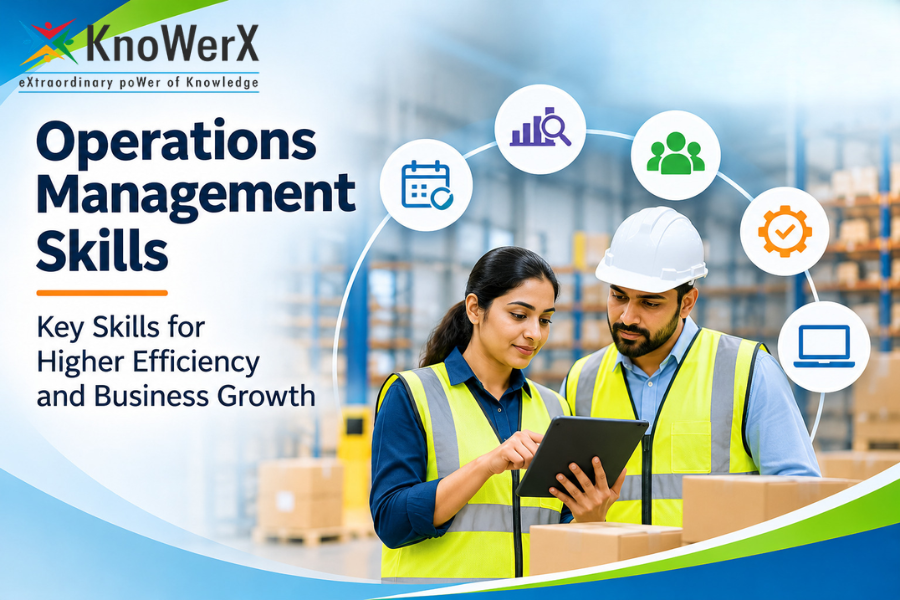
Operations management requires a combination of planning, analytical, leadership, communication and technical skills. Developing these capabilities can help professionals. If you are seeking to move forward in your present operational duties or to ready yourself for a bigger management role, then investing in professional learning might be a good idea. broader management role, investing in professional learning can be a valuable step.
Browse KnoWerX operations and supply chain management training programmes and take your next step to enhance your professional skills.
Image Reference: Magnific
Disclaimer: All trademarks, logos, and brand names are the property of their respective owners. All company, product, and service names used in this website are for identification purposes only. Use of these names, trademarks, and brands does not imply endorsement.