
Lean Manufacturing Principles in Supply Chain Management
In an environment where customer expectations shift faster than inventory cycles, efficiency alone is no longer enough. Retail organisations today must be fast, flexible, and precise without incurring excess costs or complexity. This is where Lean Manufacturing principles, originally developed for production floors, have become highly relevant to modern Retail Supply Chain management.
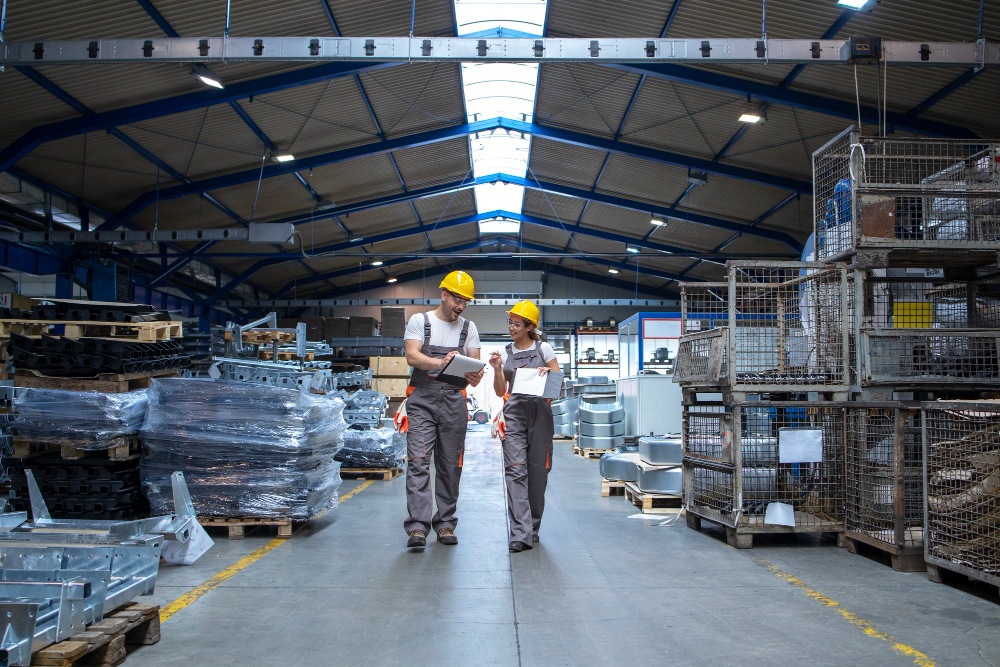
Lean does not advocate for shortcuts. It is about designing systems that deliver value with minimal waste, maximum flow, and disciplined execution. When applied thoughtfully, Lean transforms the Retail Supply Chain from a cost centre into a strategic capability.
Lean Thinking and Its Relevance to the Retail Supply Chain
Lean thinking begins with a simple question: What truly creates value for the customer? In a Retail Supply Chain, value is defined by product availability, speed, consistency, and cost efficiency. Anything that does not directly support these outcomes becomes a candidate for elimination or redesign.
Retail supply chains are uniquely complex. They operate across multiple SKUs, volatile demand patterns, seasonal spikes, and omnichannel fulfilment models. Lean thinking helps retailers move away from reactive firefighting and toward stable, repeatable processes. Instead of buffering uncertainty with excess inventory, Lean focuses on improving flow, responsiveness, and decision accuracy across the Retail Supply Chain.
This shift is particularly relevant in an era where margins are thin and customer loyalty is fragile.
Key Lean Principles Applied in Retail Supply Chain
Several Lean principles translate directly into Retail Supply Chain operations. The first is value stream mapping, which provides end-to-end visibility into how products and information flow from suppliers to stores or end customers. Value stream mapping reveals delays, redundancies, and bottlenecks that frequently hide within functional silos.
Another core principle is pull-based replenishment. Rather than pushing inventory based on forecasts alone, Lean Retail Supply Chain models respond to real demand signals. This reduces overstocks, markdowns, and obsolescence while improving availability where it matters most.
Standardised processes are equally critical. Consistency in planning, replenishment, and execution reduces variability, improves predictability, and enables scalable growth. Over time, these principles create a Retail Supply Chain that is stable yet adaptable.
Waste Reduction in Retail Supply Chain Operations
Waste in a Retail Supply Chain extends far beyond excess inventory. It includes unnecessary transportation, over-processing, waiting time, inaccurate data, and poor coordination between teams. Lean identifies these inefficiencies systematically and removes them at the root.
For example, long approval cycles delay replenishment decisions. Fragmented systems create duplicate data entry and errors. Poor demand signals lead to frequent expediting. Each of these issues adds cost without adding customer value.
By applying Lean practices, retailers streamline workflows, reduce handoffs, and improve information accuracy. The result is a Retail Supply Chain that consumes fewer resources while delivering better outcomes.
Role of Collaboration and Visibility in a Lean Retail Supply Chain
Lean cannot function in isolation. A truly Lean Supply Chain depends on collaboration and transparency across internal teams and external partners. Suppliers, logistics providers, and retail operations must operate with shared objectives and aligned metrics.
Visibility plays a central role. Having real-time information about demand, inventory, and capacity makes it easier and faster to make decisions. When all stakeholders work from a single version of the truth, the Retail Supply Chain becomes more resilient and less reactive.
Platforms and frameworks developed within ecosystems such as KnoWerX increasingly support this integration by combining process discipline with analytical insight. This allows Lean principles to scale beyond individual functions and into the broader supply network.
Business Benefits of Lean Practices in Retail Supply Chain
The impact of Lean on Supply Chain performance is measurable and sustained. Retailers experience lower inventory holding costs, improved service levels, and faster response to market changes. Removing noise from the system improves forecast accuracy, while operational teams spend less time managing exceptions.
From a strategic perspective, Lean enhances agility. Retailers can introduce new products faster, adapt to demand shifts, and support omnichannel models without proportional increases in complexity. Over time, the Retail Supply Chain evolves from a constraint into a competitive advantage.
Lean also supports sustainability goals by reducing waste, energy consumption, and unnecessary movement across the network.
Challenges and Best Practices for Implementing Supply Chain Analytics
While Lean principles are powerful, implementation is not without challenges. Cultural resistance, fragmented data, and over-reliance on legacy processes often slow progress. Many organisations attempt to layer analytics over broken workflows, limiting their impact.
Best-in-class retailers take a different approach. They stabilise processes first, define clear performance metrics, and then deploy analytics to support decision-making. Supply chain analytics become an enabler of Lean, not a substitute for it.
Successful Retail Supply Chain transformations also invest in capability building. Teams are trained to interpret data, identify root causes, and continuously improve processes. Governance structures ensure that Lean practices are sustained rather than treated as one-time initiatives.
Frequently Asked Questions
What is Lean thinking in the context of Retail Supply Chain management?
Lean thinking in a Retail Supply Chain focuses on delivering maximum customer value with minimum waste. Instead of relying on excess inventory or reactive decision-making, Lean emphasises smooth flow, accurate demand signals, standardised processes, and continuous improvement to ensure product availability, speed, and cost efficiency.
How is Lean Manufacturing relevant to retail organisations?
Although Lean Manufacturing originated on factory floors, its principles apply strongly to retail supply chains. Retailers face challenges such as volatile demand, seasonal spikes, and omnichannel fulfilment. Lean helps streamline operations, reduce waste, improve responsiveness, and create stable yet flexible supply chain systems that can scale efficiently.
What types of waste exist in a Retail Supply Chain?
Waste in retail supply chains includes:
Excess inventory and markdowns
Unnecessary transportation and handling
Waiting time in approvals or replenishment cycles
Duplicate data entry and system inefficiencies
Forecast inaccuracies leading to expediting
Poor coordination between teams
Lean identifies and removes these inefficiencies to improve performance without increasing complexity.
Ending Notes
Lean Manufacturing principles, when applied with discipline and context, offer a powerful blueprint for Supply Chain excellence. They replace complexity with clarity, reaction with flow, and cost with value.
As retail environments grow more volatile, Lean provides the structural stability required to scale intelligently. Supported by platforms, analytics, and integration frameworks such as KnoWerX, organisations can build Retail Supply Chain systems that are efficient, resilient, and strategically aligned ready to compete in a world where execution matters as much as strategy.
Image Reference: Freepik
Disclaimer: All trademarks, logos, and brand names are the property of their respective owners. All company, product, and service names used in this website are for identification purposes only. Use of these names, trademarks, and brands does not imply endorsement.