Currency Rate Fluctuations | Impact on Supply Chains | KnoWerX

Currency Rate Fluctuations and Their Impact on Supply Chains Global supply chains operate across multiple currencies, borders, and economic environments. When exchange rates shift—even marginally the financial and operational consequences can be significant. Currency rate fluctuations are no longer just a concern for finance teams. They directly affect procurement costs, supplier relationships, inventory decisions, and overall supply chain strategy. Understanding how currency volatility works and how to manage it is a critical capability for supply chain leaders in 2026 and beyond, especially for organisations sourcing internationally, selling across markets, or managing cross-border logistics. How Currency Rate Fluctuations Affect Global Supply Chain Costs Impact on Procurement and Raw Material Costs One of the most immediate effects of currency rate fluctuations is on procurement costs. When a buyer’s home currency weakens against the currency of a supplier’s country, the cost of imported goods rises even if the supplier has not changed their price. For organisations sourcing raw materials, components, or finished goods from international suppliers, such fluctuations can rapidly erode margins. A procurement strategy that appeared cost-effective when we signed contracts may become significantly more expensive as exchange rates shift over months or quarters. Conversely, when the buyer’s currency strengthens, import costs fall, creating a temporary cost advantage. However, relying on favourable exchange rates as part of a cost strategy introduces risk, since currency movements are consistently difficult to predict. Effect on Transportation and Logistics Expenses Currency rate fluctuations also affect the cost of transportation and logistics. Fuel prices, freight rates, port handling charges, and third-party logistics fees often use US dollars as their denomination the dominant currency in global shipping. When a company’s reporting currency weakens against the dollar, every freight invoice becomes pricier in local currency terms, even if freight market rates remain stable. This creates pressure on landed cost calculations and makes budget planning more complex across international supply chains. Influence on Pricing and Margin Management For businesses selling across multiple markets, currency volatility creates pricing challenges. Revenues earned in a weaker foreign currency translate to lower value when repatriated, compressing margins even when sales volumes remain strong. Supply chain leaders must work closely with finance and commercial teams to understand how currency movements affect the true profitability of cross-border trade and adjust sourcing, pricing, or inventory strategies accordingly. Managing Supplier Risk During Currency Rate Fluctuations Renegotiating Contracts and Payment Terms Currency rate fluctuations can strain supplier relationships, particularly when one currency locks in price agreements but the supplier incurs costs in another. As exchange rates move, suppliers operating on thin margins may face financial pressure, which can lead to quality compromises, delivery delays, or in severe cases, supplier failure. Proactive supply chain leaders review supplier contracts regularly and build in provisions for currency adjustment — particularly for long-term agreements. Flexible payment terms, multi-currency invoicing arrangements, and open dialogue with key suppliers help maintain relationship stability during periods of volatility. Diversifying the Supplier Base Across Geographies Geographic diversification is one of the most effective strategies for managing supplier risk during currency rate fluctuations. When a single country or currency zone concentrates sourcing, the entire supply base faces the same exchange rate risk. By qualifying suppliers across multiple regions, such as maintaining both Asian and nearshore suppliers for the same category, organisations can shift sourcing volumes toward more cost-effective origins as currency conditions change. This flexibility reduces dependency and provides a natural hedge against exchange rate exposure. Monitoring Supplier Financial Health During extended periods of currency rate fluctuations, suppliers in affected markets may experience deteriorating financial health. Regular supplier risk assessments, including financial health checks allow organisations to identify vulnerable suppliers early and take preventive action before disruptions occur. Currency Hedging Strategies for Supply Chain Leaders Understanding Financial Hedging Instruments Currency hedging refers to the use of financial instruments to lock in exchange rates for future transactions, reducing exposure to adverse currency movements. The most commonly used instruments are forward contracts, options, and currency swaps. A forward contract allows an organisation to agree on an exchange rate today for a transaction that will occur in the future providing cost certainty for planned purchases. Currency options offer the right, but not the obligation, to exchange at a predetermined rate, allowing organisations to benefit if the market moves favourably while capping their downside risk. Supply chain leaders do not need to manage these instruments directly, but they must understand how hedging decisions affect procurement budgets, supplier payment schedules, and cash flow planning. Operational Hedging Through Sourcing Strategy Beyond financial instruments, supply chain leaders can implement operational hedging structuring sourcing and procurement strategies in ways that naturally reduce currency exposure. This includes matching revenues and costs in the same currency where possible, sourcing from countries whose currencies correlate with the markets being served, and building flexibility into supplier agreements to adjust volumes as exchange conditions change. Operational hedging is particularly valuable for organisations that do not have the scale or financial infrastructure to use complex financial instruments but still need to manage currency risk effectively. Aligning Hedging Strategy with Supply Chain Timelines Effective currency hedging requires close alignment between supply chain lead times and the duration of hedging instruments. A procurement team ordering goods with a twelve-week lead time needs hedging coverage that matches that window; otherwise, the gap exposes the organisation. Supply chain and finance teams must collaborate on hedging strategies that reflect actual procurement cycles, order volumes, and payment terms not just theoretical financial exposures. Role of Demand Planning During Exchange Rate Volatility Adjusting Forecast Assumptions for Currency Impact Demand planning during periods of currency rate fluctuations requires more than tracking sales trends. Exchange rate movements can affect consumer pricing, competitor behaviour, and the cost-competitiveness of imported alternatives all of which influence demand patterns. Demand planners must build currency sensitivity into their forecasting models, working with commercial teams to understand how pricing adjustments driven by exchange rate changes may affect volume expectations. A price increase triggered by a weaker currency can suppress demand something a standard statistical forecast may not
Circular Supply Chains: The Future of Resource Efficiency

Circular Supply Chains: The Future of Resource Efficiency The traditional supply chain model was built on a linear structure extract, produce, consume, and discard. For decades, this approach prioritized scale, speed, and cost efficiency. However, growing environmental pressures, resource scarcity, rising waste generation, and changing consumer expectations are forcing businesses to rethink how supply chains operate. In 2026, sustainability is no longer a peripheral initiative. It has become a strategic business requirement. This is where Circular Supply Chains are becoming increasingly popular. Rather than treating products and materials as disposable outputs, circular systems aim to extend resource life cycles, recover value continuously, and minimize waste across the network. The shift toward Circular Supply Chains reflects a deeper transformation in global business strategy one where efficiency is no longer measured only by cost reduction, but also by how intelligently resources are utilized and regenerated. What Are Circular Supply Chains and Why They Matter Understanding the Concept of Circularity Circular Supply Chains are systems designed to keep materials, products, and resources in use for as long as possible through reuse, recycling, refurbishment, remanufacturing, and recovery. Unlike traditional linear supply chains, circular models aim to create a closed-loop ecosystem where waste is minimized and value is continuously extracted from existing resources. The focus shifts from ownership and disposal toward regeneration and lifecycle optimization. This transformation is becoming increasingly important as businesses face mounting pressure to reduce environmental impact while maintaining operational efficiency. The Shift from Linear to Circular Thinking Traditional supply chains often depend heavily on continuous extraction of raw materials. This creates long-term sustainability concerns, particularly as resource availability becomes more constrained. Circular Supply Chains challenge this approach by introducing systems that prioritize: Product Longevity – Products are designed to last longer, reducing the need for frequent replacement. Resource Recovery – Materials are recovered and reintroduced into the supply chain instead of being discarded. Waste Reduction – Operational processes are redesigned to minimize excess production, packaging waste, and disposal. Regenerative Value Creation – Businesses generate value not just from production, but also from recovery, refurbishment, and reuse. This model changes how organizations think about production, consumption, and profitability. Why Circular Supply Chains Matter in 2026 The importance of Circular Supply Chains continues to grow due to several interconnected factors. Rising Resource Scarcity – The availability of raw materials is becoming increasingly uncertain and expensive. Circular systems reduce dependency on virgin resources by maximizing reuse. Sustainability Regulations – Governments and global regulatory bodies are introducing stricter environmental compliance requirements. Businesses must now demonstrate responsible resource management practices. Consumer Expectations – Modern consumers increasingly favor brands that prioritize sustainability and environmental responsibility. Supply Chain Resilience – Circular models reduce reliance on external sourcing and improve continuity by creating internal recovery and reuse systems. Long-Term Cost Optimization – Although implementation may require investment, circular systems often reduce waste, lower material costs, and improve resource efficiency over time. In many ways, Circular Supply Chains are no longer just sustainability initiativesthey are becoming strategic business models. How Circular Supply Chains Improve Resource Efficiency Extending Product and Material Lifecycles One of the biggest advantages of Circular Supply Chains is their ability to extend the usable life of products and materials. Instead of discarding products after use, companies recover, repair, refurbish, or remanufacture them. This reduces waste generation while maximizing the economic value extracted from each resource. Reducing Raw Material Dependency Global industries face increasing risks related to raw material shortages and price volatility. By reusing and recycling materials internally, Circular Supply Chains help organizations reduce dependence on external sourcing. This not only improves sustainability but also strengthens supply chain resilience against global disruptions. Improving Waste Management Traditional supply chains often generate significant operational waste across manufacturing, packaging, and distribution. Circular systems redesign these processes to minimize excess and create mechanisms for material recovery. This creates a more efficient and environmentally responsible operational model. Supporting Sustainable Manufacturing Manufacturing processes within Circular Supply Chains increasingly focus on renewable energy usage, recyclable materials, and modular product design. Products are designed for easier disassembly, repair, and material separation, making recovery more practical and cost-effective. Enhancing Economic Efficiency Resource efficiency is not only an environmental objective it also has financial implications. Businesses that reduce waste and maximize material utilization often achieve: Lower operational costs Improved inventory efficiency Reduced disposal expenses Better long-term resource stability As resource costs continue to rise globally, these efficiencies become increasingly valuable. Technologies Enabling Circular Supply Chain Transformation Digital Tracking and Visibility Technology plays a critical role in enabling Circular Supply Chains by providing visibility into product movement and material usage. Digital tracking systems help organizations monitor products across their lifecycle from production to recovery. This visibility supports better resource planning and recovery management. Internet of Things (IoT) IoT devices enable real-time monitoring of product condition, usage patterns, and operational performance. This data helps companies determine when products require maintenance, refurbishment, or replacement. It also improves predictive decision-making within circular systems. Artificial Intelligence and Analytics AI-powered analytics help organizations identify opportunities for reuse, optimize recovery processes, and improve resource allocation. Predictive models support smarter inventory and lifecycle management decisions. In complex supply chains, this intelligence is essential for scaling circular operations efficiently. Blockchain for Traceability Transparency is critical in circular ecosystems. Blockchain technology enables secure tracking of materials and products throughout the supply chain, improving traceability and trust. This aspect becomes particularly important for industries with strict sustainability and compliance requirements. Automation and Robotics Automation technologies improve sorting, recycling, and remanufacturing processes. Advanced robotics can identify and separate reusable materials more efficiently, reducing operational costs and increasing recovery rates. These technologies are accelerating the scalability of Circular Supply Chains across industries. Challenges Companies Face in Building Circular Supply Chains High Initial Investment Transitioning from linear to circular systems often requires substantial investment in technology, infrastructure, and process redesign. Many organizations struggle to balance short-term costs with long-term benefits. Complex Reverse Logistics Unlike traditional supply chains, circular systems require reverse logistics networks to recover products and materials from customers.
Strait of Hormuz Closure | Oil & Trade | KnoWerX

Strait of Hormuz Closure: What It Means for Oil & Trade The possibility of a Strait of Hormuz closure is no longer a distant geopolitical scenario it is a strategic risk that businesses across industries must actively consider. In 2026, global supply chains are tightly interconnected, and a disruption at a single chokepoint can trigger cascading effects across energy markets, trade routes, and economic stability. For organizations dependent on global logistics and energy flows, understanding the implications of a Strait of Hormuz closure is not optional. It is essential for building resilient, future-ready supply chains. Why the Strait of Hormuz Is Critical to Global Trade A Strategic Global Chokepoint The Strait of Hormuz is one of the most critical maritime passages in the world. Connecting the Persian Gulf to the Arabian Sea, it serves as a primary route for transporting crude oil from major producing nations to global markets. A significant percentage of the world’s oil supply passes through this narrow corridor every day. This makes the region not just important but indispensable to the functioning of the global energy ecosystem. Because of this concentration, even minor disruptions can create immediate volatility in oil prices and supply availability. A complete Strait of Hormuz closure would represent one of the most severe supply shocks in modern history. Dependence of Global Economies Countries across Asia, Europe, and beyond rely heavily on oil shipments that pass through this route. The uninterrupted operation of this route directly ties industries such as manufacturing, transportation, and logistics. Oil is not the only dependency. The passage also supports the movement of liquefied natural gas (LNG) and other critical commodities. This reinforces the systemic importance of the strait within global trade networks. In essence, the Strait of Hormuz is not just a route it is a lifeline. What Happens If the Strait of Hormuz Closes Immediate Impact on Oil Supply A Strait of Hormuz closure would instantly disrupt the flow of millions of barrels of oil per day. This would create a sharp supply shortage in global markets, leading to rapid price escalation. Oil-importing countries would face immediate pressure to secure alternative supplies, often at significantly higher costs. This would intensify competition and create market instability. Surge in Oil Prices and Inflation With supply constrained and demand remaining relatively stable, oil prices would likely surge. This increase would ripple across industries, driving up transportation and production costs. The result would be widespread inflation, affecting everything from consumer goods to industrial manufacturing. Businesses would need to absorb higher costs or pass them on to customers, both of which impact profitability. Disruption of Global Trade Routes A closure would not only impact oil shipments but also disrupt broader trade flows in the region. Shipping routes would need to be rerouted, increasing transit times and logistical complexity. Ports and alternative routes would experience congestion, further delaying shipments. The knock-on effect would be reduced efficiency across global supply chains. Increased Geopolitical Tension A closure of the Strait of Hormuz would likely lead to heightened geopolitical tensions, complicating trade and supply chain planning. Sanctions, policy changes, and security risks could intensify, creating an unpredictable operating environment. Supply Chain and Trade Risks for Businesses Energy Cost Volatility One of the most immediate risks of a Strait of Hormuz closure is the sharp increase in energy costs. Businesses that rely heavily on fuel such as logistics, manufacturing, and aviation would face significant cost pressures. This volatility makes budgeting and forecasting more challenging, impacting financial planning and operational stability. Supply Disruptions and Delays Disruptions in oil transportation affect more than just energy supply. They influence the movement of goods across industries. Delays in shipping, increased transit times, and reduced availability of transportation capacity can disrupt production schedules and inventory management. Demand-Supply Imbalance Uncertainty in supply can lead to mismatches between demand and availability. Businesses may face shortages of critical inputs or struggle to meet customer demand due to logistical constraints. This imbalance can result in lost revenue and reduced customer satisfaction. Increased Risk Exposure Across the Network A Strait of Hormuz closure exposes vulnerabilities in supply chain design particularly in organizations that rely on single sourcing, centralized production, or limited logistics options. The ripple effects can extend across multiple tiers of suppliers, amplifying disruption. How Companies Can Build Resilient Supply Chains Diversification of Supply Sources One of the most effective responses to a Strait of Hormuz closure is to reduce dependency on any single region or route. By sourcing from multiple geographies, companies can maintain continuity even when one pathway is disrupted. This approach aligns with broader supply chain diversification strategies, which are increasingly becoming standard practice. Alternative Transportation and Routing Strategies Businesses must explore alternative logistics routes and transportation modes. While these options may involve higher costs, they provide critical flexibility during disruptions. Developing contingency logistics plans ensures that operations can continue even under constrained conditions. Strategic Inventory and Buffer Planning Maintaining buffer stock for critical materials allows companies to absorb short-term shocks without halting operations. This is particularly important in industries where supply disruptions can have immediate consequences. The key is to balance inventory costs with risk exposure. Digital Visibility and Predictive Capabilities Investing in technology enables real-time tracking of shipments and proactive risk management. Predictive analytics can help identify potential disruptions and recommend alternative actions. This level of visibility is essential in managing complex, global supply chains. Strengthening Supplier and Partner Collaboration Close collaboration with suppliers and logistics partners improves communication and coordination during disruptions. Strong relationships enable faster response times and more effective problem-solving. Building Strategic Capability Through Learning Resilience is not just about systems it is about people. Supply chain professionals must be equipped with the skills to navigate uncertainty and make strategic decisions. At KnoWerX, professionals are trained to understand global risks such as a Strait of Hormuz closure and develop structured responses through globally aligned supply chain frameworks. This capability is critical in designing supply chains that are not only efficient but also adaptable. The Strategic Imperative
Best Supply Chain Certifications | Lead Industry | KnoWerX

Why Supply Chain Certifications Matter in Today’s Competitive Market Supply chains are no longer linear, predictable systems. They are dynamic, interconnected ecosystems shaped by global demand shifts, digital transformation, and constant disruption. In this environment, professionals are expected to think beyond operations and contribute strategically. This is exactly where the best supply chain certifications begin to create real differentiation. The best supply chain certifications act as structured frameworks that validate knowledge, sharpen decision-making, and align professionals with global standards. They are not just credentials—they represent a deeper understanding of how modern supply chains function across planning, sourcing, manufacturing, and distribution. In a competitive job market, having one of the best supply chain certifications signals that a professional is serious about growth, capable of handling complexity, and ready to take on higher responsibilities. For organisations, certified professionals bring consistency, process clarity, and improved performance outcomes. Best Supply Chain Certifications for Career Growth Choosing from the best supply chain certification requires understanding what each program offers and how it aligns with your career goals. Some certifications focus on operational depth, while others provide a broader, strategic perspective. APICS Certified Supply Chain Professional (CSCP) The Association for Supply Chain Management offers the CSCP program, one of the best supply chain certifications for professionals aiming to master end-to-end supply chain management. CSCP focuses on the entire supply chain from supplier relationships to customer delivery. It covers topics such as supply chain design, global logistics, risk management, and digital transformation. Professionals who pursue this certification gain a holistic understanding of how different functions connect to create value. APICS Certified in Planning and Inventory Management (CPIM) Another highly respected option among the best supply chain certifications is CPIM. This program dives deep into internal operations, particularly production planning and inventory management. CPIM helps professionals understand demand forecasting, material requirements planning, capacity planning, and inventory control. It is especially valuable for those working in manufacturing, operations, or supply planning roles who want to build strong technical expertise. ASCM Supply Chain Operations Reference – Digital Standard (SCOR DS) The SCOR DS certification is gaining recognition as one of the best supply chain certifications for process standardisation and performance improvement. This program is based on the SCOR framework, which provides a structured model for analysing and improving supply chain processes. It focuses on metrics, benchmarking, and process integration. Professionals who complete SCOR DS develop the ability to diagnose inefficiencies and implement measurable improvements across supply chain functions. Each of these programs represents a different dimension of the best supply chain certifications, allowing professionals to choose based on their career stage and focus area. Key Skills You Gain from the Best Supply Chain Certifications Pursuing the best supply chain certifications is not just about passing an exam it is about building capabilities that directly impact business performance. One of the most critical skills developed through the best supply chain certifications is analytical thinking. Professionals learn how to interpret data, identify patterns, and make informed decisions that optimise supply chain performance. Another key capability is end-to-end visibility. The best supply chain certifications teach professionals to look beyond individual functions and understand how procurement, production, warehousing, and distribution interact within a larger system. Problem-solving is also a major focus. Supply chains are constantly exposed to disruptions, and the best supply chain certifications equip professionals with structured approaches to manage uncertainty and maintain continuity. Additionally, these certifications strengthen communication and cross-functional collaboration. Professionals learn how to align different departments and stakeholders toward common supply chain objectives. How to Choose the Best Supply Chain Certification for Your Career Selecting from the best supply chain certifications depends on your current role, career aspirations, and industry exposure. If you are looking to build a strong foundation in operations and planning, certifications like CPIM are among the best supply chain certifications to consider. They provide deep insights into internal processes and operational efficiency. For professionals aiming to move into leadership roles or strategic positions, CSCP stands out among the best supply chain certifications due to its focus on end-to-end supply chain management. If your goal is process improvement, performance measurement, or consulting, SCOR DS is one of the best supply chain certifications that can help you develop structured problem-solving capabilities. It is also important to consider factors such as learning format, time commitment, and alignment with your long-term career vision when choosing from the best supply chain certifications. Frequently Asked Questions Ending Notes – Career Benefits of Earning the Best Supply Chain Certifications Earning one of the best supply chain certification can significantly transform your career trajectory. These certifications are widely recognised across industries, making professionals more competitive in the job market. One of the most immediate benefits of the best supply chain certifications is enhanced credibility. Employers trust certified professionals to handle complex supply chain challenges and contribute to business growth. Another major advantage is access to better career opportunities. Many organisations actively seek candidates with the best supply chain certifications for roles in supply chain planning, logistics management, procurement, and operations leadership. In the long term, the best supply chain certification contribute to career stability and progression. As supply chains continue to evolve with new technologies and global dynamics, certified professionals remain relevant and adaptable. Finally, these certifications also open doors to global career opportunities. Since the best supply chain certifications are internationally recognised, professionals can explore roles across different industries and geographies. Image Reference: Freepik Disclaimer: All trademarks, logos, and brand names are the property of their respective owners. All company, product, and service names used in this website are for identification purposes only. Use of these names, trademarks, and brands does not imply endorsement.
Top 5 Supply Chain Management Courses

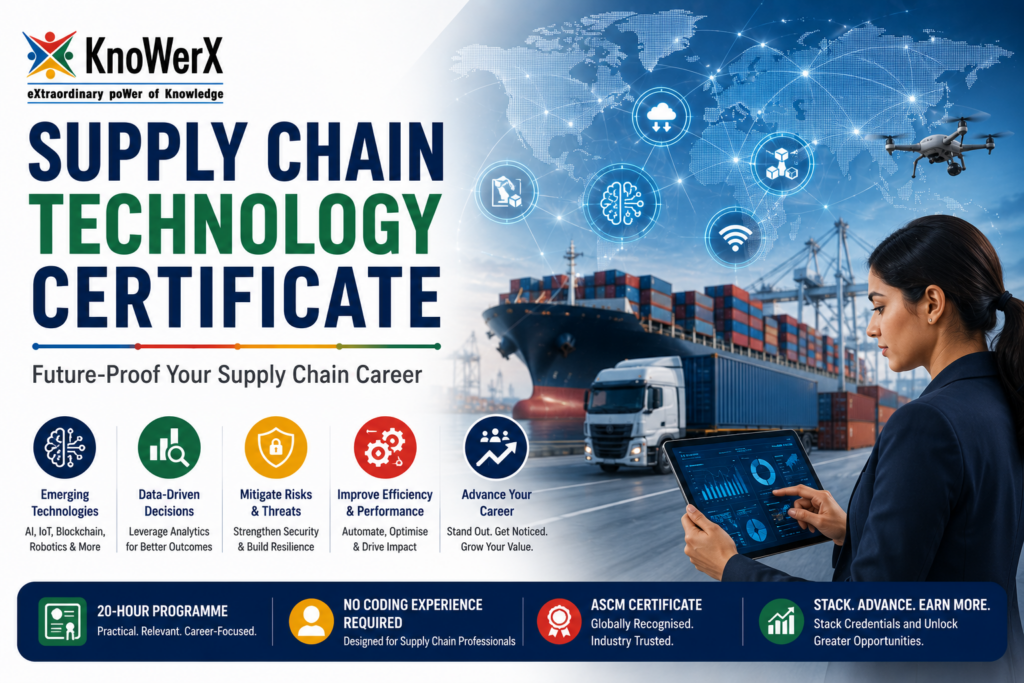
Why Supply Chain Management Courses Are Important In today’s hyper-connected, demand-sensitive economy, supply chains are no longer back-end operational functions they are strategic ecosystems. From procurement and production to warehousing and last-mile delivery, every stage of the supply chain directly influences customer experience, cost efficiency, and business resilience. This shift has created a growing demand for skilled professionals who understand how to design, manage, and optimise these complex networks. This is where supply chain management courses become essential. Supply chain disruptions, digital transformation, global sourcing challenges, and evolving customer expectations have reshaped the industry. Organisations are actively seeking professionals who are not only theoretically sound but also practically equipped with globally relevant frameworks and tools. A structured certification bridges this gap, transforming experience into expertise and knowledge into strategic impact. In essence, supply chain management courses are no longer optional they are career accelerators in a competitive global market. Key Benefits of Taking Supply Chain Management Courses 1. Structured Knowledge with Global Relevance Supply chain management courses provide a comprehensive understanding of end-to-end operations. From demand planning to logistics execution, these programs offer structured frameworks that are recognised across industries and geographies. 2. Enhanced Career Opportunities Professionals with certifications stand out in a crowded job market. Whether you are entering the field or aiming for leadership roles, these courses significantly improve your employability and career growth trajectory. 3. Practical Skill Development Modern supply chain courses focus on real-world applications. They equip learners with problem-solving abilities, analytical thinking, and decision-making skills required to manage dynamic supply environments. 4. Higher Earning Potential Certified professionals often command higher salaries due to their specialised knowledge and ability to contribute strategically to business outcomes. 5. Adaptability to Industry Trends With the rise of digital supply chains, automation, and data-driven decision-making, staying updated is crucial. Supply chain management courses help professionals remain relevant in an evolving landscape. Top 5 Supply Chain Management Courses to Consider Choosing the right certification can define your career trajectory. Below are five globally recognised supply chain management courses that offer strong value across industries. 1. APICS Certified Supply Chain Professional (CSCP) The CSCP certification is one of the most comprehensive supply chain management courses available today. It focuses on end-to-end supply chain management, making it ideal for professionals who want a holistic understanding of global operations. What it offers: End-to-end supply chain visibility Demand planning and forecasting Supplier and customer relationship management Risk management and sustainability This course is particularly valuable for professionals involved in strategic roles, as it connects operational execution with business outcomes. 2. APICS Certified in Planning and Inventory Management (CPIM) The CPIM certification is designed for professionals who want to specialise in internal operations, particularly planning and inventory control. What it offers: Production planning and scheduling Inventory optimisation techniques Master production scheduling (MPS) Materials requirement planning (MRP) CPIM is one of the most respected supply chain management courses for those working in manufacturing, operations, and production environments. It builds deep expertise in managing internal supply chain efficiencies. 3. ASCM Supply Chain Operations Reference – Digital Standard (SCOR DS) The SCOR DS program is based on the globally recognised SCOR model, which standardises supply chain processes and performance measurement. What it offers: Process standardisation across supply chains Performance benchmarking metrics Supply chain design and improvement frameworks End-to-end process visibility This course is ideal for professionals involved in process improvement, consulting, and transformation projects. It provides a structured methodology to analyse and optimise supply chain performance. 4. ASCM Supply Chain Technology Certificate (CTSC) As supply chains become increasingly digital, the CTSC certification focuses on the role of technology in modern supply chain management. What it offers: Understanding emerging technologies like AI, IoT, and blockchain Digital transformation strategies Data analytics in supply chain decision-making Automation and system integration Among all supply chain management courses, CTSC stands out for its future-focused approach. It prepares professionals to navigate technology-driven supply chain ecosystems. 5. Demand Driven Planner Professional (DDPP) The DDPP certification introduces a demand-driven approach to supply chain planning, moving beyond traditional forecast-based systems. What it offers: Demand-driven material requirements planning (DDMRP) Buffer management techniques Real-time demand sensing Improved responsiveness and agility This course is particularly useful in volatile markets where demand patterns are unpredictable. It enables organisations to become more responsive and less dependent on inaccurate forecasts. How to Choose the Right Supply Chain Management Course With multiple options available, selecting the right course requires a thoughtful approach. Not every certification serves the same purpose, and your choice should align with your career goals and current experience. 1. Define Your Career Objective Are you aiming for strategic leadership, operational excellence, or technology-driven roles? For example: CSCP is ideal for end-to-end supply chain roles CPIM suits operations and manufacturing professionals CTSC is best for technology-focused careers 2. Assess Your Current Experience Beginners may benefit from foundational courses, while experienced professionals should opt for advanced certifications that add strategic value. 3. Consider Industry Relevance Different industries prioritise different skill sets. Manufacturing may emphasise CPIM, while consulting and transformation roles may prefer SCOR DS. 4. Evaluate Learning Format and Duration Some supply chain management courses are intensive and require significant time commitment. Choose a format that fits your schedule whether self-paced, instructor-led, or hybrid. 5. Check Global Recognition Certifications with global credibility offer better career mobility and long-term value. Programs from recognised bodies ensure your skills are accepted across industries and geographies. Career Opportunities After Completing Supply Chain Management Courses Completing supply chain management courses opens doors to a wide range of career opportunities across industries such as manufacturing, retail, e-commerce, pharmaceuticals, and logistics. 1. Supply Chain Manager Responsible for overseeing the entire supply chain network, from sourcing to delivery, ensuring efficiency and cost optimisation. 2. Demand Planner Focuses on forecasting customer demand and aligning supply strategies to meet market needs. 3. Operations Manager Manages internal processes, production schedules, and resource allocation to ensure smooth operations. 4. Logistics Manager Handles transportation, warehousing, and distribution, ensuring timely delivery and cost control. 5. Procurement Specialist
3 Month DDPP Certification | Demand Driven Planner Professional | KnoWerX

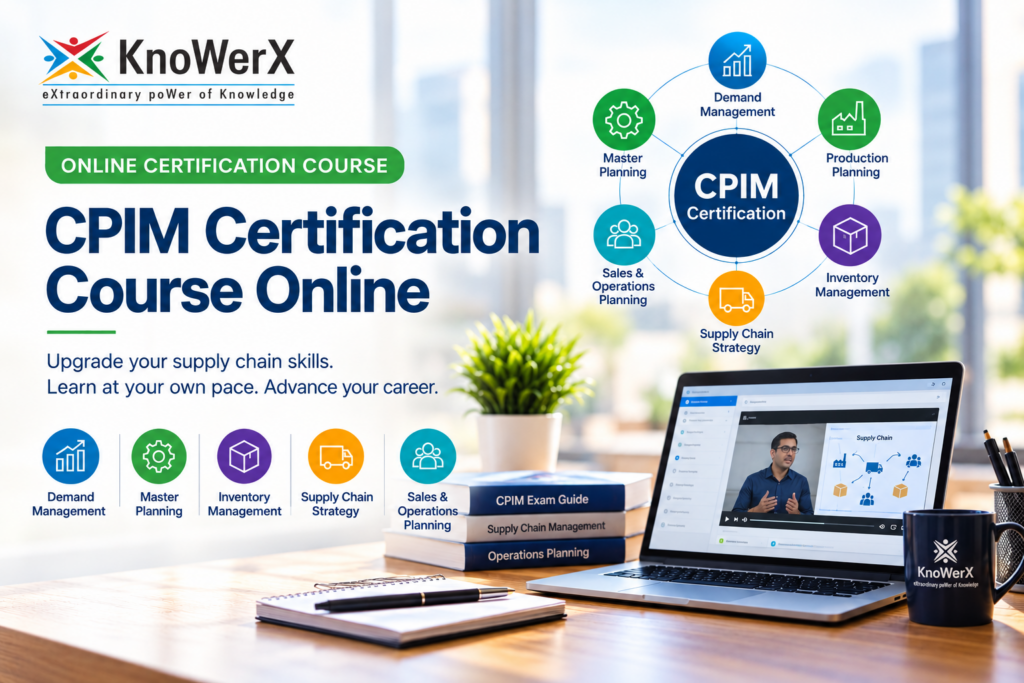
3 Month DDPP Certification: Become a Demand Driven Planner Professional Modern supply chains operate in an environment where demand patterns shift quickly, market disruptions occur frequently, and traditional planning methods often struggle to keep up. Forecast-driven models, while useful, can sometimes create inefficiencies when demand volatility increases. As organisations search for more adaptive planning approaches, the DDPP certification has emerged as a valuable credential for supply chain professionals. The DDPP certification (Demand Driven Planner Professional) focuses on demand-driven planning methodologies that enable organisations to respond more effectively to real market demand. For professionals looking to gain expertise in this area, a 3 month DDPP certification program provides a structured path to learn the principles, tools, and techniques needed to manage modern supply chain planning. Programs delivered through experienced training partners such as KnoWerX help professionals understand how demand-driven strategies can improve supply chain agility and operational performance. Understanding DDPP Certification The DDPP certification is designed for professionals who want to master demand-driven planning concepts and apply them in real-world supply chain environments. The certification focuses on how organisations can align planning decisions with actual market demand rather than relying solely on forecasts. Traditional planning models typically depend on historical data and statistical forecasts. However, these methods may struggle when markets experience sudden shifts, supply disruptions, or rapid changes in customer behaviour. The DDPP certification introduces professionals to demand-driven planning principles that emphasise responsiveness, visibility, and strategic inventory positioning. Professionals who pursue DDPP certification learn how to create supply chain systems that can adapt quickly to changing demand while maintaining operational stability. Why Demand Driven Planning Matters Today Demand volatility has become one of the defining characteristics of modern supply chains. Global events, digital commerce, and evolving customer expectations mean that demand signals can change faster than ever before. In such environments, organisations require planning systems that respond quickly rather than simply predicting future demand. The DDPP certification focuses on planning strategies that are designed to sense demand changes and adjust supply decisions accordingly. By adopting demand-driven principles, organisations can reduce excess inventory, improve service levels, and respond faster to market shifts. Professionals who hold DDPP certification are equipped to implement these approaches, making them valuable contributors to supply chain transformation initiatives. The Advantage of a 3 Month DDPP Certification Program For working professionals, balancing certification preparation with daily responsibilities can be challenging. A 3 month DDPP certification program offers a focused learning timeline that helps participants build knowledge systematically while maintaining their professional commitments. A structured DDPP certification program allows participants to explore demand-driven planning concepts step by step. Instead of approaching the certification independently, professionals benefit from guided instruction, practical examples, and exam preparation support. Training providers such as KnoWerX design these programs to help participants understand complex supply chain concepts while preparing effectively for the certification exam. The 3 month DDPP certification program typically includes instructor-led sessions, discussion-based learning, and exam-oriented preparation that helps professionals strengthen both theoretical understanding and practical application. Core Concepts Covered in DDPP Certification The DDPP certification curriculum focuses on the principles of demand-driven planning and how they can be implemented within modern supply chains. Professionals enrolled in a DDPP certification program learn about several key areas that influence planning performance and supply chain responsiveness. Demand Driven Planning Fundamentals Participants explore the core principles that define demand-driven planning. This includes understanding how organisations can move from forecast-heavy systems to demand-responsive planning models. Strategic Inventory Positioning The DDPP certification teaches professionals how to strategically position inventory buffers within supply chains to improve responsiveness while controlling inventory costs. Demand Signals and Visibility A major focus of the DDPP certification is understanding how demand signals flow across the supply chain and how planners can interpret these signals to make informed decisions. Buffer Management Buffer management is a central concept in demand-driven planning. Professionals learn how to monitor inventory buffers, adjust parameters, and maintain supply chain stability. Supply Chain Flow and Synchronisation Participants also learn how demand-driven planning improves the flow of materials and information across supply networks, ensuring better synchronisation between supply and demand. These concepts enable professionals pursuing DDPP certification to develop a deeper understanding of how modern planning systems operate. Who Should Pursue DDPP Certification? The DDPP certification is ideal for professionals who are involved in planning, operations, inventory management, or supply chain strategy. Professionals who benefit from DDPP certification include: Supply chain planners Demand planners inventory managers Operations managers Procurement professionals Logistics specialists Supply chain consultants For professionals responsible for managing demand fluctuations and maintaining operational efficiency, the DDPP certification offers valuable tools and frameworks. Why Choose KnoWerX for DDPP Certification Training Choosing the right training partner is an important step in the certification journey. Structured learning, experienced instructors, and exam preparation support significantly improve the chances of success. KnoWerX has built a strong reputation for delivering professional training programs for supply chain certifications. Professionals enrolling in the DDPP certification program through KnoWerX benefit from a learning environment designed to support both conceptual understanding and exam readiness. Key advantages include: Experienced Trainers The DDPP certification program at KnoWerX is delivered by experienced instructors who understand the practical challenges of supply chain planning. Structured Learning Approach The training program follows a clear learning structure, helping participants understand each concept before moving to the next. Practical Industry Insights Participants gain insights into how demand-driven planning principles can be applied in real organisational environments. Exam Preparation Support Preparing for the DDPP certification exam becomes easier with guided study sessions, practice questions, and expert support. With years of experience in professional training, KnoWerX has helped many supply chain professionals successfully complete certification programs and enhance their career prospects. Career Benefits of DDPP Certification Earning the DDPP certification can create several career advantages for supply chain professionals. Expertise in Modern Planning Methods The DDPP certification provides professionals with knowledge about advanced planning approaches designed for dynamic supply chain environments. Increased Professional Credibility Being DDPP certification qualified demonstrates a professional’s ability to manage demand-driven supply chain systems. Improved Decision-Making
How Production Planning & Control Function | KnoWerX

How Production Planning & Control Function | KnoWerX In today’s dynamic and highly competitive business environment, organisations can no longer afford inefficiencies in manufacturing and operations. Customer expectations are rising, product lifecycles are shrinking, and supply chains are becoming more interconnected and complex. In such a scenario, Production Planning & Control plays a pivotal role in ensuring that operations are aligned with business strategy, customer demand, and supply chain capabilities. For professionals and organisations aiming to build operational excellence, understanding Production Planning & Control is not optional it is essential. At KnoWerX, a Premier Elite Partner of APICS and affiliated with ASCM, Demand Driven Institute, Theory of Constraints, and Six Sigma, professionals are equipped with globally recognised frameworks that strengthen their expertise in operations and supply chain management. This article explains how Production Planning & Control functions, its key components, its impact on supply chain performance, and best practices to overcome challenges. What is Production Planning & Control (PPC)? Production Planning & Control is a structured process used to plan, coordinate, and control manufacturing operations to ensure that products are produced efficiently, on time, and within budget. It integrates demand forecasts, material availability, capacity planning, scheduling, and shop-floor execution into a unified system. At its core, Production Planning & Control answers three critical questions: What should be produced? How much should be produced? When should it be produced? Production planning focuses on designing the roadmap for manufacturing activities, while production control ensures that execution aligns with the plan. Together, Production Planning & Control creates a bridge between strategic objectives and operational performance. Without effective Planning & Control, organisations may face excess inventory, stockouts, idle resources, missed delivery deadlines, and rising operational costs. Key Functions of Production Planning The planning component of Production Planning & Control establishes the foundation for efficient manufacturing. It ensures that resources are optimally allocated and production schedules align with customer demand. 1. Demand Forecasting and Sales Alignment Production planning begins with demand estimation. Accurate forecasting ensures that manufacturing plans reflect market needs. When demand signals are unreliable, Planning & Control becomes reactive rather than proactive. Integrating sales and operations planning (S&OP) processes enhances coordination between commercial and operational teams. 2. Capacity Planning Capacity planning evaluates whether the organisation has sufficient resources machines, labour, and facilities to meet forecasted demand. Planning & Control ensures that production targets are realistic and achievable within existing constraints. If gaps exist, management may decide to add shifts, outsource production, or invest in additional capacity. 3. Material Requirements Planning (MRP) Material availability is critical for seamless production. Production Planning & Control uses structured systems to determine: What materials are required How much is needed When they must be available Effective material planning prevents stockouts while reducing excess inventory holding costs. 4. Routing and Process Planning Routing defines the sequence of operations required to manufacture a product. Planning & Control ensures that workflows are clearly documented and optimised for efficiency. Clear routing improves coordination between departments and reduces bottlenecks. 5. Production Scheduling Scheduling translates plans into detailed timelines. It determines when each job or order will be processed. Through scheduling, Production Planning & Control ensures optimal utilisation of machines and labour while meeting customer delivery dates. Role of Production Control in Execution While planning creates the roadmap, production control ensures disciplined execution. The control function of Production Planning & Control monitors performance, identifies deviations, and initiates corrective actions. 1. Dispatching Dispatching authorises the start of production activities. It ensures that materials, instructions, and tools are available before work begins. Within Planning & Control, dispatching aligns shop-floor activities with approved schedules. 2. Shop Floor Monitoring Real-time monitoring tracks production progress against planned targets. Key performance indicators (KPIs) such as output rate, downtime, scrap levels, and cycle time are analysed. Effective Production Planning & Control enables early detection of issues, preventing small disruptions from escalating into major delays. 3. Quality Control Coordination Production control works closely with quality teams to ensure that output meets required standards. By integrating quality checks into processes, Production Planning & Control reduces rework and waste. 4. Performance Reporting and Feedback Feedback loops are essential for continuous improvement. Production Planning & Control collects performance data to refine forecasts, adjust schedules, and improve future planning cycles. Importance of Production Planning & Control in Supply Chain Performance Modern supply chains are interconnected networks rather than isolated functions. The effectiveness of Production Planning & Control directly influences overall supply chain performance. 1. Improved Service Levels Timely production ensures that customer orders are fulfilled as promised. Strong Planning & Control reduces late deliveries and enhances customer satisfaction. 2. Inventory Optimisation Excess inventory ties up working capital, while shortages disrupt operations. By synchronising demand and supply, Production Planning & Control maintains optimal inventory levels across the supply chain. 3. Cost Efficiency Efficient scheduling, better capacity utilisation, and reduced waste lower overall manufacturing costs. Well-structured Production Planning & Control contributes to higher profitability. 4. Enhanced Agility Market volatility requires rapid response. Organisations with mature Production Planning & Control systems can quickly adjust schedules and production volumes to accommodate changes in demand. 5. Cross-Functional Integration Production Planning & Control connects procurement, manufacturing, warehousing, and distribution. This integration ensures alignment across the entire value chain. Challenges in PPC and Best Practices Despite its importance, implementing effective Production Planning & Control is not without challenges. Common Challenges Demand Uncertainty – Inaccurate forecasts disrupt production schedules. Data Silos – Lack of system integration leads to inconsistent information. Capacity Constraints – Limited resources restrict responsiveness. Frequent Plan Changes – Excessive schedule adjustments create instability. Skill Gaps – Inadequate training weakens execution quality. Without structured processes, Planning & Control may become reactive and inefficient. Best Practices for Effective Production Planning & Control 1. Integrated Planning Systems Use integrated ERP and advanced planning systems to ensure data consistency. Technology strengthens visibility across the production lifecycle. 2. Cross-Functional Collaboration Encourage collaboration between sales, procurement, operations, and logistics. Strong governance improves the reliability of Production Planning & Control decisions. 3. Demand-Driven Approaches Adopt demand-driven methodologies
What Is Supply Chain Management (SCM): An Overview

What Is Supply Chain Management (SCM): An Overview The question what is a scm is often asked in simple terms, yet the answer sits at the centre of how modern businesses survive, scale, and compete. Supply Chain Management is no longer a back-office function concerned only with moving goods from one place to another. It has evolved into a strategic discipline that determines cost structures, customer experience, risk exposure, and long-term resilience. In an era of global uncertainty, rapid demand shifts, and intense margin pressure, leaders, professionals, and organisations alike must understand what SCM truly means. Definition of Supply Chain Management (SCM) To understand what is a scm, it helps to move beyond narrow definitions. Supply Chain Management refers to the coordinated management of the flow of materials, information, finances, and decisions across the entire network that transforms raw inputs into finished products and delivers them to customers. At its core, SCM integrates suppliers, manufacturers, warehouses, transport providers, distributors, and customers into a single operating system. The objective is not just movement, but optimisation ensuring the right product reaches the right place, at the right time, at the right cost, and with the right level of quality. Unlike logistics, which focuses primarily on transportation and storage, SCM takes a holistic view. It connects planning with execution, operations with finance, and demand signals with supply responses. When businesses ask what is a scm, the most accurate answer is that it is the discipline that aligns operational activity with business strategy. Key Components of Supply Chain Management Understanding what is a scm also requires clarity on its core components and how they function together as an integrated system rather than isolated departments. The first component is planning and forecasting. This component defines how demand is anticipated and how supply is structured to meet it. It includes demand forecasting, sales and operations planning, capacity planning, and inventory strategy. Weak planning creates instability across the entire supply chain. Sourcing and Supplier Management Sourcing involves selecting suppliers, negotiating contracts, and managing supplier performance. Effective SCM treats suppliers as strategic partners rather than transactional vendors, focusing on reliability, quality, cost, and risk. Production and Operations Management This area governs how goods are manufactured or assembled. It includes production scheduling, process optimisation, quality control, and capacity utilisation. Decisions made here directly impact cost, lead time, and service levels. Warehousing and Inventory Management Warehousing is not just storage; it is a control point for inventory accuracy, order fulfilment speed, and working capital efficiency. Inventory management balances availability with cost, ensuring neither excess nor shortage dominates the system. Transportation and Distribution This component manages the physical movement of goods across the supply chain. It includes route planning, carrier selection, freight optimisation, and last-mile delivery performance. Technology and Data Visibility Modern SCM relies on integrated systems that provide real-time visibility across planning and execution. Data enables performance measurement, exception management, and informed decision-making. Together, these components define the practical reality behind the question what is a scm. How Supply Chain Management Works (End-to-End Flow) Supply Chain Management works as an end-to-end flow rather than a sequence of disconnected activities. To truly understand what is a scm, one must see how value moves across the entire lifecycle. The process begins with suppliers, where raw materials or components are sourced based on demand forecasts and production plans. Information flows upstream in the form of forecasts, schedules, and purchase orders, while materials flow downstream into manufacturing or assembly operations. In production, raw materials are turned into finished or semi-finished goods. Inventory levels, production rates, and quality outputs are continuously monitored to maintain balance between efficiency and responsiveness. The finished goods are then moved to warehouses or distribution centres, where they are stored, picked up, packaged, and prepared for delivery. Distribution channels vary depending on business models direct-to-customer, retail distribution, or business-to-business networks. Parallel to the physical flow is the information flow. Demand signals, order statuses, inventory data, and performance metrics move across systems to enable coordination. Financial flows payments, credits, and working capital move alongside goods and information. This interconnected movement explains what is a scm: a dynamic system where decisions at one point affect performance across the entire network. Importance of SCM for Businesses Today The importance of Supply Chain Management has grown dramatically in recent years. When businesses ask what is a scm, they are often responding to real pressures impacting performance and growth. Cost Control and Margin Protection SCM directly influences procurement costs, manufacturing efficiency, logistics expenses, and inventory holding costs. Small improvements in supply chain efficiency often translate into significant financial gains. Customer Experience and Service Reliability On-time delivery, product availability, and order accuracy are all outcomes of effective SCM. Inconsistent supply chain performance quickly erodes customer trust. Risk Management and Resilience Disruptions whether caused by supplier failures, transportation delays, or demand volatility expose weak supply chains. Strong SCM designs resilience for the network through diversification, visibility, and contingency planning. Scalability and Growth enablement. As businesses grow, supply chains must scale without becoming inefficient or fragile. SCM ensures growth does not lead to uncontrolled complexity. Competitive Advantage In many industries, supply chain performance is the primary differentiator. Faster response times, lower costs, and greater reliability often matter more than product features alone. These factors explain why understanding what is a scm is now essential at the leadership level. Modern Trends Shaping Supply Chain Management The answer to what is a scm continues to evolve as new trends reshape how supply chains are designed and managed. Digital Supply Chains and Real-Time Visibility Companies are investing in integrated platforms that provide end-to-end visibility during planning and execution. Real-time data enables faster, more accurate decisions. Automation and Advanced Analytics Automation is improving efficiency in warehouses, production lines, and planning processes. Analytics and artificial intelligence are enhancing forecasting accuracy and scenario modelling. Resilience-Focused Network Design Instead of optimising purely for cost, businesses are redesigning their supply networks to balance efficiency with resilience, reducing their dependence on single sources or routes. Sustainability and
Tariff Classification in SCM: One Mistake Can Cost You

Tariff Classification in SCM: One Mistake Can Cost You In global supply chain management, accuracy is everything. You can have advanced forecasting tools, strong vendor relationships, and smooth warehouse operations, but if one detail is wrong in customs paperwork, everything comes to a halt. This phenomenon is especially true for tariff classification, a small but powerful part of trade compliance. Many companies underestimate how critical it is, but the truth is simple: one mistake in tariff classification can cost money, time, and long-term trust with customs authorities. This topic becomes even more important as supply chains become more complex. Businesses are importing a greater variety of materials, dealing with new regulations, and selling into multiple markets. In this environment, ignoring tariff classification or treating it lightly is a direct invitation for financial losses and operational headaches. What Is Tariff Classification? Understanding HS Codes and Their Purpose At its core, tariff classification is the process of assigning the correct HS (Harmonized System) code to every product that crosses a border. These HS codes are part of a global system used by customs authorities to determine the duties, taxes, and rules applicable to each product category. The system looks simple on paper – a few digits that describe what the product is but each code carries a very specific meaning. Customs officers rely on these codes to identify products, understand what they’re made of, and determine the right duty rate. So, when a company gets the code wrong, the duty calculation becomes inaccurate. This is where the trouble begins. Why Tariff Classification Matters in Supply Chain Management From a supply chain perspective, tariff classification directly affects: How smoothly your goods cleared customs. How predictable are your landing costs? Whether your paperwork stands up during audits How efficiently your cross-border shipments move When the tariff classification is correct, clearance becomes predictable. When it is wrong, everything from inventory planning to customer delivery commitments becomes uncertain. The financial impact of the wrong tariff classification Overpayment of Duties One of the most common problems happens when companies unintentionally choose an HS code with a higher duty rate. This is especially true in large manufacturing and retail operations where product catalogues run into thousands of SKUs. Even a small percentage difference in duty rate can lead to massive overpayments. For high-volume importers, the cumulative cost of wrong tariff classification quietly drains profits year after year. Underpayment, Fines, and Customs Penalties The opposite scenario is even more serious. When a company underpays duties because of incorrect tariff classification, customs authorities eventually notice. Sometimes it happens during routine audits, and sometimes it happens at the border. Either way, the result is expensive. Authorities generally require: Back payment of duties Interest on unpaid amounts Monetary penalties In severe cases, legal action Even if the error was unintentional, the company still pays. Customs authorities don’t treat ignorance as an excuse. The financial impact can hit cash flow, create unplanned expenses, and disrupt budgets for the entire fiscal year. Increased Risk of Customs Audits Once customs identifies a classification mistake, they may place the company under closer observation. This increases the frequency of audits and inspections. Audits take time, documentation, manpower, and expertise. For a busy supply chain team, this becomes a major distraction from daily operations. Common Tariff Classification Mistakes Companies Make Most companies don’t deliberately make mistakes. The problem usually stems from poor processes or limited knowledge. Some of the most common mistakes include: Using very broad or generic HS codes Copying tariff classification from suppliers without verification Misclassifying a part as a finished product Using old classification data for new product versions Missing supporting documents that help justify the classification Assuming similar-looking products automatically share the same code Small mistakes like these accumulate. A company may operate for years without issues, and suddenly customs flags something. That’s when the business realizes the cost of long-term inaccuracy. Real-World Cost Consequences of Misclassification Shipment Delays When customs notices a mismatch between documentation and the actual product, they don’t just ignore it. They flag the shipment for inspection. This leads to delays that ripple across the entire supply chain delayed production, delayed customer deliveries, and increased storage costs at ports. Border Holds and Detentions A more serious consequence is a border hold. Customs may detain the cargo until the company provides detailed technical documents, product descriptions, or even laboratory test results. These delays can last days or sometimes weeks. Every extra day costs money. Penalties and Legal Repercussions Wrong tariff classification can result in penalties that go far beyond duty corrections. Customs authorities impose fines based on the level of error and the financial impact. Repeat violations may cause authorities to restrict or suspend the company’s import/export privileges. Disrupted Supply Chain Operations Stuck shipments at the border lead to instability downstream. Inventory levels drop unexpectedly. Production schedules are disrupted. Customers get frustrated. And once trust breaks, it takes a long time to rebuild it. Tools and Databases Used for Accurate Tariff Classification Getting tariff classification right requires reliable tools and data. Supply chain teams often refer to: The WCO HS Database National tariff portals such as EU TARIC, US CBP, India ICEGATE Explanatory Notes that help interpret the rules Binding rulings from customs authorities Engineering specifications, product drawings, test reports Expertise from customs brokers and trade consultants These tools help supply chain teams make informed decisions. The global trade environment changes frequently, so depending on old data is risky. Consistent updates and verification are essential. Importance of Training and Certified Trade Compliance Professionals Why Skilled Professionals Matter The rules around tariff classification are detailed and often complex. A small difference in product material, function, or composition can entirely change the HS code. Because of this complexity, companies increasingly depend on trained professionals who understand how classification rules work and how to interpret them correctly. Professionals who understand tariff classification reduce the risk of errors, maintain documentation consistency, and help companies stay audit-ready throughout the year. How KnoWerX Helps Build Expertise
Cross Border Logistics: Avoid These Costly Pitfalls

Cross Border Logistics: Avoid These Costly Pitfalls In an increasingly globalized economy, businesses are no longer limited by geography. Companies source raw materials from one country, manufacture in another, and sell across multiple markets. At the heart of this global movement lies cross border logistics a complex but critical function that determines whether international operations run smoothly or become a costly headache. Despite its importance, cross border logistics is often treated as an operational afterthought. Documentation gaps, unplanned costs, route dependencies, and poor visibility can disrupt supply chains overnight. At KnoWerX, years of working with supply chain professionals have shown that most cross-border failures are not caused by big decisions, but by small, repeatable mistakes. What Cross Border Logistics Involves in Modern Supply Chains At its core, cross border logistics refers to the planning, execution, and management of goods movement across international borders. Unlike domestic logistics, it involves navigating multiple regulatory environments, currencies, tax structures, and transportation networks simultaneously. Modern cross border logistics typically includes: International transportation (air, sea, road, or rail) Customs clearance and regulatory compliance Trade documentation and classification Duties, taxes, and fee management Coordination among multiple logistics partners What makes cross border logistics particularly challenging is that every country has its own import-export regulations, customs procedures, and compliance standards. A process that works seamlessly in one region may fail entirely in another. As supply chains become more interconnected, businesses must manage these complexities with greater precision and visibility. Common Documentation Errors That Cause Shipment Delays One of the most frequent and costly issues in cross-border logistics is incorrect or incomplete documentation. Customs authorities rely heavily on paperwork to determine whether a shipment complies with regulations. Even minor errors can lead to inspections, delays, penalties, or shipment rejection. Most Common Documentation Mistakes Documentation Issue Impact on Cross Border Logistics Incorrect HS codes Delays, penalties, reclassification costs Incomplete commercial invoices Customs holds and re-submission Missing certificates of origin Loss of duty benefits or shipment rejection Data mismatch across documents Increased inspections and audits Incorrect declared value Fines, reassessments, or shipment seizure In cross border logistics, documentation errors often occur due to poor coordination between sales, finance, and logistics teams. Without standardized processes and centralized data, inconsistencies creep in and disrupt the entire supply chain. Failure to Account for Hidden Costs in Cross Border Logistics Many businesses calculate international shipping costs based only on freight charges. However, cross border logistics involves several hidden expenses that can significantly impact margins if not planned for properly. Common Hidden Costs to Watch For Import and export duties Value-added tax (VAT) or goods and services tax (GST) Port handling and terminal charges Inspection and compliance fees Demurrage and detention costs Currency conversion and banking charges Typical Hidden Cost Breakdown Cost Type Why It’s Often Overlooked Duties & taxes Misclassified products or poor forecasting Port & terminal charges Not included in freight quotes Demurrage Caused by documentation or clearance delays Detention Slow unloading or warehouse congestion Compliance penalties Regulatory changes not tracked At KnoWerX, supply chain diagnostics often reveal that organizations lack a consolidated view of landed cost. Without this visibility, cross border logistics decisions are based on assumptions rather than accurate financial data. Without end-to-end cost visibility, cross border logistics becomes unpredictable. Businesses may win sales contracts only to discover later that hidden charges have eroded profitability. Risks of Relying on a Single Carrier or Route Another major pitfall in cross border logistics is over-dependence on one carrier, freight forwarder, or transportation route. While this may simplify operations initially, it exposes businesses to significant risk. Global trade is vulnerable to: Port congestion Labor strikes Geopolitical tensions Natural disasters Regulatory changes If a single route is disrupted, shipments can be delayed for weeks. In cross border logistics, delays don’t just affect delivery timelines they can trigger cascading costs such as storage fees, missed production schedules, and dissatisfied customers. Diversifying carriers and routes is no longer a “nice-to-have”; it is a core risk management strategy in resilient cross border logistics operations. Role of Technology in Minimizing Cross Border Logistics Errors Technology has become a powerful enabler in reducing complexity and risk in cross border logistics. Manual processes and spreadsheets simply cannot keep up with the volume, speed, and regulatory changes involved in international trade. How Technology Improves Cross Border Logistics Digital documentation reduces human errors and duplication Automated compliance checks flag issues before shipment Real-time tracking provides visibility across borders Predictive analytics anticipate delays and cost overruns System integration aligns logistics, finance, and compliance teams Technology vs Manual Processes Area Manual Approach Technology-Driven Approach Documentation Error-prone, repetitive Automated and standardized Visibility Limited, delayed updates Real-time tracking Compliance Reactive Proactive and rule-based Cost forecasting Inaccurate Data-driven and predictive By adopting digital tools, organizations transform cross border logistics from a reactive function into a strategic advantage. Best Practices to Prevent Costly Cross Border Logistics Mistakes Avoiding pitfalls in cross border logistics requires more than experience; it requires disciplined processes, reliable partners, and continuous improvement. Proven Best Practices Standardize Documentation Processes Use templates, checklists, and automated systems to ensure consistency across shipments. Plan duties and taxes in advance. Accurate product classification and valuation reduce surprise costs. Build routes and carrier redundancy. Maintain alternative options to handle disruptions without panic. Invest in training. Keep teams updated on changing regulations and trade requirements. Leverage Technology Platforms Centralize data, improve visibility, and reduce manual intervention. Work With Experienced Partners Reliable logistics providers bring local knowledge and compliance expertise. When these practices are embedded into daily operations, cross border logistics becomes predictable, efficient, and scalable. Frequently Asked Questions Ending Notes – Turning Cross-Border Logistics Into a Competitive Advantage Cross border logistics is no longer just about moving goods; it is about managing risk, cost, and compliance in a volatile global environment. Businesses that treat it as a strategic capability outperform those that treat it as a back-office function. By avoiding documentation errors, planning for hidden costs, diversifying routes, and using the right technology, companies can turn cross-border logistics into a competitive advantage.