Direct Material Planner | Why Every Plant Needs One | KnoWerX
Manufacturing plants exist in complex, interdependent supply chains where the right materials must be available at the right time, or production can run smoothly or be disrupted at considerable expense. The direct material planner is an important but often overlooked role at the core of this challenge.
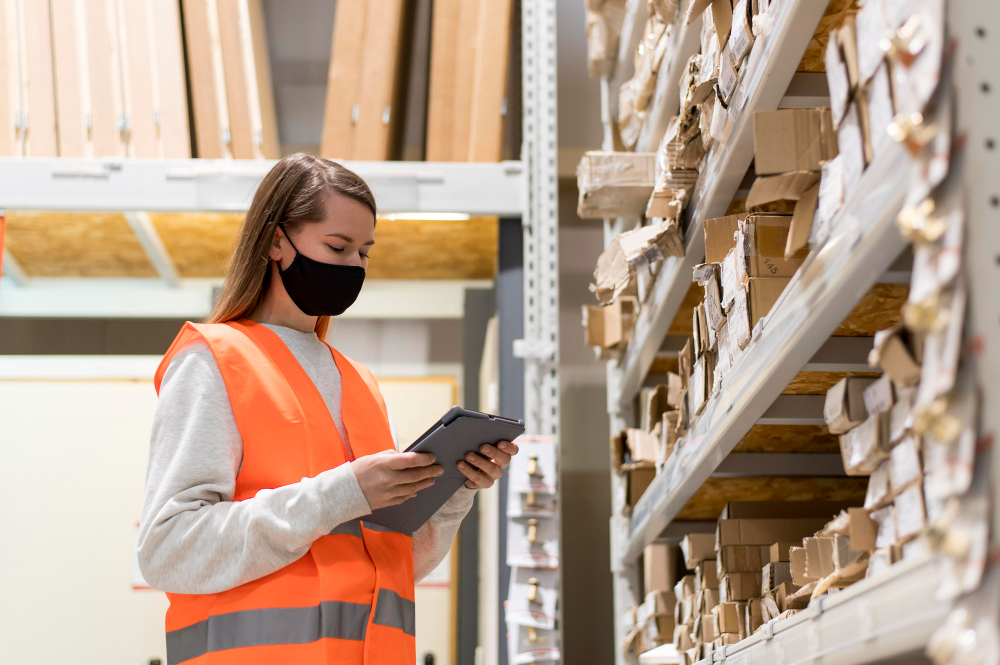
The ever-increasing complexity of supply chains and the ever-growing demands of production schedules have never made the value this role brings to a manufacturing environment more apparent.
What Is a Direct Material Planner and Why Is This Role Critical?
A direct material planner is a supply chain professional responsible for ensuring that the raw materials, components, and sub-assemblies required for production are available in the right quantities, at the right time, and at the right location. Unlike indirect procurement, which covers operational supplies and services, direct materials are those that physically become part of the finished product making their availability non-negotiable for production continuity.
The criticality of this role lies in its position at the intersection of demand, supply, and production. A direct material planner must simultaneously monitor supplier performance, interpret production schedules, manage inventory levels, and anticipate potential shortages before they disrupt the shop floor. When this role functions well, production runs smoothly. When it does not, the consequences ripple across the entire plant.
Key Responsibilities of a Direct Material Planner
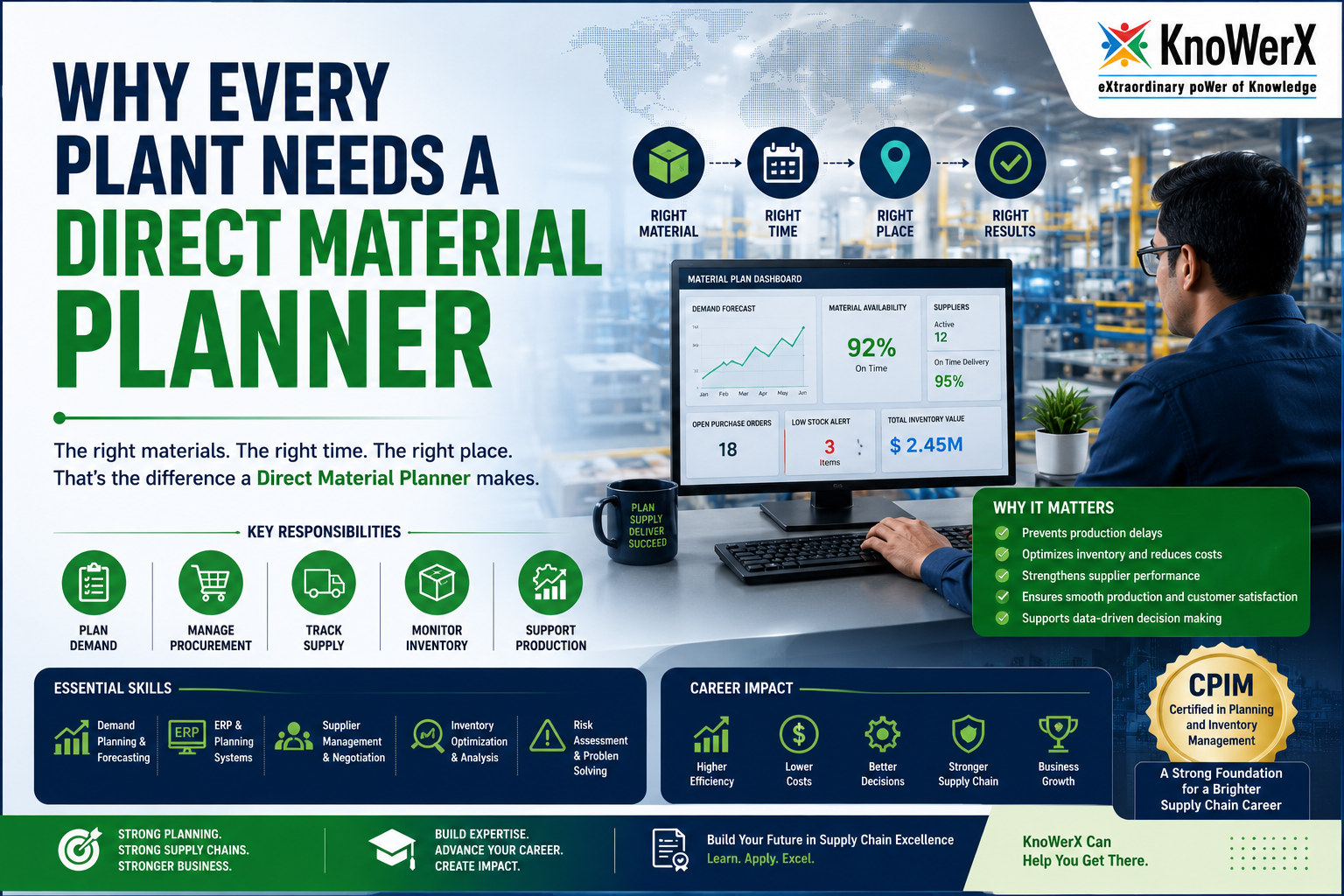
The day-to-day responsibilities of a direct material planner span both operational and strategic activities. On the operational side, this includes raising and managing purchase orders, tracking inbound deliveries, coordinating with suppliers on lead times, and resolving short-term supply issues before they escalate into production stoppages.
Strategically, a direct material planner analyses consumption patterns and demand forecasts to determine optimal inventory levels, identifies risks within the supply base, and collaborates with procurement and production teams to align material availability with the production plan. They also work closely with ERP systems to maintain accurate material master data, ensuring that planning parameters such as reorder points and safety stock levels reflect current supply chain realities.
Effective communication is equally central to the role. A direct material planner regularly liaises with suppliers, production supervisors, logistics teams, and procurement managers, acting as the connective tissue between external supply and internal demand.
Why Every Manufacturing Plant Needs a Direct Material Planner
Production stoppages caused by material shortages are among the most expensive disruptions a manufacturing plant can face. Idle labour, missed customer delivery commitments, and expediting costs all accumulate quickly when materials are not available on time. A skilled direct material planner prevents these scenarios by maintaining visibility across the supply base and acting proactively rather than reactively.
Beyond preventing disruption, this role contributes directly to cost efficiency. By maintaining appropriate inventory levels, a direct material planner helps plants avoid both the carrying costs associated with excess stock and the premium costs of emergency procurement. This balance between availability and efficiency is one that requires constant attention and judgement, and it is precisely what a dedicated professional in this role provides.
As supply chains become more global and supplier networks more complex, the case for having a direct material planner in every plant becomes even stronger. The ability to monitor multiple suppliers across different geographies, manage varying lead times, and respond to disruptions with speed and clarity is a full-time responsibility that cannot be absorbed effectively into other roles.
Essential Skills Every Direct Material Planner Should Have
A strong direct material planner combines analytical capability with practical supply chain knowledge. Proficiency in ERP systems is essential, as the role is heavily data-driven and dependent on accurate system inputs and outputs. Analytical skills enable planners to interpret demand signals, identify trends, and make informed decisions about inventory and procurement timing.
Equally important are communication and negotiation skills. Working with suppliers to resolve delivery issues, negotiate lead times, and manage expectations requires clarity, confidence, and a collaborative approach. Attention to detail, the ability to prioritise under pressure, and a sound understanding of manufacturing processes round out the skill set that distinguishes an effective planner from an exceptional one.
Ending Notes – How to Build a Career as a Direct Material Planner
The best foundation for those professionals looking to enter or advance in this field is a combination of practical experience and structured learning. Experience in a purchasing, inventory management or production planning role builds the contextual knowledge that the role demands.
This experience, along with a recognised supply chain certification such as the CPIM from ASCM, provides a structured understanding of planning principles, inventory management, and supply chain integration, which directly supports career progression in this area.
At KnoWerX, our supply chain training programmes are tailored to prepare professionals for success in planning and inventory roles, including those aspiring to or already working in direct material planner roles.
Image Reference: Freepik
Disclaimer: All trademarks, logos, and brand names are the property of their respective owners. All company, product, and service names used in this website are for identification purposes only. Use of these names, trademarks, and brands does not imply endorsement.