Why Supply Chain Certifications Are Gaining Importance
The global supply chain landscape has never been more complex. From the Red Sea shipping crisis to post-pandemic disruptions, businesses across every industry are realising that managing supply chains requires more than experience it requires certified, structured expertise.

Supply chain certifications are rapidly becoming a defining benchmark for career advancement, employer preference, and organisational resilience. Whether you are a logistics professional, a procurement specialist, or an operations manager, the right certification signals that you are equipped to navigate the demands of modern global trade.
Why Employers Prefer Candidates with Supply Chain Certifications
Hiring managers aren’t just seeking years of experience these days. They want to see proven competence, globally recognised knowledge, and the ability to hit the ground running.
Supply chain certifications provide exactly that. They validate that a professional understands end-to-end supply chain processes, industry best practices, and globally accepted frameworks, all of which are difficult to assess through a resume alone.
People also see certified professionals as more committed to their field. Earning a certification requires study, dedication, and investment, which signals to employers that a candidate takes their professional development seriously.
Additionally, as supply chains become more interconnected and technology-driven, organisations need people who can think strategically, not just operationally. Certifications from globally recognised bodies, such as ASCM, equip professionals with strategic frameworks and analytical tools that directly translate into better decision-making on the job.
For employers operating in competitive markets, hiring certified supply chain professionals reduces onboarding time, lowers operational risk, and improves team performance across planning, procurement, logistics, and distribution functions.
Top Supply Chain Certifications for Career Advancement
ASCM Certifications – The Association for Supply Chain Management (ASCM) offers some of the most respected and globally recognised certifications in the field.
CSCP — Certified Supply Chain Professional The CSCP certification helps professionals develop a thorough understanding of the entire supply chain, from supplier to customer. It covers global supply chain design, implementation, and operations. This certification is ideal for professionals seeking senior roles in supply chain strategy and management.
CPIM — Certified in Planning and Inventory Management The CPIM certification focuses on internal operations — production planning, inventory control, demand management, and materials requirements. It is best suited for professionals working within an organisation, particularly in manufacturing and operations planning roles.
CLTD — Certified in Logistics, Transportation and Distribution The CLTD certification addresses the logistics and distribution side of supply chains. It covers transportation management, warehouse operations, sustainability, and reverse logistics. It is particularly valuable for professionals in logistics, freight, and distribution functions.
Procurement and Planning Certifications
Beyond the ASCM suite, procurement and planning certifications are equally in demand as businesses look to strengthen sourcing and demand management capabilities.
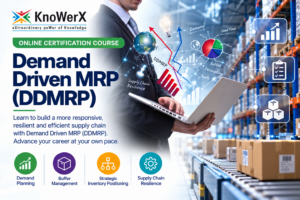
Certifications in demand-driven planning, such as those from the Demand Driven Institute (DDI), help professionals use adaptive supply chain models that respond to actual market demand instead of forecast assumptions. This is a critical capability in today’s volatile environment.
Procurement certifications equip professionals with skills in supplier evaluation, contract management, cost optimisation, and strategic sourcing all functions that directly affect an organisation’s bottom line.
How Supply Chain Certifications Improve Salary Potential
One of the most tangible benefits of earning a supply chain certification is its direct impact on earning potential.
Certified professionals consistently command higher salaries compared to their non-certified peers. This salary premium reflects the value that organisations place on structured knowledge, global frameworks, and the ability to manage complex, high-stakes operations effectively.
According to industry surveys, ASCM-certified professionals often report significant salary increases following certification both when moving to new roles and when pursuing promotions within their current organisations.
The reason is straightforward: certified professionals reduce risk for employers. They bring proven competencies in areas such as inventory optimisation, demand planning, and logistics management functions where poor decisions can cost organisations millions.
Supply chain certifications also provide access to senior and leadership roles that are typically unavailable to professionals without formal credentials. As you move up the career ladder, the salary differential between certified and non-certified professionals tends to widen, making certification a strong long-term investment.
Supply Chain Certifications vs Traditional Degrees
A common question among supply chain professionals is whether a certification can replace or complement a traditional degree. The answer depends on your career goals, but the trend is clear certifications are increasingly being valued alongside, and in some cases above, traditional academic qualifications.
Traditional degrees provide broad foundational knowledge across business functions. They are valuable for early career development and for establishing analytical thinking. However, they rarely offer the depth of specialised supply chain knowledge that a professional certification provides.
Supply chain certifications, on the other hand, are built around real-world application. They are regularly updated to reflect current industry practices, global frameworks, and emerging challenges something academic curricula often struggle to keep pace with.
For professionals already in the workforce, certifications offer a faster, more focused, and more cost-effective path to career advancement than returning to pursue another degree.
Employers increasingly view supply chain certifications as a direct indicator of job readiness. A CSCP or CPIM on a resume signals domain expertise in a way that a general business degree often cannot.
The most competitive professionals today combine foundational academic education with targeted certifications building both theoretical knowledge and practical credibility.
Future of Supply Chain Careers and Certification Demand
The demand for certified supply chain professionals is not a short-term trend it is a structural shift driven by the growing complexity of global trade.
Supply chains are becoming more digital, more global, and more exposed to disruption. Geopolitical instability, climate risk, technology transformation, and shifting consumer expectations are all placing new demands on supply chain professionals.
In this environment, employers are actively seeking professionals who can do more than manage day-to-day operations. They need people who can design resilient systems, evaluate risk, leverage technology, and lead transformation, and certifications are increasingly the benchmark for those capabilities.
Roles in supply chain management, demand planning, logistics and procurement are consistently among the most sought-after positions globally. As organisations invest in supply chain resilience and digital transformation, the need for qualified professionals will only continue to grow.
Emerging areas such as sustainable supply chains, circular economy practices, and AI-driven demand forecasting are creating new career pathways, and certifications are evolving to address these areas as well.
For professionals looking to future-proof their careers, investing in a globally recognised supply chain certification today is one of the most strategic decisions they can make.
Frequently Asked Questions
[
What are circular supply chains?
Circular supply chains are supply chain systems designed to reduce waste by reusing, recycling, refurbishing, and recovering products and materials.
Why are circular supply chains important?
They help businesses improve sustainability, reduce dependency on raw materials, minimize waste, and support long-term resource efficiency.
What is the difference between linear and circular supply chains?
Linear supply chains follow a take-make-dispose model, while circular supply chains focus on reuse, recovery, and regeneration.
Ending Notes

Supply chain certifications are no longer optional add-ons for ambitious professionals they are becoming essential credentials for career growth, employer preference, and long-term relevance in a rapidly evolving field.
Whether you are starting your supply chain career, looking to accelerate your growth, or preparing for a leadership role, the right certification provides the knowledge, credibility, and competitive advantage to move forward with confidence.
At KnoWerX, we support professionals at every stage of their supply chain career journey, offering globally aligned certification programmes, expert instruction, and a learning environment built around real-world application.
Because in a world where supply chains define business success, the professionals who invest in their expertise are the ones who lead the way.
Image Reference: Freepik
Disclaimer: All trademarks, logos, and brand names are the property of their respective owners. All company, product, and service names used in this website are for identification purposes only. Use of these names, trademarks, and brands does not imply endorsement.