Transformation for Supply Chain | Lead Change Without Losing Momentum | KnoWerX
Supply chain transformation is one of the most ambitious undertakings an organisation can pursue. It involves changing not just systems and processes but behaviours, mindsets, and ways of working across functions that have often operated in silos for years.

Many transformation programmes begin with strong executive backing and genuine organisational enthusiasm, only to stall six months in when complexity mounts, priorities shift, and momentum quietly drains away. Understanding what transformation for supply chain actually requires and what causes it to fail is what separates programmes that deliver lasting change from those that deliver reports.
Why Supply Chain Transformation Is More Than Technology
The most common mistake organisations make when embarking on transformation for supply chain is treating it as a technology project. A new planning system, a warehouse management platform, or an analytics tool can deliver significant operational improvements but only if the people using them have the skills to do so, the processes around them have been redesigned to take advantage of their capabilities, and the governance structures exist to sustain the changes over time.
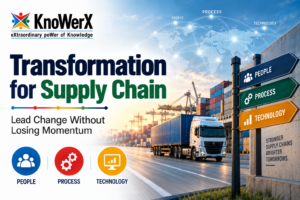
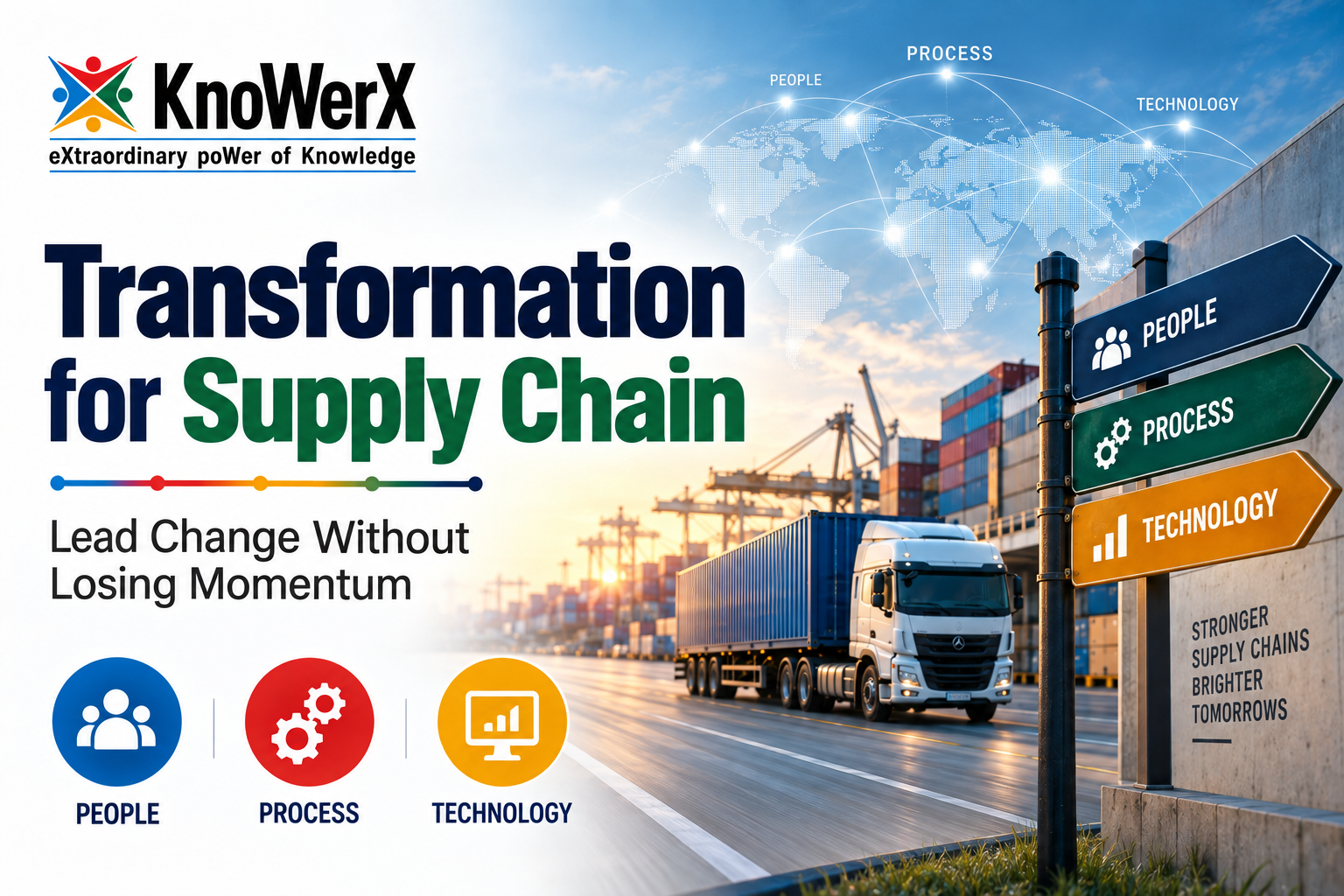
Transformation for supply chain rests on three equally important pillars. Neglecting any one of them is the single most reliable predictor of a transformation programme that loses momentum before it delivers its intended results.
Pillar One: People
People are the foundation of any transformation for supply chain. Skills development, leadership capability, change adoption, and change management are not soft considerations to be addressed after systems go live they are strategic imperatives that must be embedded throughout the transformation programme from the outset.
Resistance to change is predictable in any transformation for supply chain programme. People resist not because they are obstructive but because change creates uncertainty about roles, responsibilities, and ways of working. Addressing this resistance directly through communication, involvement, and structured capability development keeps transformation programmes moving forward when initial enthusiasm fades. Professionals equipped with recognised supply chain certifications bring the standardised knowledge and frameworks that transformation programmes depend on, ensuring the people dimension of change is as well-resourced as the technology dimension.
Pillar Two: Process
Technology cannot fix a broken process it can only automate it at greater speed and scale. Transformation for supply chain must therefore include genuine process redesign, standardisation, and governance as core workstreams, not afterthoughts. Redesigning processes around new capabilities, establishing clear standards for how those processes should be executed, and building governance structures that sustain compliance over time are the process foundations that make technology investments deliver their intended value.
Organisations that implement new technology without addressing the process layer consistently find that the same inefficiencies they were trying to eliminate simply reappear in a digital format. Transformation for supply chain only delivers lasting results when process change and technology change are designed and delivered together.
Pillar Three: Technology
Technology is the enabler of transformation for supply chain, but it is most powerful when it is deployed in support of clear process and people foundations. AI, automation, advanced analytics, digital platforms, and real-time visibility tools are reshaping what supply chains can do and how quickly they can adapt. Organisations that invest in these technologies with a clear understanding of the process changes and capability developments required to support them consistently outperform those that treat technology as a standalone solution.
How to Lead Transformation for Supply Chain Effectively
Start With an Honest Diagnosis
The most expensive mistake in transformation for supply chain is starting with the solution before fully understanding the problem. Before committing to a technology platform or a restructured operating model, invest in an honest, data-driven assessment of where the supply chain currently stands its maturity level, its capability gaps, and the specific performance improvements that transformation is expected to deliver.
Build Cross-Functional Ownership Early
Transformation for supply chain cannot be owned by the supply chain function alone. Building a governance structure with senior representation from every affected function procurement, finance, sales, operations, and technology with clear accountability for specific workstreams and outcomes, creates the organisational infrastructure that keeps transformation on track through inevitable periods of difficulty.
Deliver Early Wins Deliberately
Nothing sustains momentum in transformation for supply chain more effectively than visible, early results. Identifying two or three high-impact, quick-to-deliver improvements at the outset and communicating their results clearly across the organisation builds the credibility and confidence that carries the programme through longer-horizon initiatives.
Common Mistakes That Derail Supply Chain Transformation
Treating transformation for supply chain as a technology project rather than a people, process, and technology programme is the most common and most costly mistake. Others include underestimating the scope of change required, failing to address resistance in the middle layers of the organisation, measuring activity rather than outcomes, and allowing competing operational priorities to erode focus on transformation workstreams over time.
Frequently Asked Questions
What is transformation for supply chain?
Transformation for supply chain refers to a sustained programme of change that redesigns processes, systems, capabilities, and ways of working across the supply chain to deliver significant improvements in performance, resilience, and competitive advantage. It goes well beyond technology implementation to encompass cultural and capability change across the organisation.
Why do supply chain transformation programmes lose momentum?
The most common reasons include underestimating the scope of change required, failing to address resistance from middle management, allowing competing operational priorities to erode focus, and measuring activity rather than outcomes. Programmes that address these risks proactively are significantly more likely to sustain momentum through to delivery.
How important is diagnosis before starting supply chain transformation?
Starting with an honest, data-driven assessment of the current supply chain is critical. Without a clear baseline, transformation programmes risk investing in solutions that do not address the most significant performance gaps. Standards-based assessments benchmarked against frameworks such as ASCM's SCOR model provide the objective foundation that effective transformation requires.
Ending Notes – Building Capability for Lasting Transformation
Capability development should be embedded throughout the transformation programme, not added as an afterthought once systems are live. Certifications such as the CPIM, CSCP, and CLTD from ASCM provide supply chain professionals with the standardised knowledge and frameworks that transformation programmes depend on, ensuring the people side of change is as well-resourced as the technology side.
At KnoWerX, we work with supply chain professionals and organisations navigating transformation for supply chain, combining certification programmes that build individual capability with the broader supply chain expertise that transformation programmes need to succeed. If your organisation is planning or leading a supply chain transformation and wants a trusted education partner to support the people dimension, we would be glad to help.
Image Reference: Magnific
Disclaimer: All trademarks, logos, and brand names are the property of their respective owners. All company, product, and service names used in this website are for identification purposes only. Use of these names, trademarks, and brands does not imply endorsement.